
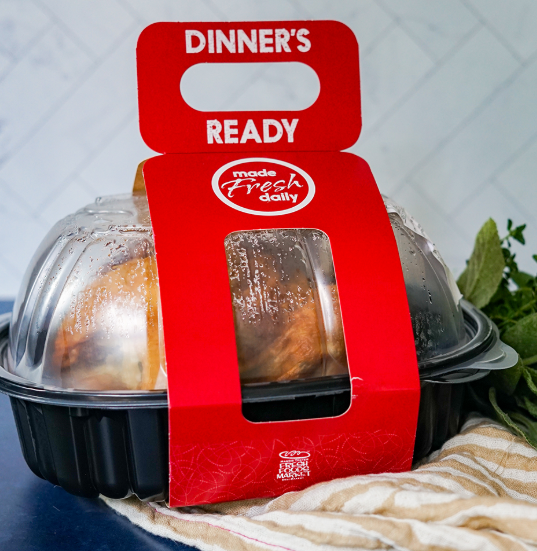
from Harris Teeter
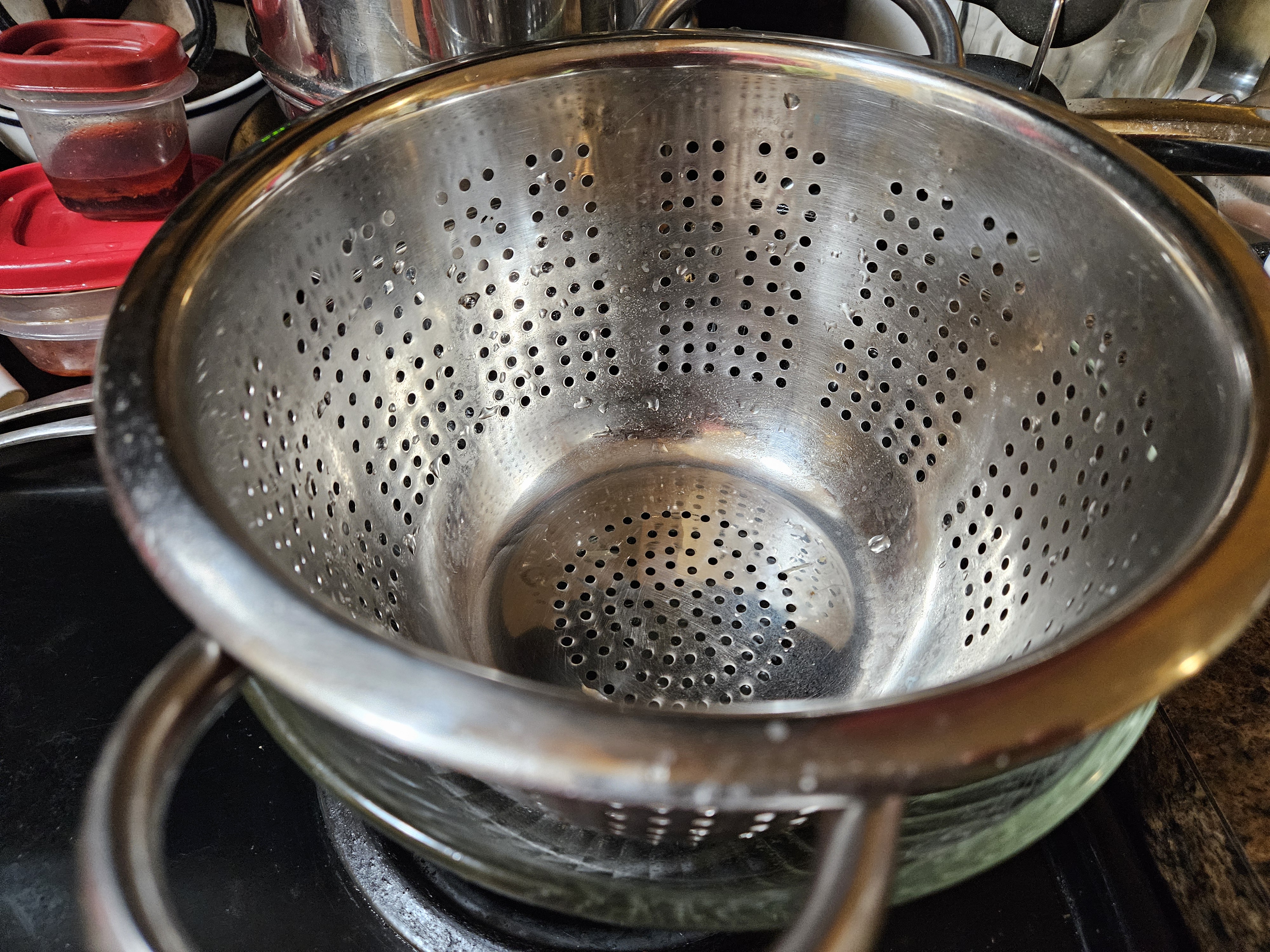

after draining the broth off.
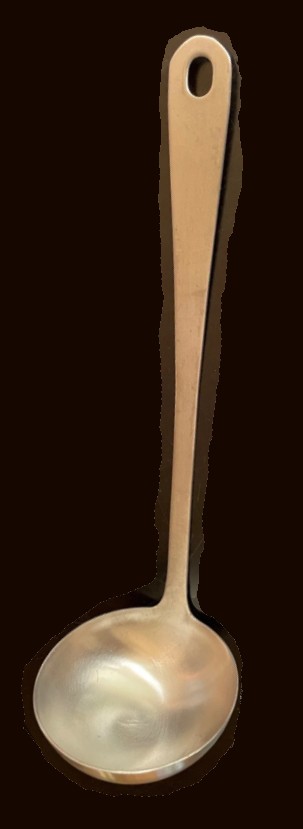
Soup Ladle
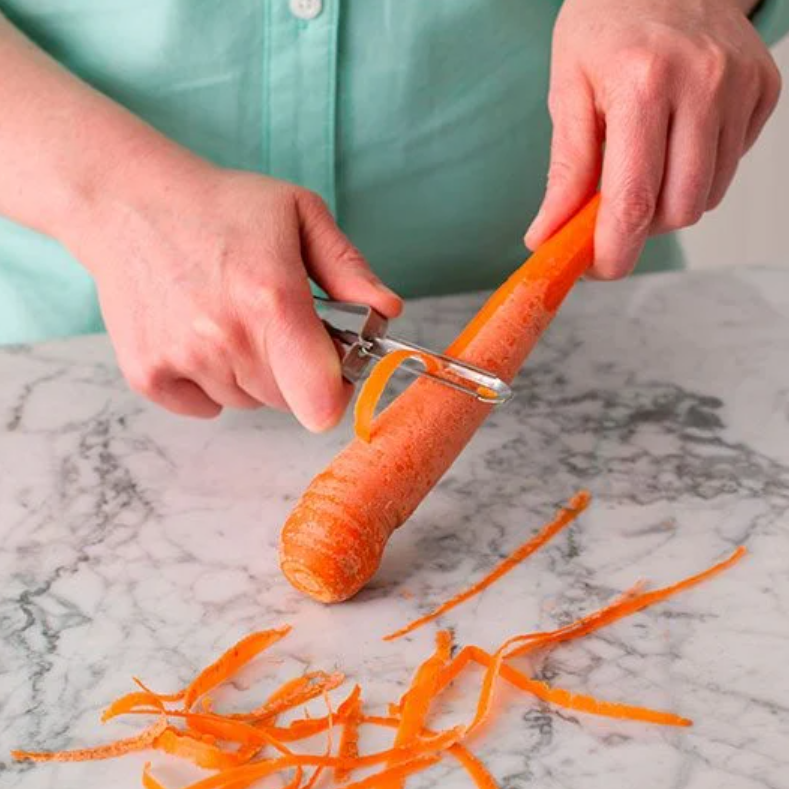
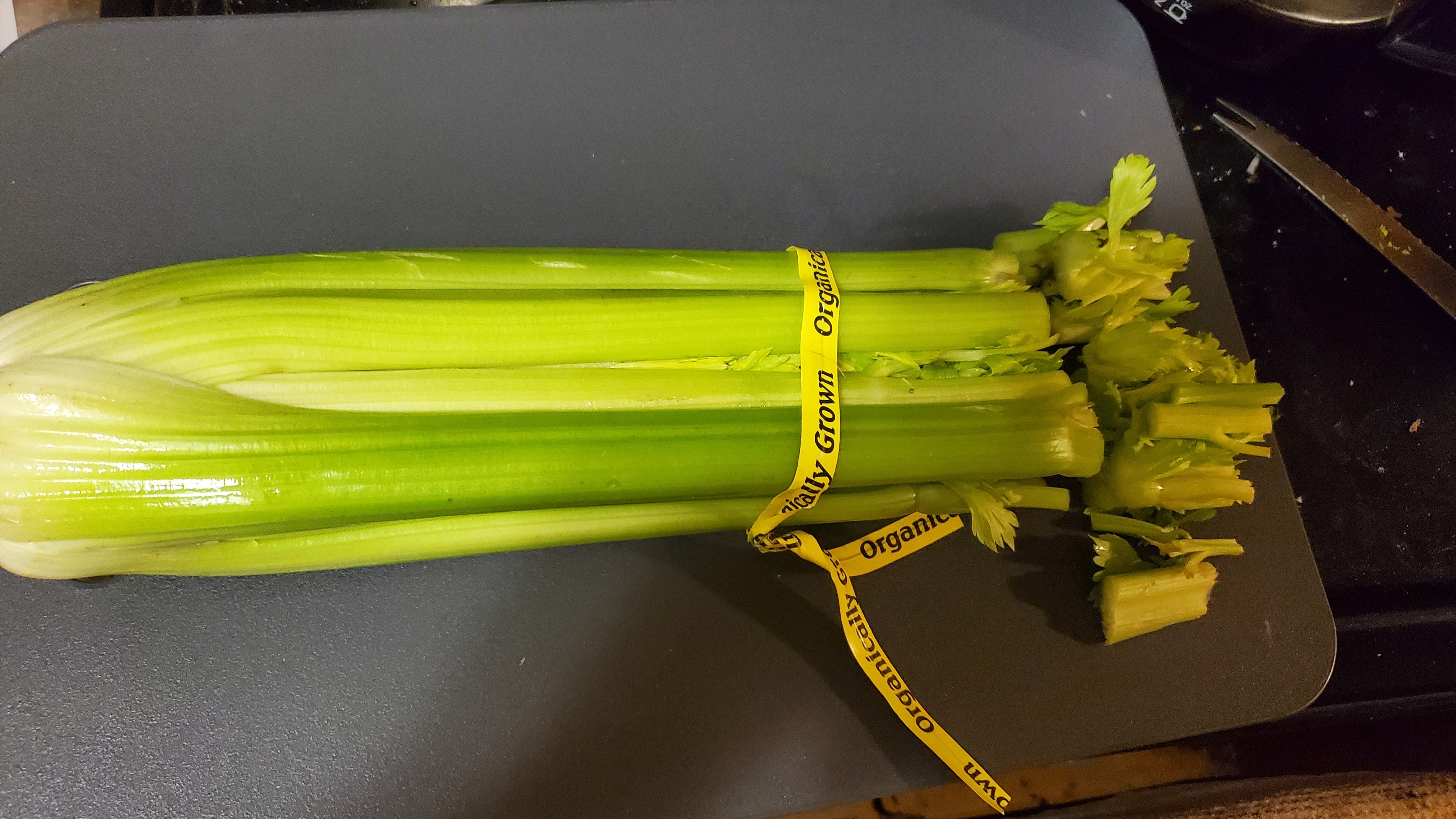
for making broth.


In some ways, making my own chicken stock at home was like making my first Pastrami Reuben at home. Very messy the first time, but so many lessons learned that it will become much easier the next time. For instance, I will know to use a ladle to transfer the stock liquid from the stock pot into the collander, instead of trying to pour the liquid from the pot into the collander.
Making chicken stock at home is just a simple mind set of saving all the necessary ingredients and then letting them all cook down into the stock pot, and then pour off the rich broth into containers, to either refrigerate or freeze. Save your onion tops & bottoms, your carrot ends and each end of your celery to go with the left over rotisserie carcass. That’s about 5 chicken dinners & chicken broth all from an $8 Harris Teeter rotisserie chicken and veggie parts that you would normally throw away.
I already had all the necessary equipment for the process: a Guy Fieri stock pot, a Frugal Gourmet soup ladle, a shiny new collander, a glass mixing bowl, and a spoon.

*An additional thought is that the empty Greek Gods Yogurt containers are about the perfect size for my homemade chicken broth, and I am generating a new container about every four days. However, the truth is that I don’t have enough freezer space to store ANY containers of chicken broth.

*And another thought just came to me. Since I have limited space, why not use the empty yogurt containers to save the carrot, onion & celery pieces that will be used to make the broth? I can just recycle these containers. Empty one that has broth and start filling it up with veggie waste. And I’ve put a shiny cat sticker on my veggie waste container to make it distinguishable from the ones filled with good broths. No extra space needed and my last batch of broth filled about 5 of these Greek Gods containers.
I already see, and taste, that the homemade broth is so much richer in flavor, and how can that not affect the outcome of the next soup, stew or “mess of” beans?
I owe this jaunt into culinaria to Lynn Wells, who is a personal chef, a food writer, food stylist, culinary consultant, and the recipe developer/writer for Our State. I was watching her YouTube video where she was showing how to make her “Fireside Stew,” and she made a comment about saving & freezing the ends of your onions (and how many of those have I chopped off in my cooking life, and just thrown away) to use in making your homemade stock.
That “right word at the right time” reminds me of the time my mom told me why I should spread out the shower curtain after I was through taking my shower. Probably for years, I had “forgotten to” spread the curtain out, just leaving it’s wet self, folded upon itself, as I dried off with a towel and then left the bathroom. But this time, mom added the additional comment to “spread the shower curtain out… so it will dry out and not cause it to mildew.” When she added this extra comment, as to “why I should do this,” I came immediately “on board” with her command and I think for the rest of my life, with a few exceptions, I have spread the shower curtain out after each shower, and that has been thousands of showers.
So Lynn Wells provided me with that one “teachable moment,” for what I could do productively, with those chopped off ends of onions… carrots, & celery stalks. “Bag ’em, freeze ’em, and cook ’em down with the rotisserie chicken carcass from Harris Teeter.”
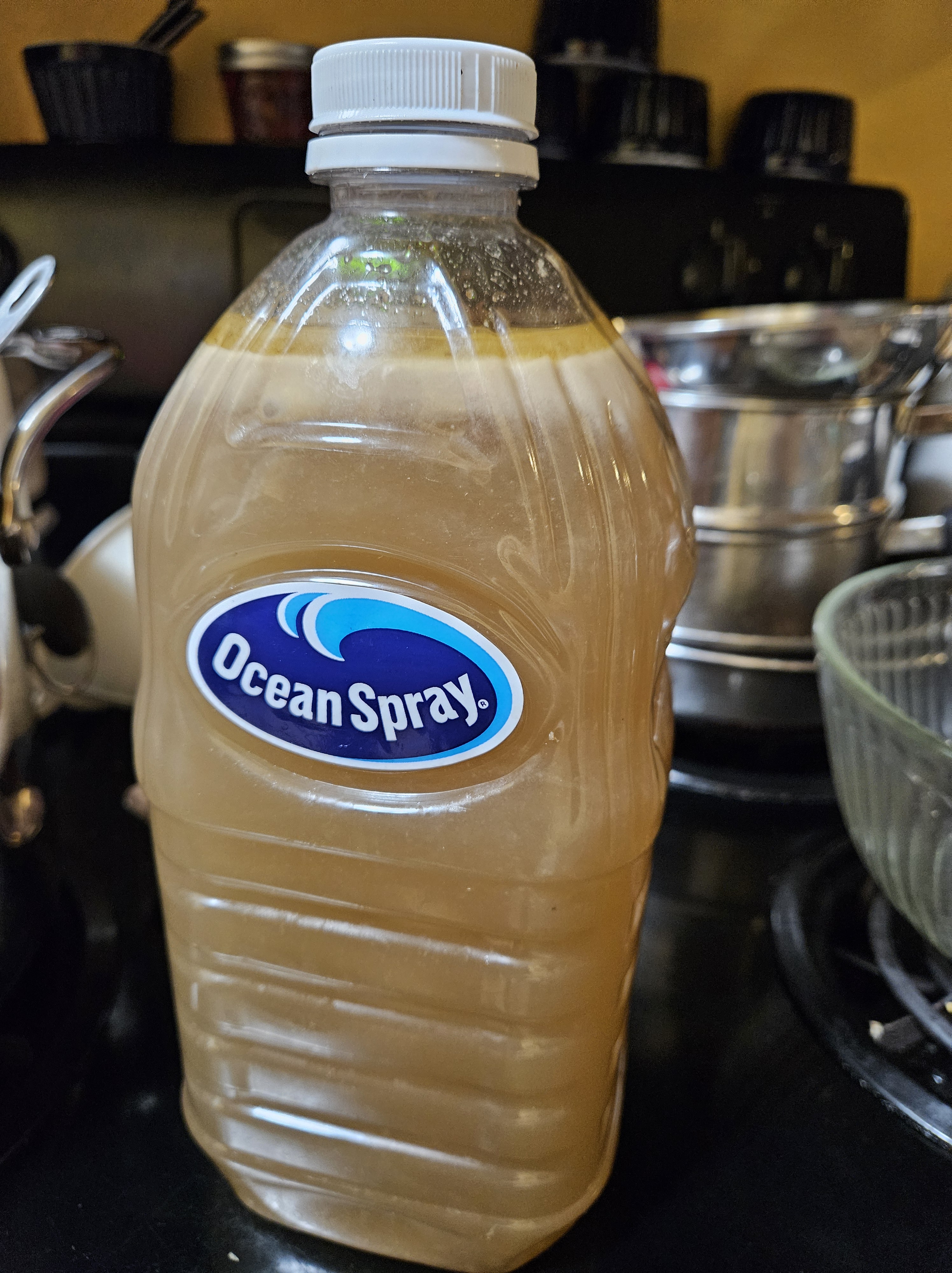
I used one of my empty plastic Cranberry Juice containers to save most of my fresh batch of chicken broth. I found that that container fits well on the bottom rack of my refrigerator door, when it may participate with “the other usual suspects” that include the Greek Gods Yogurt container, the orange juice carton, the Ocean Spray® Cranberry juice jug, the plastic 2% Milk jug, and the glass bottle of Half-n-Half.
The glass bottle of Half-n-Half was the rescued and repurposed bottle that originally contained the Fresh Market “Homestead Creamery” Christmas Egg Nog from two years ago. I just love the feel of the cold glass bottle in my hand as I pour some cream into my morning cup of coffee or tea, and it has the slightly smaller shape of a milkman’s daily milk delivery from a past, that I never actually knew.
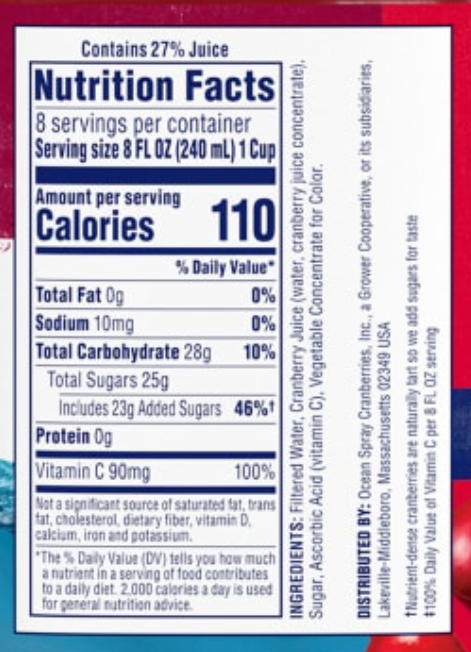
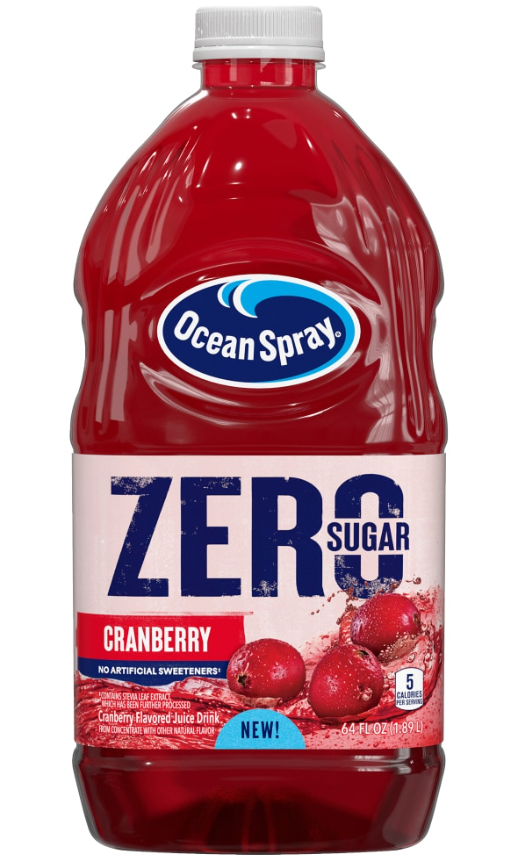
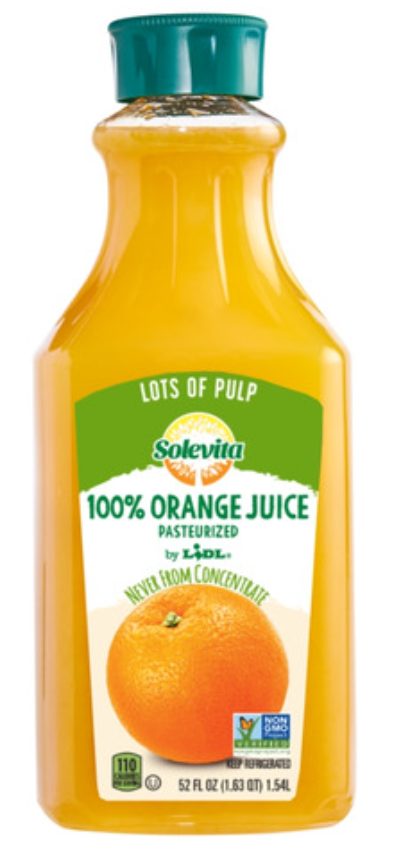

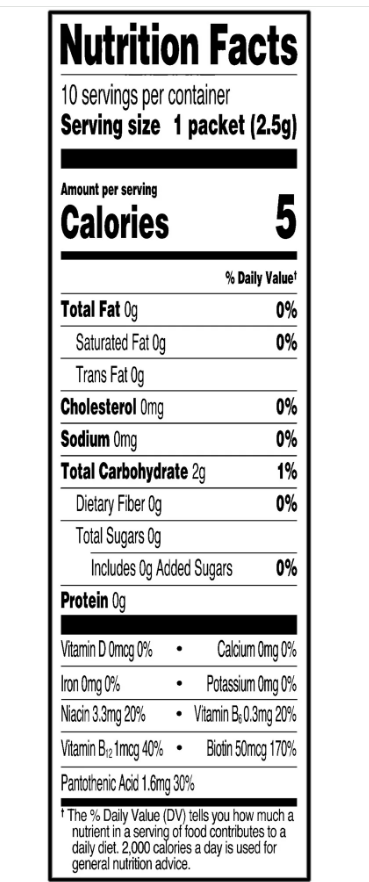

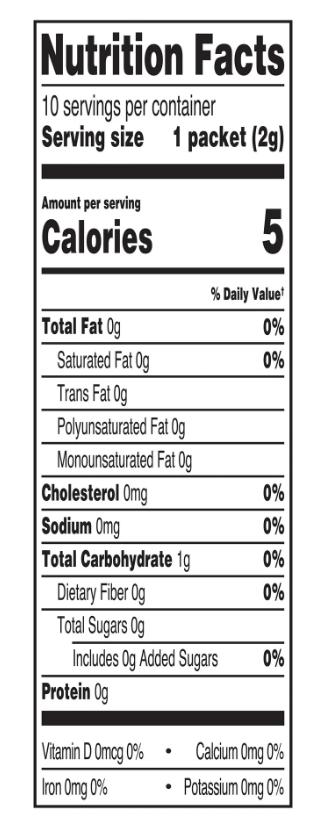
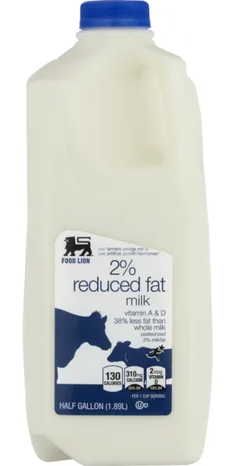

NOTE: I’ve recycled an empty 52 oz. Orange Juice container for making my “Bill’s Drink Mix.” I marked off 2 one-cup marks to put in 1 cup of orange juice and 1 cup of cranberry juice. After that I add about 32 oz. of water and add two flavor packets of the Walmart flavor drinks: sweet tea w/ lemon and pomegranate lemonade. I haven’t grown tired of this mixture for probably a year, and almost every day, and about 52 oz. each day. *Recall that you can remove the label glue by adding olive oil to the surface and letting it sit for a while, then wiping off, and using Dawn dishwashing liquid and washing that off. [end]
*And I just checked and there is an actual “Homestead Creamery” located in Wirtz, Virginia. I thought it might just be a “made up name” that was just meant to provide a “feel good” opportunity. Wirtz is about 30 minutes south of Roanoke, Virginia.
I made some blackeyed peas a few days ago and then some more this morning. I used my homemade chicken stock both times, and they are really good. It may be something else, but I’m guessing the chicken stock is special.
BEEF STOCK
AI says, “For making beef stock, you can use a variety of beef bones including neck bones, beef shanks, rib bones, marrow bones, knuckle bones, oxtail bones, and even bones leftover from roasting a roast; the key is to choose bones with some meat still attached and connective tissue for maximum flavor and gelatin content; ask your butcher for “soup bones” or “stock bones” for the best selection.“
PORK STOCK
Although I’ve not seen Pork Stock at Walmart, is that possible?
And AI was even smart enough to know I might ask that question: “Yes, “pork stock” is definitely a thing; it’s a stock made by simmering pork bones, vegetables, and herbs in water, just like you would make chicken or beef stock, and can be used as a base for soups, stews, and sauces; while it might not be as readily available in grocery stores as chicken stock, you can easily make it at home.“
INSTANT POT MINI INSTRUCTIONS — CHICKEN CARCASS BASE STOCK
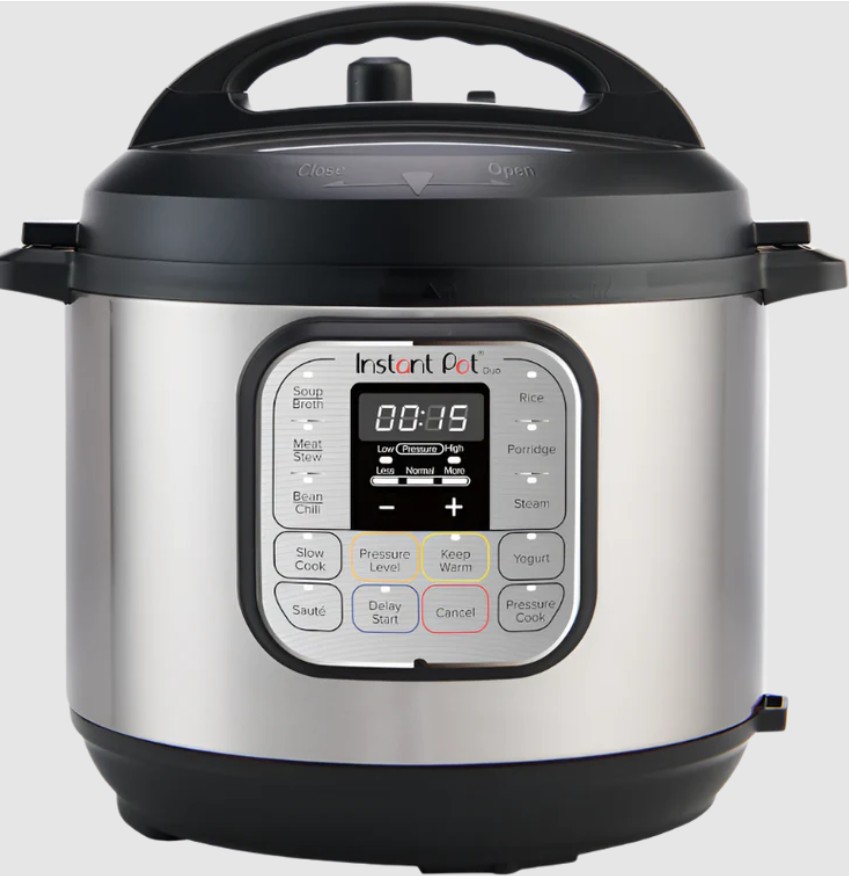
My thought was to incorporate some of the cooking time using my Instant Pot Mini. It’s not large enough to cook the whole batch of broth, but cooking the chicken carcass & left over meat and skin for about an hour should give a real good flavorful broth.
- Break the chicken carcass into smaller pieces so it fits below the MAX line of the 3-qt Instant Pot Mini.
- Add the carcass pieces to the pot. Optional: add a few onion pieces, a garlic clove, or a small celery piece. (Do not add carrots at this stage.)
- Add water until the pot is just below the MAX fill line.
- Close the lid and set the Instant Pot to Manual/Pressure Cook for 45–60 minutes. Use Natural Release when the cooking cycle ends.
- Open the lid and carefully strain the liquid into a large stock pot. Discard the cooked bones and skin.
This liquid is now your concentrated base stock.
- Add additional water to the stock pot to reach the quantity of broth you want.
- Add your vegetables to the stock pot: carrots, celery, onion, parsley, bay leaf, garlic, peppercorns, and any additional chicken scraps. Simmer uncovered on the stove for 1–2 hours.
- Strain again to finish your full batch of chicken stock.
ADDENDUM [02/25/25]: I made homemade chicken stock again yesterday. I had saved onions, celery and carrots in my freezer. In fact, I had saved too much, and I will try this next time, to save less, and try to save equal amounts of each of these veggies. That will be difficult, because I use way more onion in my cooking.
I actually blended the veggies before putting them in the water. I thought they might release more flavor that way, but I haven’t read whether it is just better to leave the veggies whole. I think they suggest leaving them whole because it is quicker that way.
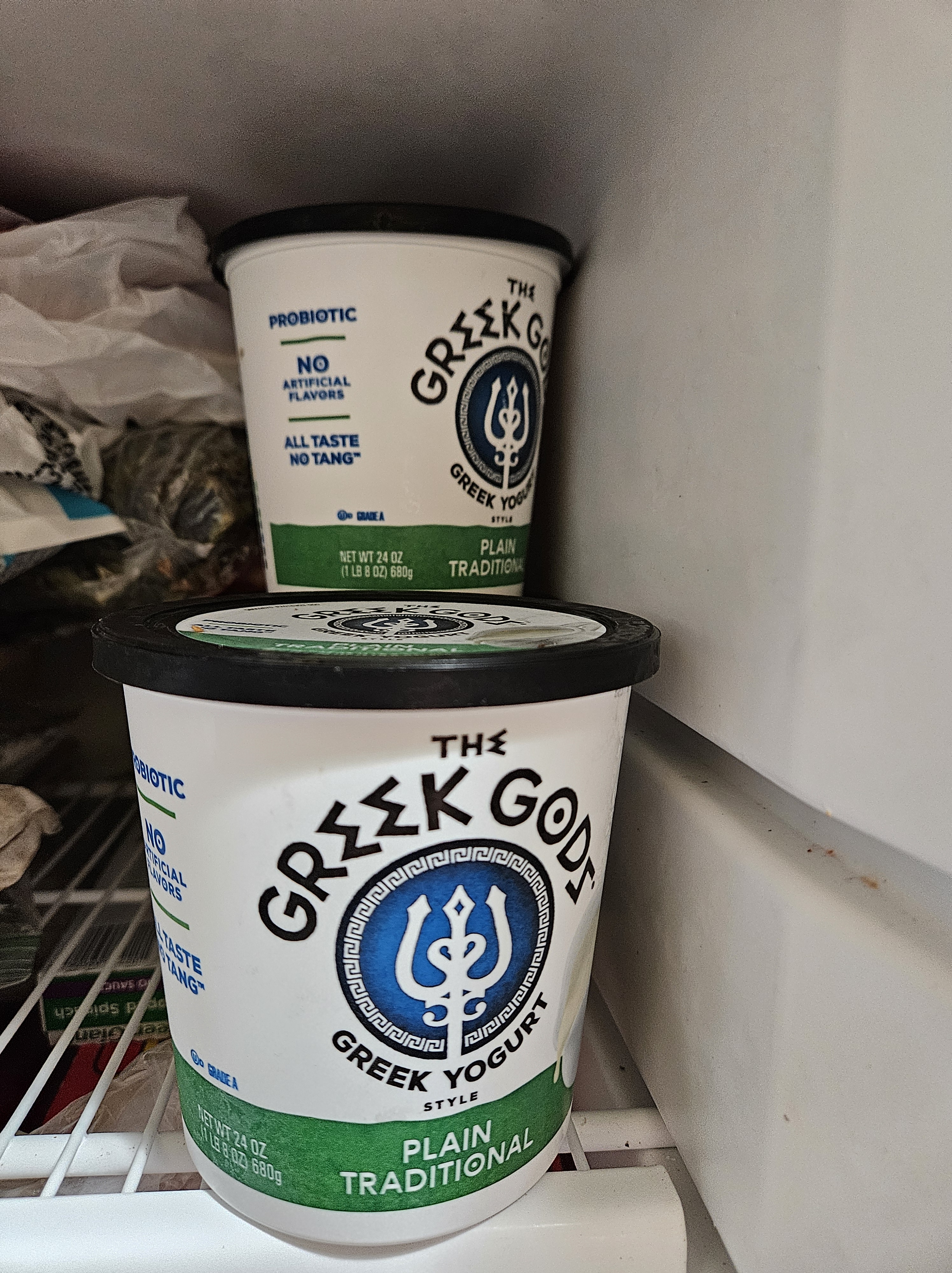
with veggie waste.
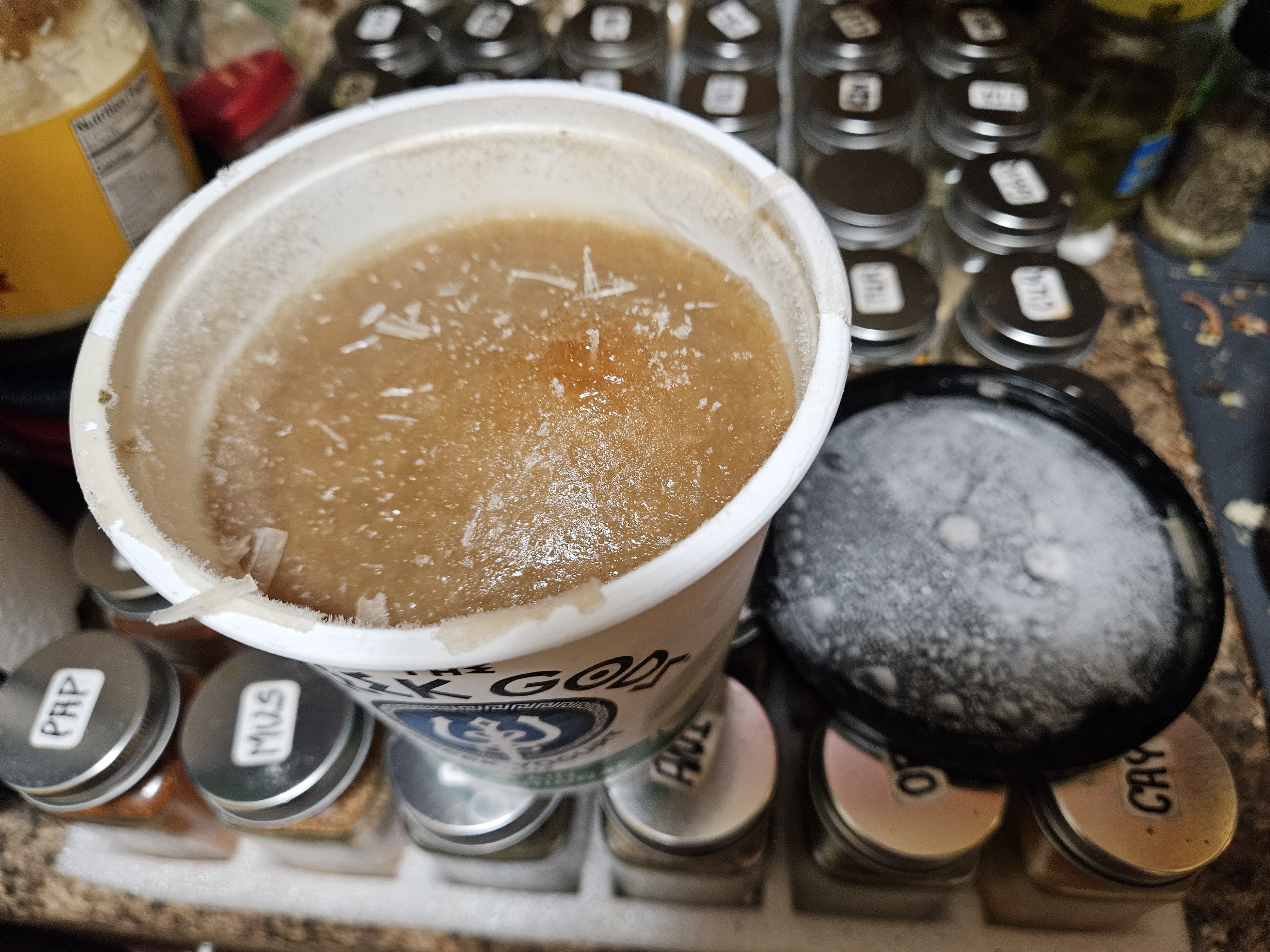
I had enough empty Greek Gods Yogurt plastic containers, with lids, and filled four of them (leaving a little space for the liquid to freeze without overflowing) and partially filled a fifth container. I used some of the fifth container to make my Avocado/Chipotle/Chicken Soup, adding a little store bought chicken broth also. The plastic containers fit perfectly in my freezer with one on top of the other (a height of two). I should be able to freeze the veggies beside the frozen broth, or I might fill a container with the veggies after draining the broth from them. I have a couple of extra containers. [end]
ADDENDUM [09/28/2025]: I have more than enough Greek Gods yogurt containers. I only need about 4 or 5 of these when making a pot of stock. I haven’t bought a rotisserie chicken from HT in quite a while (maybe a couple of months at least. I’m in the process of cleaning out my freezer to make room for some stock, and probably pork chops, ground beef and some chicken tenders and cilantro. I think I will freeze both cilantro and assorted peppers to keep them from going bad, and take them out as needed. I tend to leave stuff in the freezer until it goes bad, and I need to label each item as I am adding it because once I have either pork or ground beef, I often can’t tell which one it is.
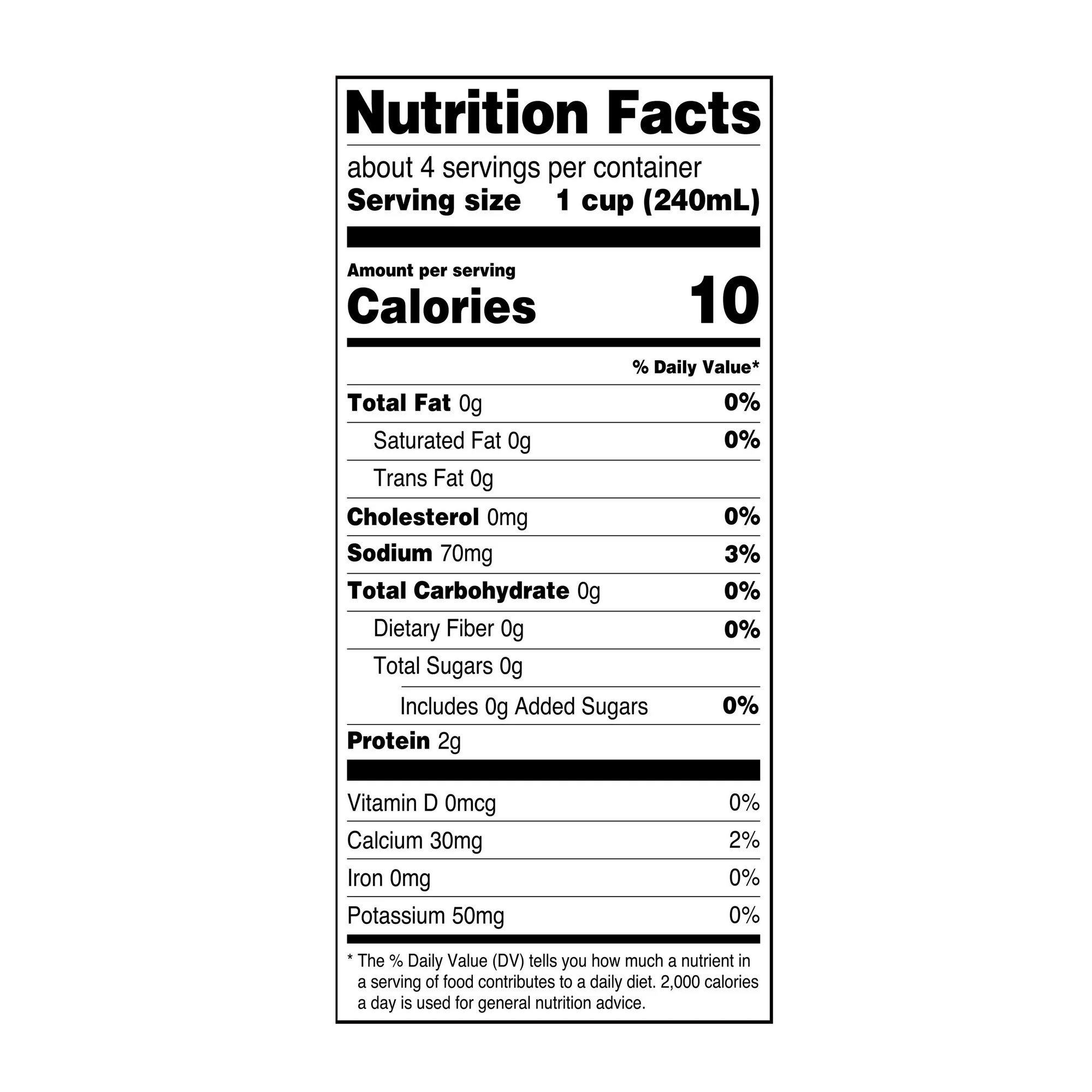
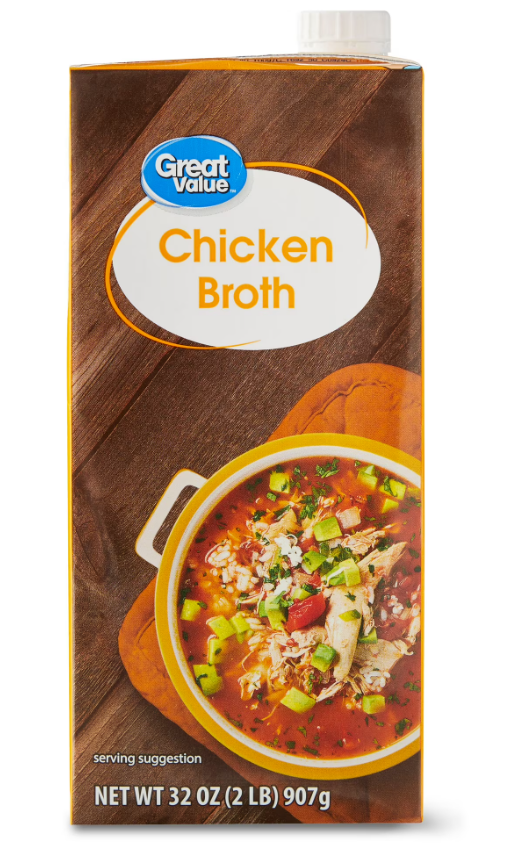
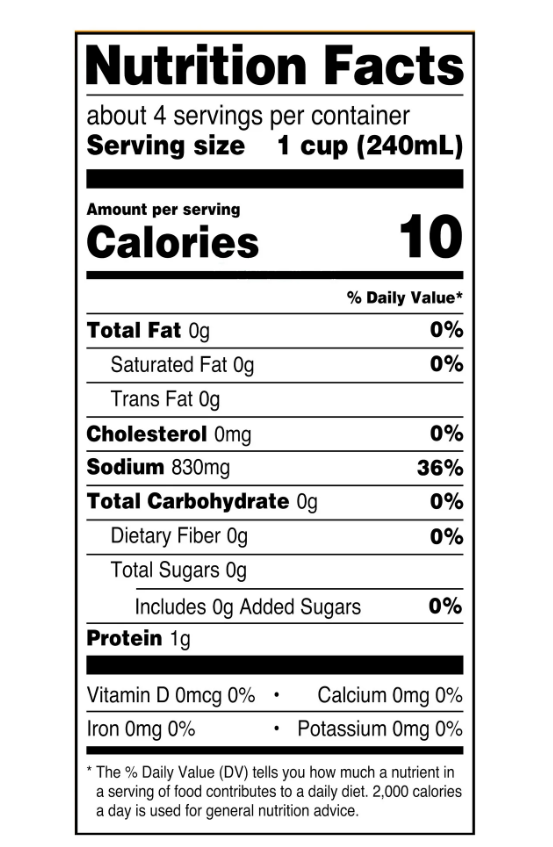
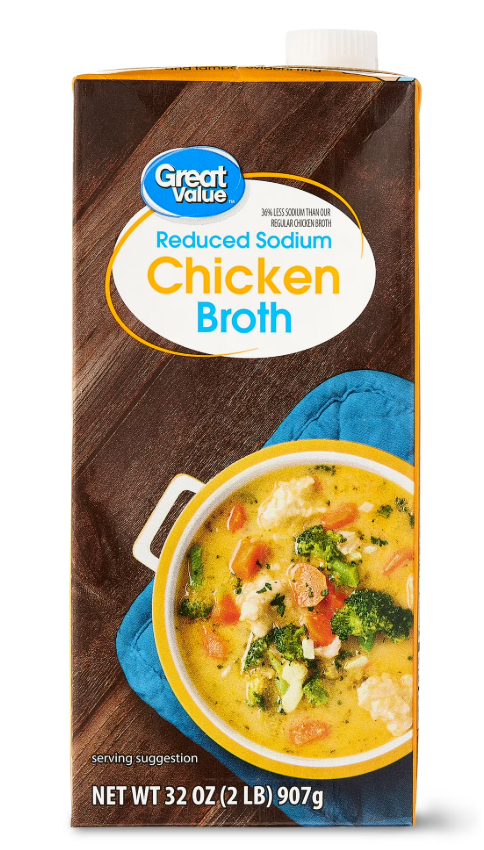
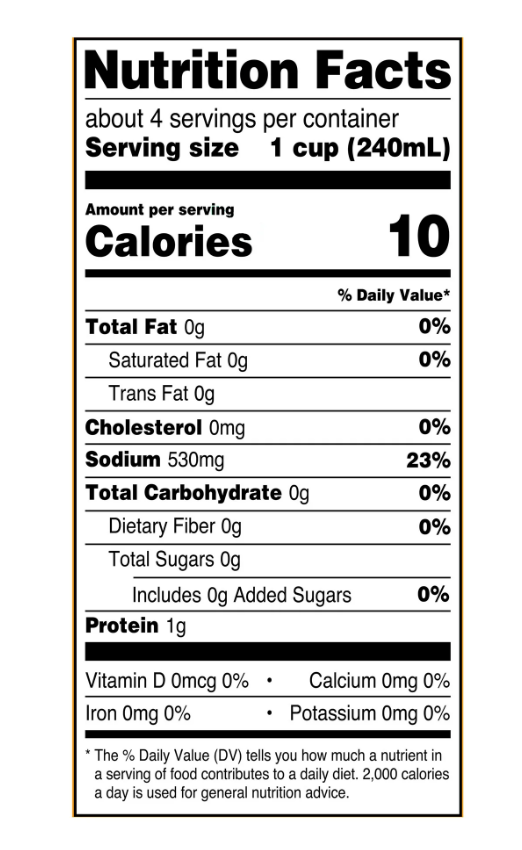
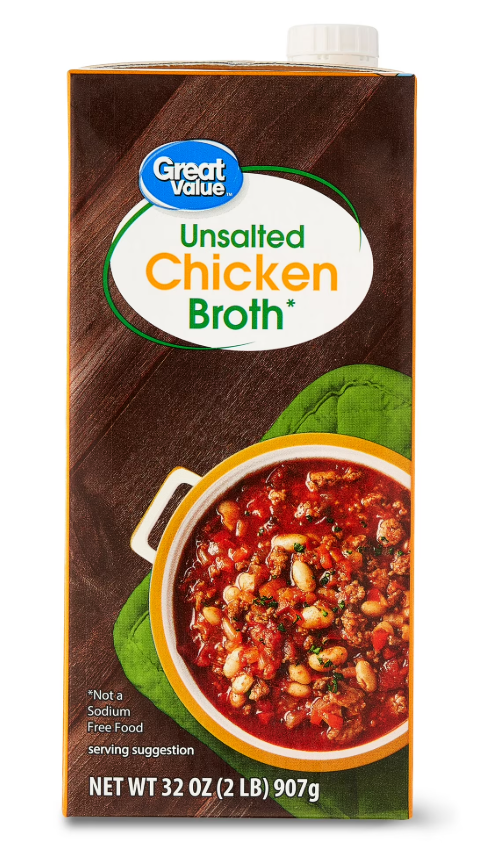
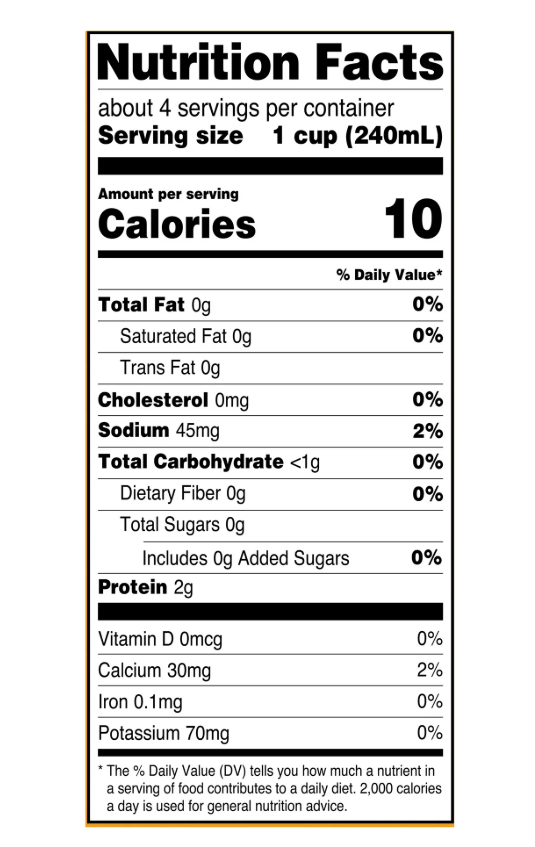
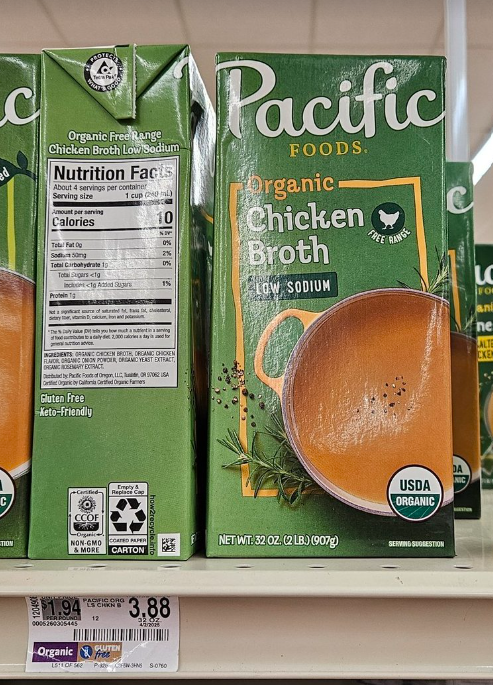
I’ve been more attentive to the amount of sodium in the various foods I’ve been eating lately. Now I have become aware that the Walmart GV brand of Chicken Stock I’ve been using has a very high amount of sodium 900 mg?! And you’ve got to read the labels even for “Reduced Sodium” options. Some of that may have as much as 570 mg of sodium, at that’s supposed to be low sodium. But, there is “Unsalted Broth” which has less than 100 mg of sodium for either beef or chicken broth. *So the key word is “unsalted” and not “reduced sodium.” And not too long ago the price of the GV brand 32 oz. of broth increased from about $1.35 up to $1.50. *I bought 3 – 32 oz. cartons of GV Unsalted Chicken Broth today (09/28/25) at the Walmart near Cracker Barrel. It was hidden behind other boxes of broth, and I had found none at the Walmart on Ramsey Street, nearest my apartment.
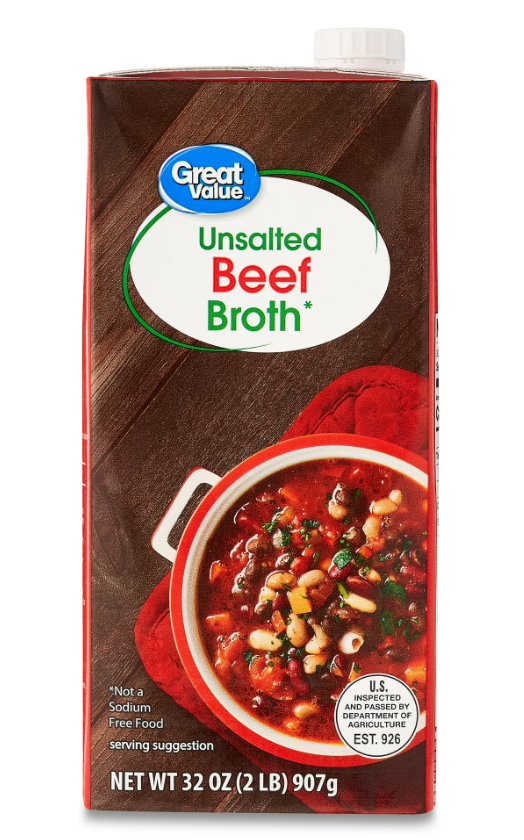
$1.50
$1.50
$1.50
$1.50
$3.88
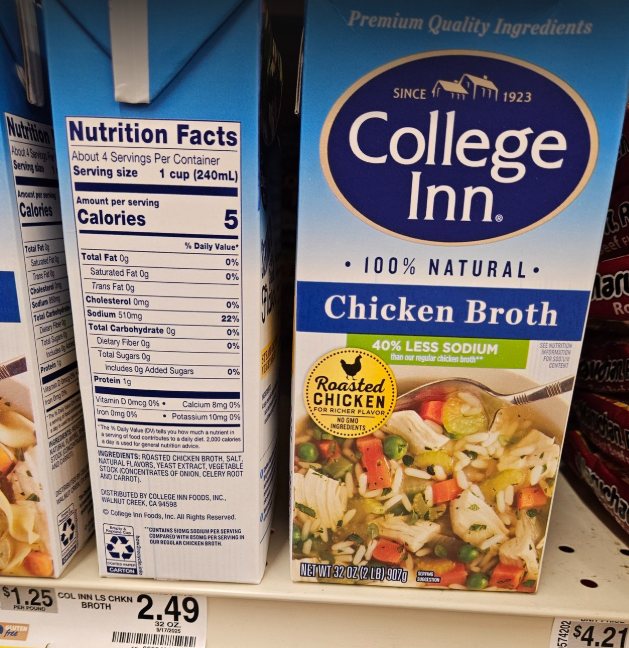
$2.49
- 830 mg of Sodium is about 1/3 of a tsp of salt.
- 530 mg sodium ≈ 0.23 teaspoons of table salt (a little less than ¼ teaspoon).
- 45 mg sodium ≈ 0.02 teaspoons of table salt (about 1/50 of a teaspoon — just a tiny pinch).
There are 4 cups of broth in a carton (32 oz = 4 – 8 oz cups). A serving size of broth is one cup and I usually use at least 2 or 3 cups of broth, with about another 1 or 2 cups of water when making a soup or stew.
[end]
 Bill Gibson, II