
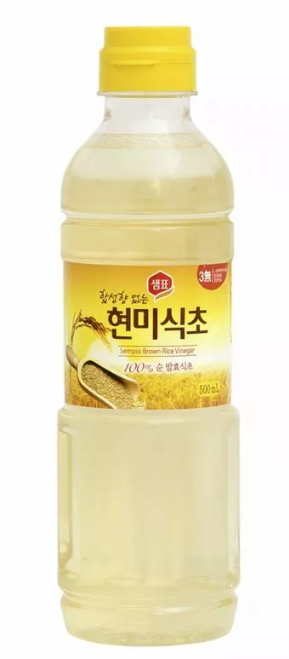
RICE WINE VINEGAR
샘표 “Sempio” in Korean
표 “Pyo” which means “mark” or “label” as in brand, but it can also mean “table.”
현미 brown rice 식초 vinegar
Several years ago there was a Korean Market located across town (Fayetteville, NC) near where the original Thai Pepper Restaurant was located. I bought a couple of bottles of Korean Brown Rice Vinegar there and really liked the mild, but distinctive flavor. The vinegar was slightly tinted. The problem was that after I finished using the second bottle and went back, they no longer had this brand of vinegar. I went looking and it seemed that the company might have stopped exporting their vinegar to the United States. I did keep the label and took a picture of it and I just came across that label again.

Korean Rice Vinegar.
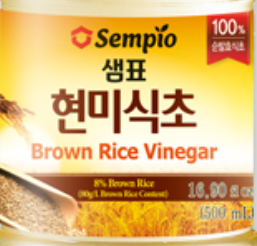
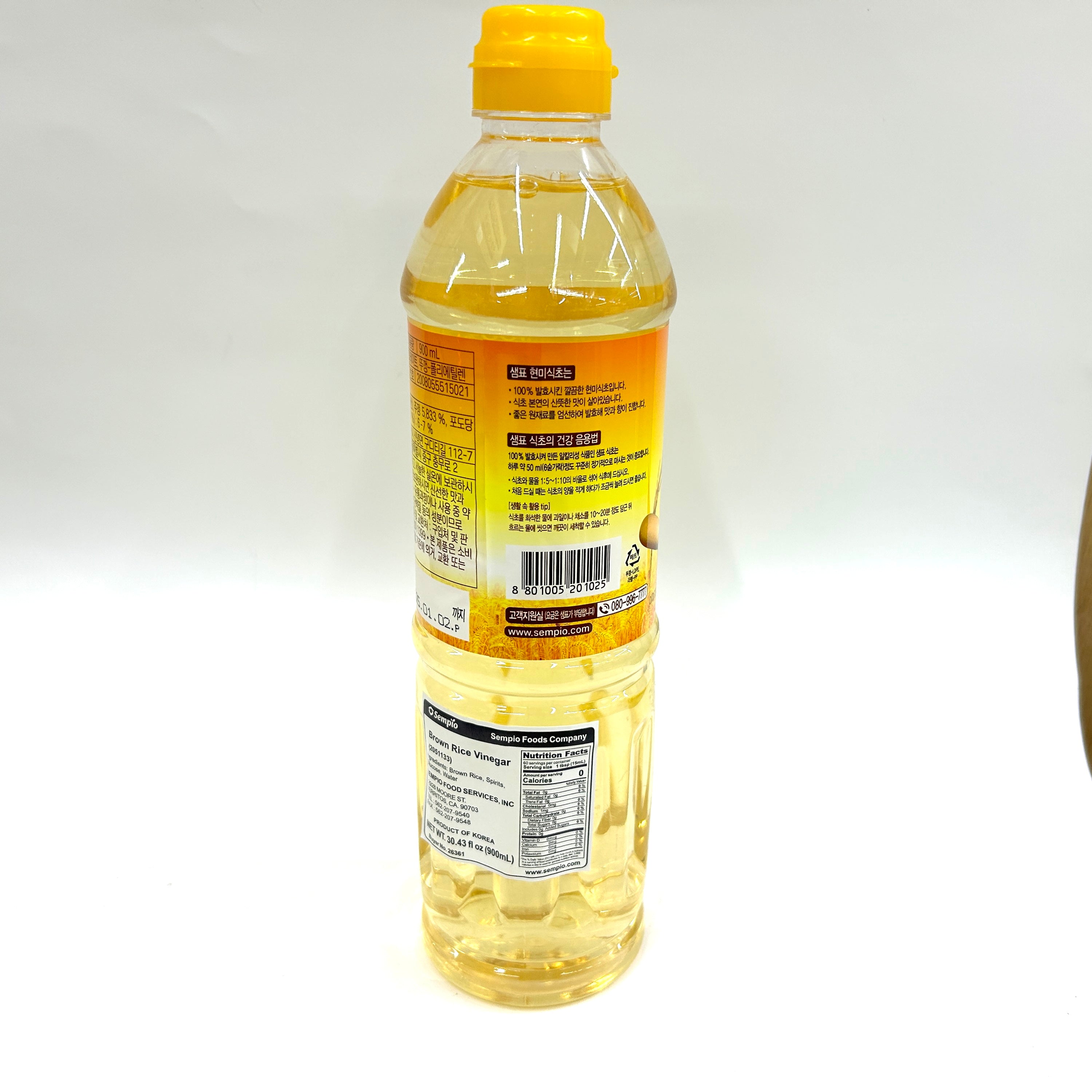
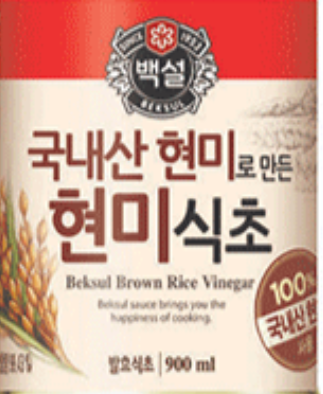
It was only since I started translating the Korean symbols above that I can understand that the first two labels, from the left, are for the same company, so both these vinegars should be the same.
I also bought and enjoyed some “drinking vinegar” from this Korean grocery. I don’t recall the flavor, but it was a sweetened, flavored vinegar that was pleasant to drink.
I found the following online at Amazon, but it is a 5 pack of vinegar for about $67 before tax.
Sempio Brown Rice Vinegar (900ml), 30-Ounce (Pack of 5)
APPLE CIDER VINEGAR REFERESHERS
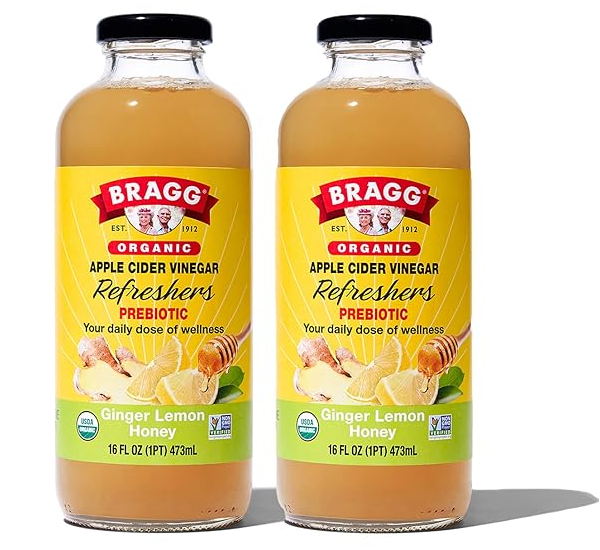
The last time I was in Asheboro, North Carolina, I found a health foods store, “Samson & the Lion Natural Foods” and went in to see what they had. I ended up buying a bottle of “Bragg Apple Cider Vinegar Refreshers” (ginger, lemon & honey flavored vinegar) and a package of Frankincense Resin Gum.
The vinegar, which was mostly water, had honey, ginger and lemon for flavoring, and I really liked those flavors together.
I later bought a bottle of Apple Cider Vinegar at a Food Lion and when I was back home made my interpretation of the flavored vinegar. I came close enough to the original that I have made it a couple of times and keep some in the refrigerator door. I’ve added Turmeric also.
SCLAFANI BALSAMIC VINEGAR OF MODENA

The shop where I bought the vinegar is no longer located in Grove Arcade.
Years ago, and I don’t actually recall where I first bought and tried this particular balsamic vinegar, but I tried Sclafani “Balsamic Vinegar of Modena.” I liked the sweetness, and ended up buying some for myself, and later as perhaps Christmas presents for friends & relatives.
I’m not sure that I could buy this, in this type of bottle, any more. It’s not currently available at Amazon. I do recall finding it for sale in a store in the Grove Arcade in Asheville, North Carolina.

POMPEIAN RED WINE VINEGAR
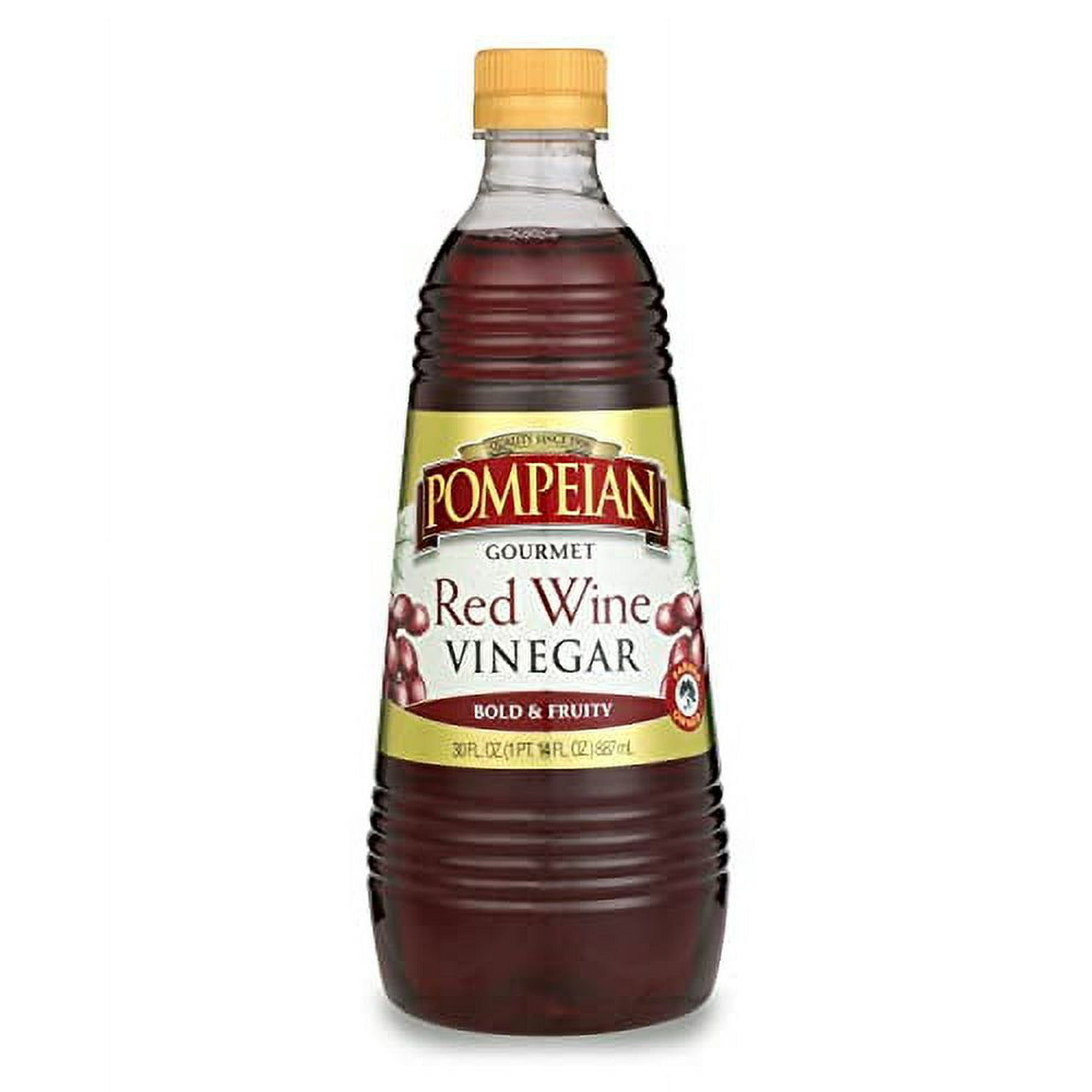
The Pompeian Red Wine Vinegar has been my favorite for several years. I’ve tried a few other “red wine” vinegars, but this one satisfies me.
I bought a 6 pack of this vinegar from Amazon, but have gone through it already. I may use this vinegar in cooking almost as much as I use onions.
.
Making Vinegar at Home
I am perfectly happy with the Pompeian Red Wine Vinegar that I can get at Walmart, and so I am not really sure why I came up with the idea to try and make my own vinegar at home. It could have been something as simple as trying to explain the meaning of “the mother” regarding vinegar. *You never saw “the mother” in bottles of Apple Cider Vinegar when I was growing up. You probably would not have bought it if you had, thinking it spoiled. **I guess this is something like not having any color of sweet bell pepper other than green when I was growing up. And, I’m not sure what I would have put diced green bell pepper in other than spaghetti sauce, or maybe a salad. Not sure if this fits, but how about the McCormick’s Ground Black Pepper that came in the red & white tin can. I am thinking that we kept one at least 10 years, if not longer. And now, I grind an Indian Long Pepper or mixed red, white, green & black pepper freshly each time.
Here is what the AI said about the vinegar making process:
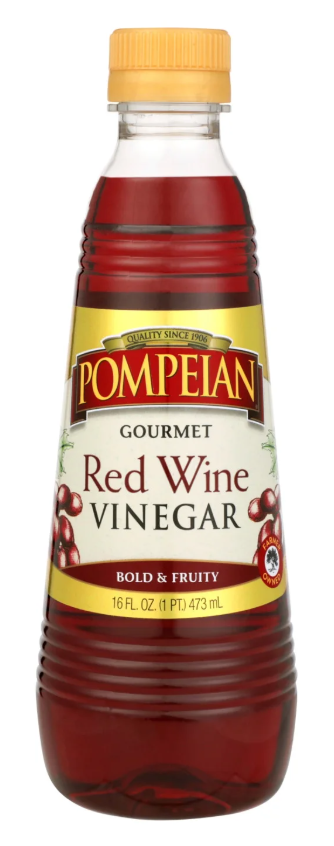

$4.40 for 24 oz.
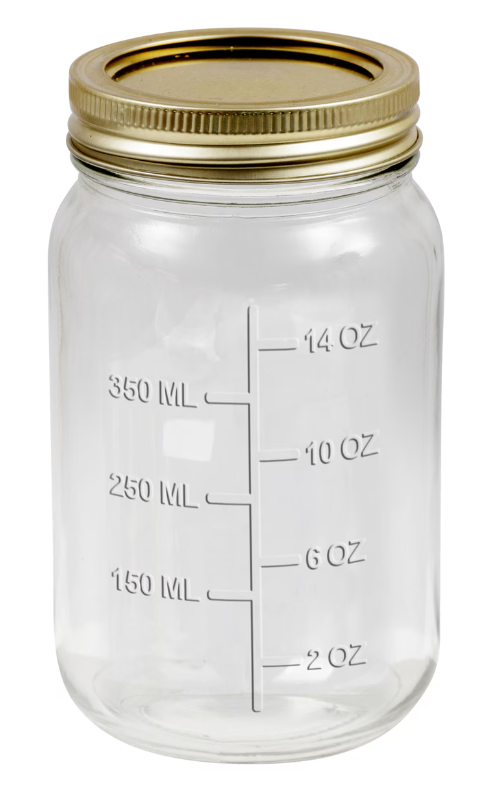

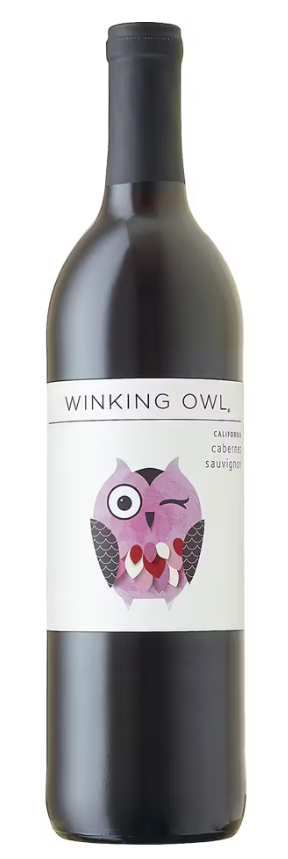
Making vinegar at home from cheap wine (Winking Owl from Aldi’s – Cabernet Sauvignon $4.39 750 ml 12% ABV) is fairly straightforward and requires just a few ingredients and some patience. Here’s the general process for turning wine into vinegar: *It already looks to me that making vinegar at home will not be worth the time (up to 6 weeks) & effort. If there is little to no loss of wine being converted into vinegar, the cost per ounce is about 18 cents, which is the approximate cost of commercially produced red wine vinegar. **And then I found that I might have to dilute the wine, with water, to reduce the ABV from 12% down to about 9%. Now we are producing a larger volume of vinegar because we’re necessarily adding water to the mix for a total liquid volume of about 45 oz.
🧪 BASIC OVERVIEW
Vinegar is made by converting alcohol (ethanol) into acetic acid using acetic acid bacteria (mainly Acetobacter). This is called acetous fermentation.
🍷 WHAT YOU NEED
- Cheap wine – red, white, or even a blend. Avoid wine with sulfites if possible (see note below).
- Unpasteurized vinegar with “mother” – Bragg apple cider vinegar or any live, raw vinegar will do.
- Wide-mouth glass jar, ceramic crock, or food-grade plastic container.
- Cheesecloth or clean cloth + rubber band – to cover the container and allow airflow.
- A warm, dark place – ideally 60–80°F (15–27°C).
🧂 OPTIONAL
- A vinegar mother (a cellulose mat of bacteria) from a previous batch or commercial source – this speeds up the process.
- A pH meter or pH strips – to test acidity (vinegar is around pH 2.5–3.5 when ready).
🧃 STEP-BY-STEP INSTRUCTIONS
Step 1: De-sulfite the wine (if necessary)
- Sulfites can inhibit bacterial activity. If your wine has sulfites (most do), let it sit open for 24 hours before using, or pour it back and forth between containers to let them dissipate.
Step 2: Mix wine and vinegar starter
- Mix 1 part water to 3 parts wine to get ABV from 12% down to about 9% ABV.
- Mix about 3 parts water/wine to 1 part unpasteurized vinegar (e.g., 3 cups wine + 1 cup Bragg’s ACV).
- Pour the mixture into your jar or crock until it’s about 2/3 full to leave room for airflow.
Step 3: Cover and store
- Cover the container with cheesecloth or a clean towel, secured with a rubber band.
- Place it in a dark, warm (not hot) place with good air circulation.
Step 4: Wait and watch
- Let it ferment for 3–6 weeks, or longer depending on temperature and strength of the wine.
- You may notice a gelatinous blob forming — that’s the mother of vinegar. It’s a good sign.
Step 5: Taste test
- After 3–4 weeks, start tasting once a week using a clean spoon or straw. When it’s tangy and no longer tastes like alcohol, it’s vinegar!
Step 6: Strain and bottle
- Once it’s fully fermented (no alcohol flavor remains), strain out the mother and any sediment.
- Bottle the vinegar in clean jars or bottles. Store in a cool, dark place.
🧫 SAFETY NOTE
- Smell is important: Vinegar should smell pleasantly sour. If it smells rotten or moldy, discard it.
- Mold: Sometimes a white film (kahm yeast) forms on top — this is generally harmless, but black, green, or fuzzy mold means contamination, and the batch should be thrown out.
🧪 HOW TO KNOW IT’S DONE
You can be more precise with:
- pH testing: Vinegar should be around pH 2.5–3.5.
- Smell/taste: Sharp, tangy, and acidic with no alcohol burn.
🥫 BONUS: Reuse the “mother”
Save the mother to kick-start future batches. You can also gift or compost it.
I used the cheap red wine from Aldi’s, Winking Owl, and added water. I put cheesecloth over the mouth of the jar, and fastened it with a rubber band. Basically I left it on the top of my refrigerator for more than a month. I’m still not sure if the product is vinegar or wine. It is pleasing to drink if I add a little sweetener to it. As warned there is a whitish scum that forms on the top of the vinegar/wine, and I just strain it off through my coffee filter as I pour from the carafe into the wine glass. I noted that the Winking Owl wine was only $3.95 today (09/26/25).
 Bill Gibson, II