
| God | 신 | |
| light | 빛 | |
| hot | 더운 | |
| cold | 추운 | |
| rain | 비 | |
| man – male | 남자 | |
| woman – female | 여자 | |
| baby | 아기 | |
| food | 음식 | |
| water | 물 | |
| salt | 소금 | |
| milk | 우유 | |
| tea | 차 | |
| brown rice | 현미 | |
| bread | 빵 | |
| chicken | 닭고기 | |
| pork | 돼지고기 | |
| beef | 소고기 | |
| vinegar | 식초 | |
| fermentation | 발효 | |
| 100% fermented vinegar | 100% 발효식초 |
현미 brown rice
식초 vinegar

100% 발효식초
Well, here is something that I hadn’t thought about, and am surprised is possible. I had come across the image of the “brown rice vinegar” label that was written mostly in Korean. I hadn’t researched the translation of the characters, until now. I found that one small set of characters on the label represented the phrase “100% fermented vinegar.” So, I took the characters representing the word “fermented” ( 발효 ) and added them to the name for Pu’er ( 푸에르차 ) is a “fermented tea” ( 발효차 ), with ( 차 ) being the symbol for “tea.”
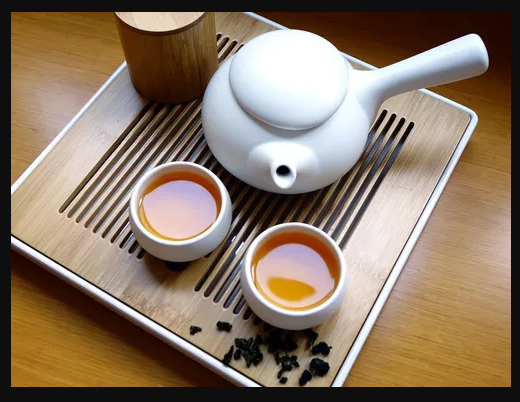
The thought came to me, whether I could save a file using Korean characters. Could I find an image file related to tea, and then save that file with the Korean characters for “tea” ( 차 ). So, I tried it, and darn if it didn’t work flawlessly.
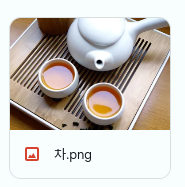
Here was the image file named with the Korean characters for “tea.”
And how the URL to the image file gets re-interpreted: https://billggibsonii.com/wp-content/uploads/2025/02/ecb0a8.png
.
And once the above test worked, I asked myself if I could incorporate Korean characters into my naming of meals in my “MyFitnessPal” site. And I was pleasantly surprised a second time when it worked flawlessly.
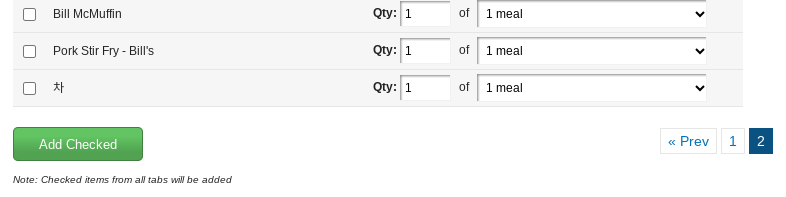
I created a multi-item meal & saved the name using Korean characters for “tea” ( 차 ). See above. I checked the box beside the name “차” and then clicked on “Add Checked” and it did.
And here is what the URL for a WordPress page named with Korean characters looks like:

and how the URL is interpreted:
 Bill Gibson, II