
by Marguerite Steen [1956]
ERSTES KAPITEL
„Wie dumpf die Totenglocke tönt, horch, horch! Dem besten aller Könige, Georg!“
Solchermaßen hatte ein Bürger von Bristol in der „Morgenchronik“ seine poetischen wie auch seine patriotischen Gefühle ausgelebt; und am 30. Oktober 1760 wurde dann die Thronbesteigung eines neuen Georg gebührend, wenn auch recht bescheiden, gefeiert, indem das Fest die Stadtbehörden auf ganze hundertneunundzwanzig Pfund Sterling zu stehen kam. Diese Sparsamkeit der öffentlichen Hand (die ganz nach dem Sinn desjenigen war, zu dessen Ehren sie sich äußerte) wurde in den Kreisen der lebenslustigen Jungvolkes stark beanstandet, da dieses, durch den sich in die Länge ziehenden Krieg ohnehin um manche seiner Vergnügungen gebracht, sich berechtigt gefühlt hatte, bei dieser Gelegenheit wieder einmal seinen Übermut auszutoben, wie es von jeher – Krieg hin oder her – das Vorrecht der Jugend gewesen ist.
Weshalb sollte denn Bristol überhaupt sparen? Mit der Eroberung der französischen Besitzungen in Westindien hatte der Sklavenhandel einen unerhörten Aufschwung genommen, und nahezu die Hälfte der im laufenden Jahr von der britischen Schifffahrt verfrachteten sechsundzwanzigtausend Neger war auf Fahrzeugen aus Bristol befördert worden. Die von Dankbarkeit überfluteten Stadtväter von Bristol hatten hundertdreizehn Pfund bewilligt, um Pitt und dem Herzog von Newcastle, deren politischer Führung die aufsehenerregenden militärischen Erfolge in Indien, Amerika und Deutschland zugeschrieben wurden, in zwei Kästchen von feinster Goldschmiedearbeit das Ehrenbürgerrecht der Stadt zu überreichen. Hundertdreizehn Pfund für ein Paar Kassetten und hundertneunundzwanzig Pfund zur Feier der Thronbesteigung; ein gewisses Mißverhältnis in der Auswerfung öffentlicher Gelder ließ sich nicht übersehen. Man hielt dafür, diese hätten füglich dazu beitragen müssen, etwas Abwechslung in das trostlose Einerlei der Kriegszeit zu bringen.
Man war nachgerade ein wenig kriegsmüde; der Schreck der Rekrutenaushebung und die ersten bangen Monate waren vergessen; das Schauspiel sich einschiffender Truppen, gefühlvoller Abschiedsszenen, glorreich heimkehrender Krieger war mehr oder weniger verbraucht. Bristol hatte im Betrauern der Gefallenen
Translation:
FIRST CHAPTER
“As long as the death knell tolls, listen, listen! The best of all kings, George!”
In this way, a citizen of Bristol had given vent to his poetic as well as his patriotic feelings in the “Morning Chronicle”; and on October 30, 1760, the accession to the throne of a new George was celebrated fittingly, if rather modestly, in that the festivities cost the city authorities a total of one hundred and twenty-nine pounds sterling. This frugality on the part of the public purse (which was entirely in keeping with the sentiments of the one in whose honor it was expressed) was strongly criticized in the circles of the pleasure-loving young people, as they, already deprived of many of their amusements by the protracted war, felt entitled to indulge their high spirits once again on this occasion, as it had always been – war or no war – the prerogative of youth.
Why should Bristol have economized at all? With the conquest of the French possessions in the West Indies, the slave trade had taken an unprecedented upswing, and almost half of the twenty-six thousand negroes transported by British shipping in the current year had been carried on vessels from Bristol. The city fathers of Bristol, overflowing with gratitude, had approved one hundred and thirteen pounds to present the freedom of the city in two caskets of the finest goldsmith’s work to Pitt and the Duke of Newcastle, whose political leadership was credited with the sensational military successes in India, America, and Germany. One hundred and thirteen pounds for a pair of caskets and one hundred and twenty-nine pounds for the celebration of the accession to the throne; a certain disproportion in the allocation of public funds could not be overlooked. It was felt that these funds should rather have contributed to bringing some variety into the dreary monotony of wartime.
People were by now a little weary of the war; the dread of conscription and the first anxious months were forgotten; the spectacle of troops embarking, emotional farewell scenes, gloriously returning warriors had more or less lost their novelty. Bristol had in the mourning for the fallen…
There was a King George connected to the date of October 30, 1760. A few days before that date, King George II of Great Britain and Ireland had died.
His grandson, George III, ascended to the throne on that very same day, October 25, 1760 (the date you mentioned in the German text was October 30th, which would have been shortly after the ascension).
So, the text you provided likely refers to the celebration of King George III‘s ascension to the throne. The mention of the death knell in the opening lines (“Wie dumpf die Totenglocke tönt…”) probably alludes to the passing of King George II, immediately followed by the acclamation of the new monarch, George III (“Dem besten aller Könige, Georg!”).
It’s interesting to see how quickly news and sentiments regarding the monarchy were being recorded and likely discussed at the time, as reflected in the “Morgenchronik.”
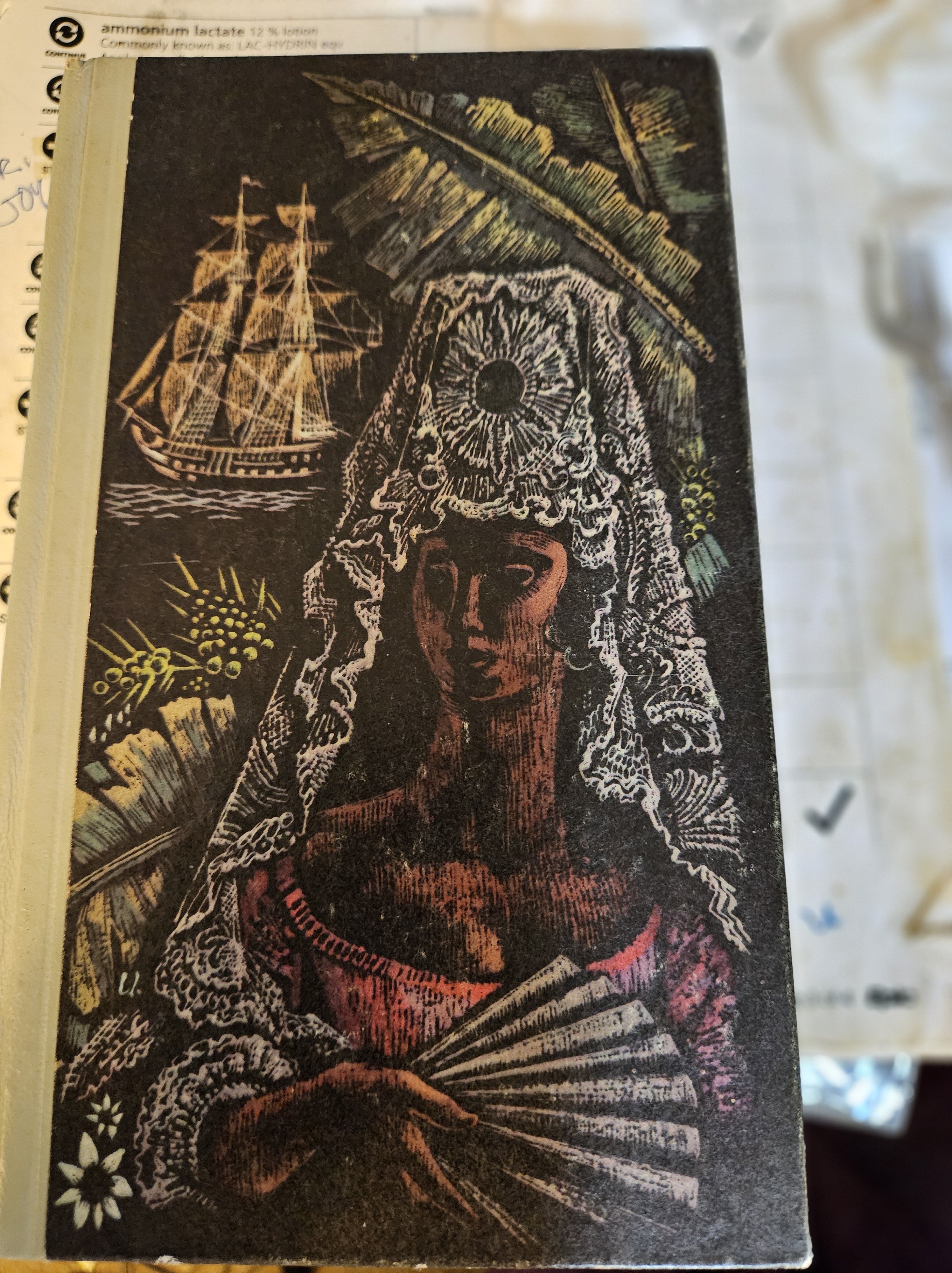
I bought this book at the Scotland County Library in Laurinburg, North Carolina for $1. I had seen it when I had visited the library previously (several months ago). Not really sure of why I bought it.
 Bill Gibson, II