
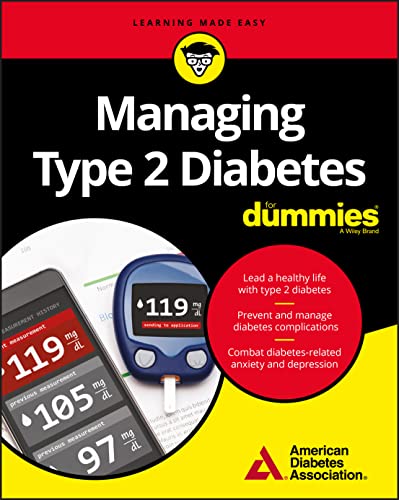
I saw this book title and image online at the Asheboro Main Library yesterday (09/02/25) and when I asked about it, the desk clerk said it was available but at the branch library in Liberty, North Carolina. *I was familiar with the town of Liberty having been there at various times in the past. Rev. Rick Bell & his wife Linda had lived there. Rick was the pastor of First Baptist Church, Liberty. *After lunch at No. 1 China Buffet, I looked up how far it would be if I drove up to Liberty. I think it was only about 18 miles, and then on the way, after getting gas, I saw that I would turn off of Hwy. 64 at Ramseur, on Hwy 49, to go to Liberty. This was great because I think it was only about 9 miles from Ramseur, which was on my way back home anyway. Surprisingly, as I was coming into Liberty, I looked to my right and there was the First Baptist Church that Rick had pastored. And then a little farther, on the right also was the Main Library (maybe the only one in town).
I went in the library carrying a copy of “Magic Foods for Better Blood Sugar” thinking that I would offer the book for the library, if they wanted it, and also asking about the “Managing Type 2 Diabetes for Dummies” book to see if they had it. There was a tall man at the front desk and he said they would accept the book donation and then he went to look for the Dummies book and found it quickly. I took it and said I would like to read it in the library and he said something like, “Well, you can read all you want up until 7 pm,” which I took to mean that that was the library’s closing time.
There were four chairs, one with a rotating desk top, two facing two and with colorful cushions. I chose the chair with the desktop and sat for a read. Having a book specifically written for “type 2” diabetics was refreshing. It probably took me about two hours to read through it, skipping the section for “women” and “teens,” but there was a lot of info that would be useful for a new type 2 diabetic. They even had a brief section for men & ED.
This book covers what diabetes is, and how the body has failed both in producing insulin and in recognizing when insulin is available (insulin resistance). Is it the pancreas that handles the production of insulin? And it’s glucose, the simplest form of sugar, that is carried by the blood to the cells that need it for energy to do things. If the body isn’t working right, the glucose gets to the cell, but the cell doesn’t recognize that it is there and the glucose begins to build up into the blood. And that is where the body problems begin to manifest themselves. Nerve ends are damaged, eye sight affected, and if untreated more serious problems like the need to remove body limbs and blindness occur.
The book goes on to explain about various food types, carbohydrates (carbs), proteins, fats and non-starchy vegetables. That all are necessary, but the carbs cause spikes in blood sugar so eating those requires strict monitoring as to the types and amounts (serving sizes).
Oh, perhaps the main statement early in the book was that (and I paraphrase here) ‘you are captain of your own domain.’ When all is said and done, it is the choices YOU make that determines if you successfully control your type 2 diabetes, blood sugar and ultimately your health. You can call others in to help, form a team, so the speak, but it all comes back to you in the end.
Team? I may not recall all those listed but they were: a CDE, a dietitian, a health care specialist (perhaps a doctor, your primary care physician) and your pharmacist.
Being reminded of the CDE, I then recalled that when first diagnosed with type 2 back in January of 2012 (I think it was 2012, but perhaps 2011.) that I was supposed to attend a session with someone knowledgeable about diabetes, and although I signed up for a session, the session was cancelled and I never rescheduled one. I’m not so sure that it might not still be useful although I have lived 13 years since, and have gotten much better about the things I eat, having lost about 10 lbs. during the last year and dropped about 25 points in my resting blood sugar level.
*As an aside, I had asked my doctor if I could get a CGM (continuous blood glucose monitor) after my last medical checkup. Later she said that my insurance company had refused, and just yesterday I was looking through some old mail and opened and read the Humana explanation for their refusal. I think it was based on not meeting at least one of two criteria: I think one requirement was having experienced a “low blood sugar” event and I don’t recall the other. Might have been a blood glucose level or A1C above a certain amount. I won’t fight it, but I wanted to see how certain foods affected my blood sugar “on the fly.”
In reading this book, it dawned on me that even with my successes, I’m still what they might call a “borderline” diabetic. I’m thinking that an A1C below 7, just below, was great, but no. I think they were saying that even a 6.4 is right on the border, and a resting blood sugar level of above 100, even if just slightly, isn’t that great or normal. I should be trying to hit a goal of maybe 90 on a regular basis. **And, that number I would think was very low for me having only hit near it about two or three times in a whole year.
TERMINOLOGY:
- CDE, which stands for Certified Diabetes Educator.
- This credential is given to health professionals (nurses, dietitians, pharmacists, etc.) who specialize in educating and supporting people with diabetes. In 2020, the title shifted to CDCES (Certified Diabetes Care and Education Specialist), but many people still use “CDE” as the shorthand.
The following chart was not in this book (or I didn’t copy it from this book, but had my AI create it for me).
📊 A1c ↔ Average Blood Glucose Chart
(0.1% increments from 5.0 to 8.5)
| A1c (%) | Avg Glucose (mg/dL) |
|---|---|
| 5.0 | 97 |
| 5.1 | 100 |
| 5.2 | 103 |
| 5.3 | 106 |
| 5.4 | 109 |
| 5.5 | 112 |
| 5.6 | 114 |
| 5.7 | 117 |
| 5.8 | 120 |
| 5.9 | 123 |
| 6.0 | 126 |
| 6.1 | 129 |
| 6.2 | 132 |
| 6.3 | 135 |
| 6.4 | 138 |
| 6.5 | 140 |
| 6.6 | 143 |
| 6.7 | 146 |
| 6.8 | 149 |
| 6.9 | 152 |
| 7.0 | 154 |
| 7.1 | 157 |
| 7.2 | 160 |
| 7.3 | 163 |
| 7.4 | 166 |
| 7.5 | 169 |
| 7.6 | 171 |
| 7.7 | 174 |
| 7.8 | 177 |
| 7.9 | 180 |
| 8.0 | 183 |
| 8.1 | 186 |
| 8.2 | 189 |
| 8.3 | 191 |
| 8.4 | 194 |
| 8.5 | 197 |
🔍 Context (important for how you read this)
- Each 0.1% A1c ≈ ~3 mg/dL average glucose
- CGM users with high time-in-range (like your 97%) often see:
- Lab A1c slightly lower than this table predicts
- This chart reflects population averages, not variability or spike shape
For reference:
- Your ~133 mg/dL average → ~6.2–6.3%
- With your glucose profile, a lab result closer to 6.1–6.2% would not be surprising
 Bill Gibson, II