
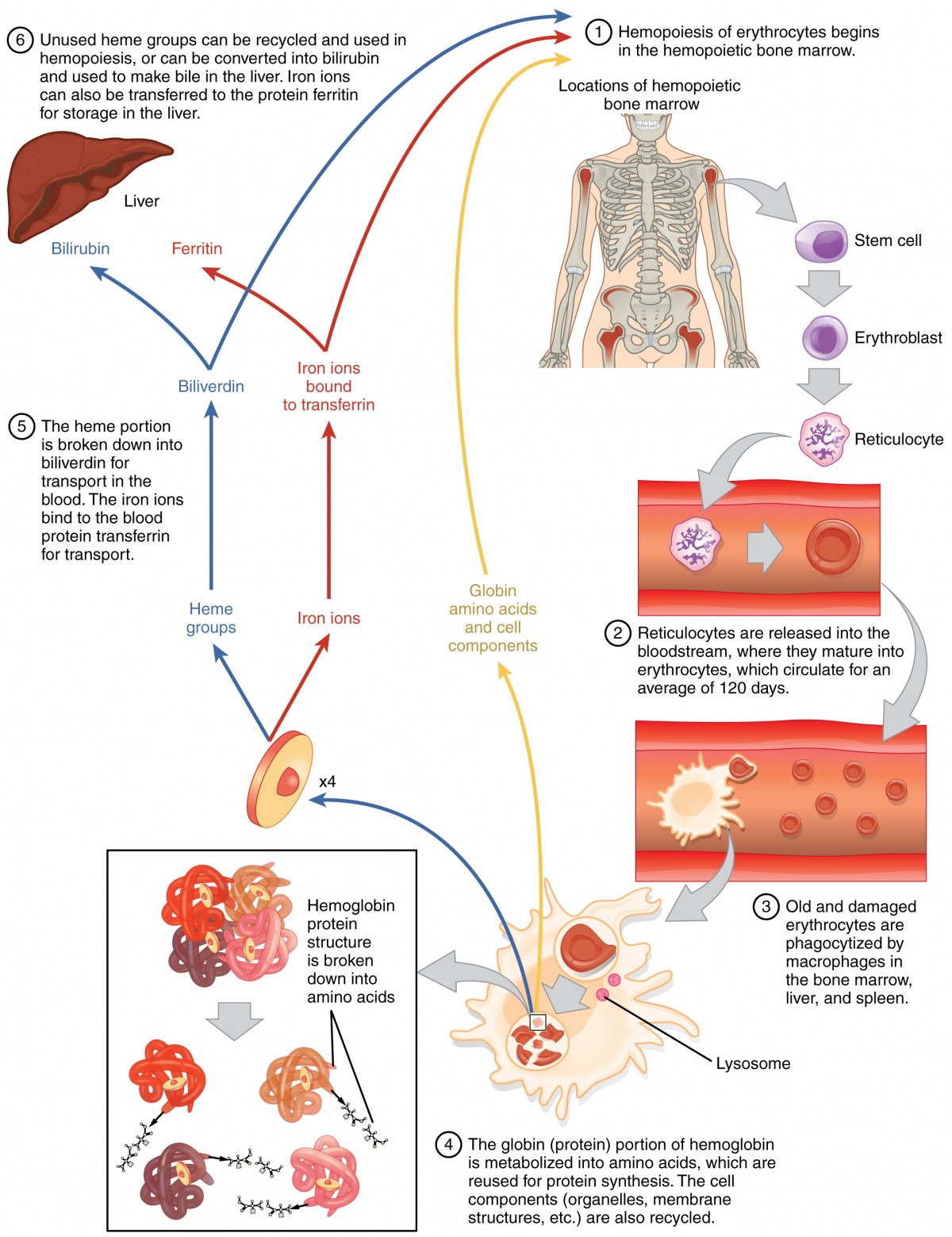
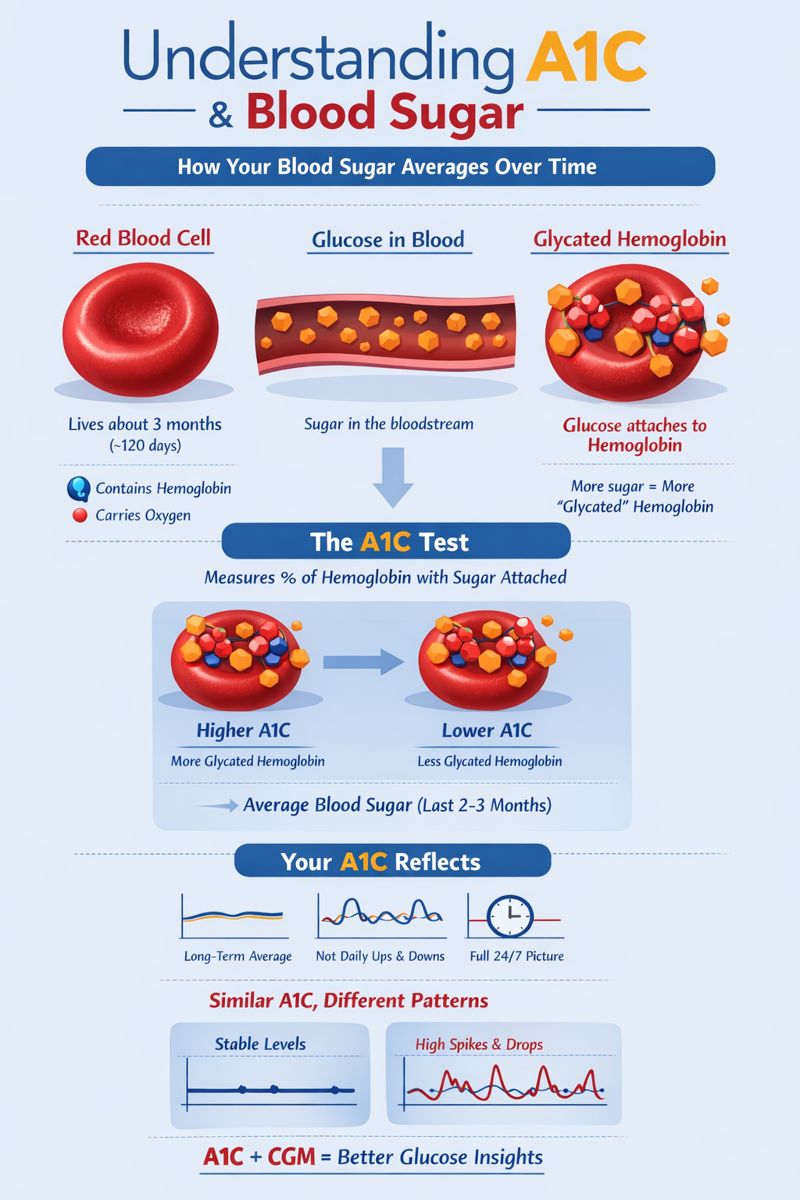
Hemoglobin A1c (often written as A1c) is a laboratory measure that reflects a person’s average blood glucose level over time, rather than at a single moment. It works by measuring the percentage of hemoglobin—the oxygen-carrying protein in red blood cells—that has glucose attached to it. Because red blood cells typically live for about 120 days, the A1c test provides a weighted average of blood sugar exposure over roughly the previous two to three months, with more recent weeks contributing slightly more to the result. This makes A1c especially useful for understanding long-term glucose control and overall metabolic trends.
Clinicians use A1c both to diagnose diabetes and to monitor how well blood sugar is being managed over time. Unlike finger-stick glucose tests, A1c does not require fasting and is not affected by day-to-day fluctuations, illness, or stress at the moment the blood is drawn. However, it is an average and does not show how much glucose rises and falls during the day; two people with the same A1c can have very different glucose patterns. For that reason, A1c is increasingly interpreted alongside continuous glucose monitoring (CGM) data—such as time-in-range and variability—to provide a more complete picture of glucose health.
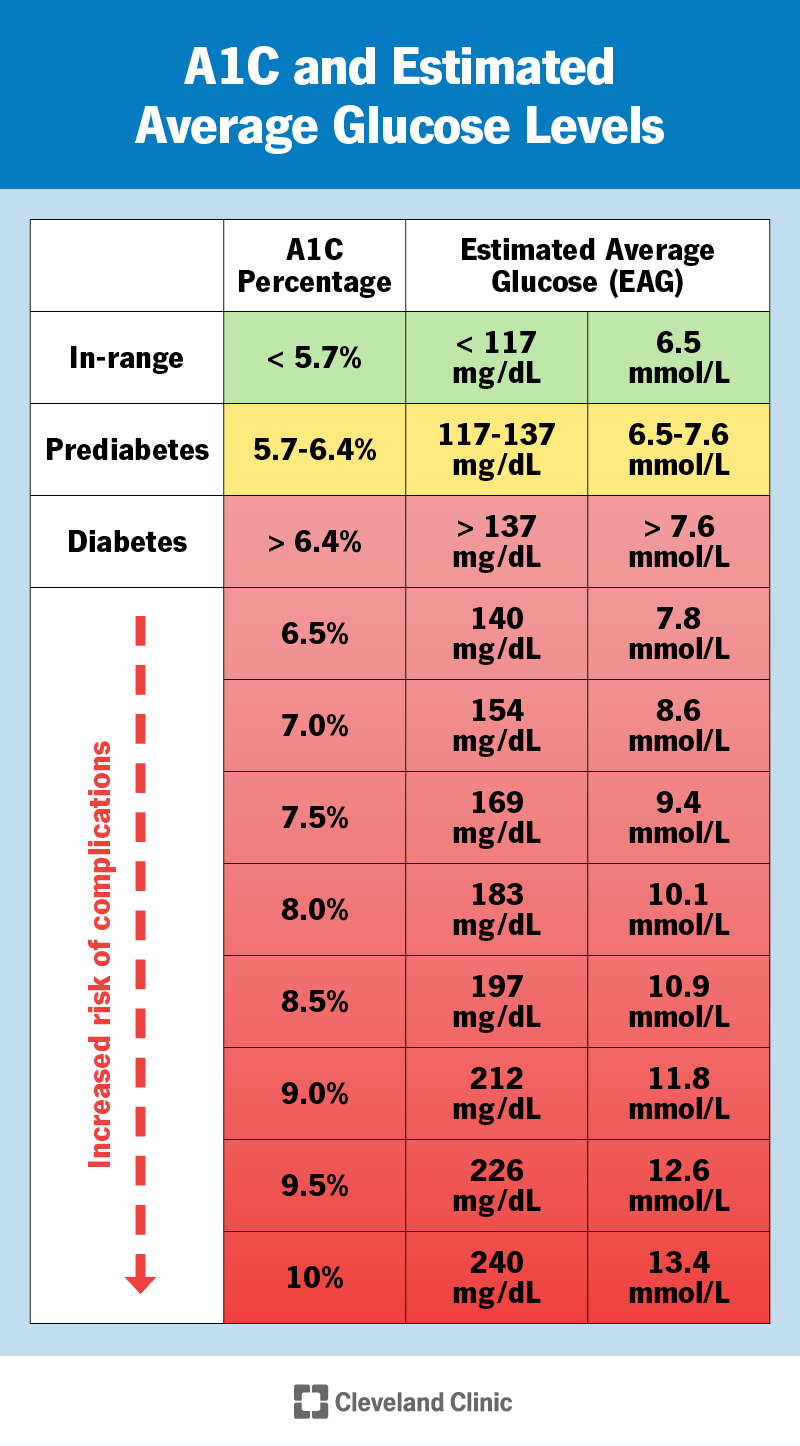
📊 A1c ↔ Average Blood Glucose Chart
(0.1% increments from 5.0 to 8.5)
| A1c (%) | Avg Glucose (mg/dL) |
|---|---|
| 5.0 | 97 |
| 5.1 | 100 |
| 5.2 | 103 |
| 5.3 | 106 |
| 5.4 | 109 |
| 5.5 | 112 |
| 5.6 | 114 |
| 5.7 | 117 |
| 5.8 | 120 |
| 5.9 | 123 |
| 6.0 | 126 |
| 6.1 | 129 |
| 6.2 | 132 |
| 6.3 | 135 |
| 6.4 | 138 |
| 6.5 | 140 |
| 6.6 | 143 |
| 6.7 | 146 |
| 6.8 | 149 |
| 6.9 | 152 |
| 7.0 | 154 |
| 7.1 | 157 |
| 7.2 | 160 |
| 7.3 | 163 |
| 7.4 | 166 |
| 7.5 | 169 |
| 7.6 | 171 |
| 7.7 | 174 |
| 7.8 | 177 |
| 7.9 | 180 |
| 8.0 | 183 |
| 8.1 | 186 |
| 8.2 | 189 |
| 8.3 | 191 |
| 8.4 | 194 |
| 8.5 | 197 |
🔍 Context (important for how you read this)
- Each 0.1% A1c ≈ ~3 mg/dL average glucose
- CGM users with high time-in-range (like your 97%) often see:
- Lab A1c slightly lower than this table predicts
- This chart reflects population averages, not variability or spike shape
For reference:
- Your ~133 mg/dL average → ~6.2–6.3%
- With your glucose profile, a lab result closer to 6.1–6.2% would not be surprising
 Bill Gibson, II