
Author: bgibson135
I am a retired Web Developer, Blackboard & Canvas Administrator at Fayetteville State University, which is a constituent institution of the University of North Carolina.


Protected: Merry Christmas & Happy New Year!
A Recipe
On the stove top, in a frying pan.
- Sausage
- Red bell pepper
- Onion
- Tomatillo, quartered
- Italian parsley, chopped
- Olive oil
- Lime juice
- Brown sugar
- Salt & pepper
- Coriander, ground
- Celery seeds
I have used Italian sausage for this, but I think Kielbasa would be better, or even some southern smoked sausage. The tomatillo provides a tartness along with the lime juice.
—
I added a baked sweet potato with this and added some cinnamon, sugar, & ground coriander.
Quick South Carolina Trip – Part 2
Reflection off of Richland County Public Library in Columbia, SC.
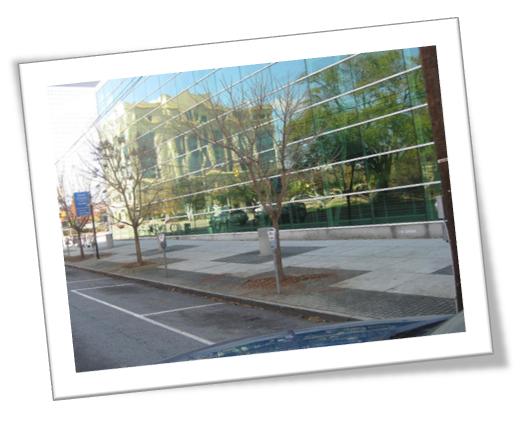
It’s early December, and there is still some color in the trees.
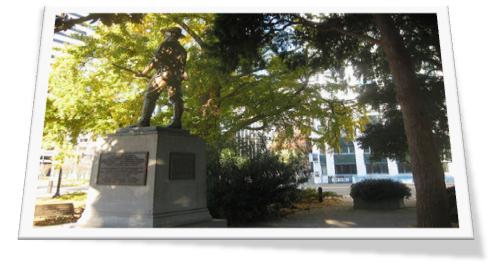
In front of the South Carolina State Capitol Building.
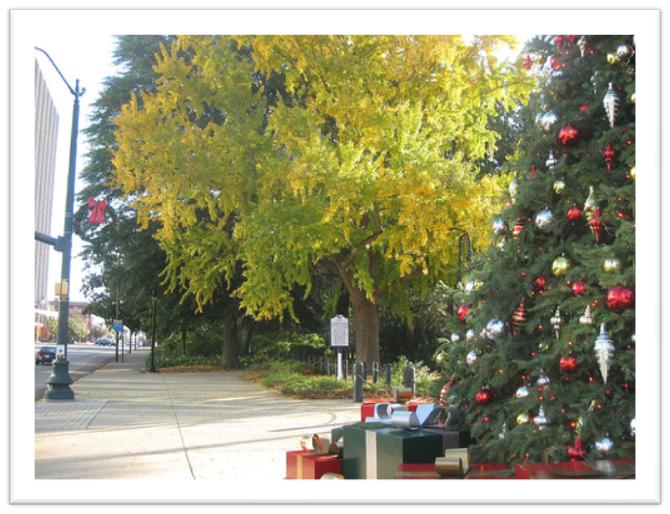
I guess the State Christmas tree and I know the State Capitol.
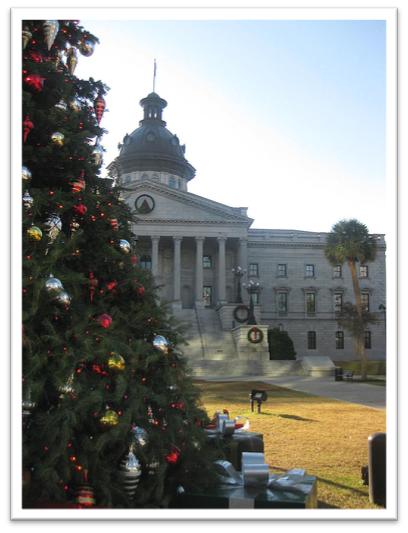
You should see the size of the dog I had to chase away from here.
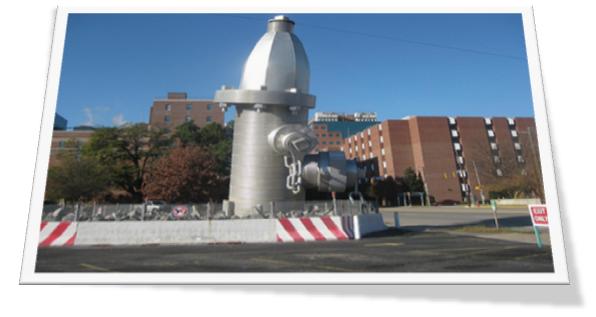
This Chinese restaurant has been in Camden, SC for several years. The quality is not quite what it was. Looks like they cycle through a new batch of young Chinese families.
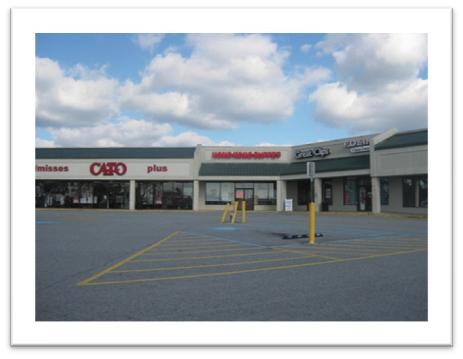
Now this is a Christmassy looking building in Cheraw, SC.
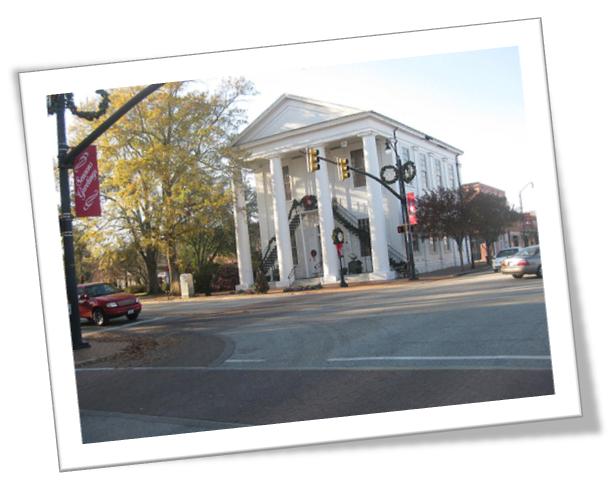
A Quick Trip About South Carolina – Part I
I took a quick jaunt about South Carolina on Saturday and Sunday, past. Here are some of the places I visited.
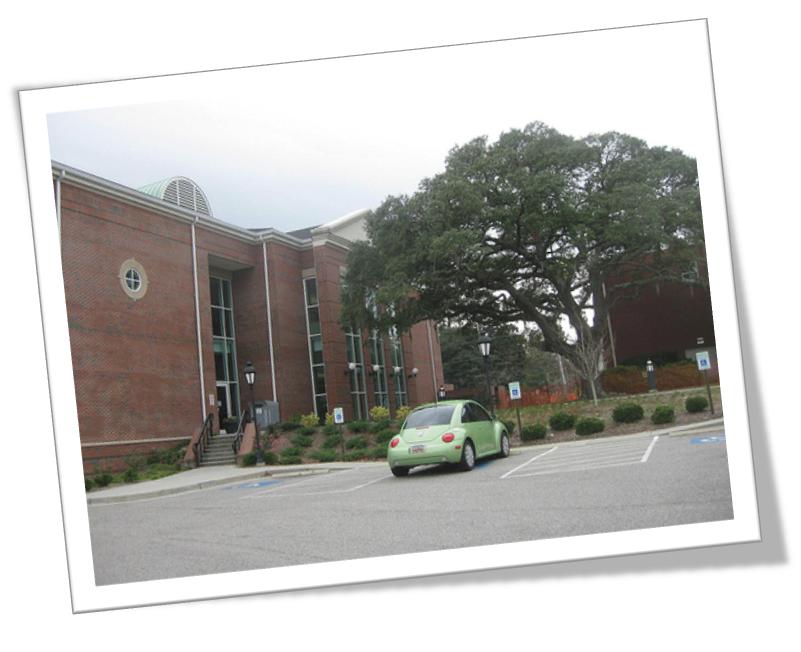
I visited Conway, SC and stopped by their new library to pore over some old newspapers on microfilm. Sadly, there were no items for which I was looking.
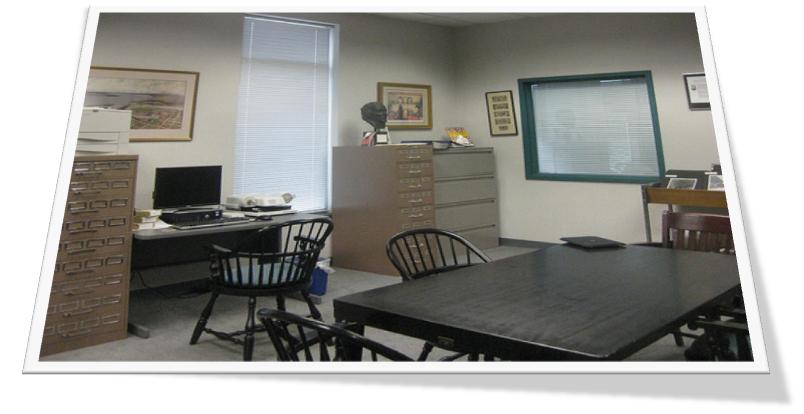
I then took a short ride down to Georgetown, SC and stopped in their library to look through some more old newspapers on microfilm. I didn’t find what I was looking for there either. I had a good talk with one of their computer techs. He was probably bored with my steamboat ramblings. They have a very nice computer Game Room. Apparently, they wrote and received a grant and they use the room as incentive to attract young readers.
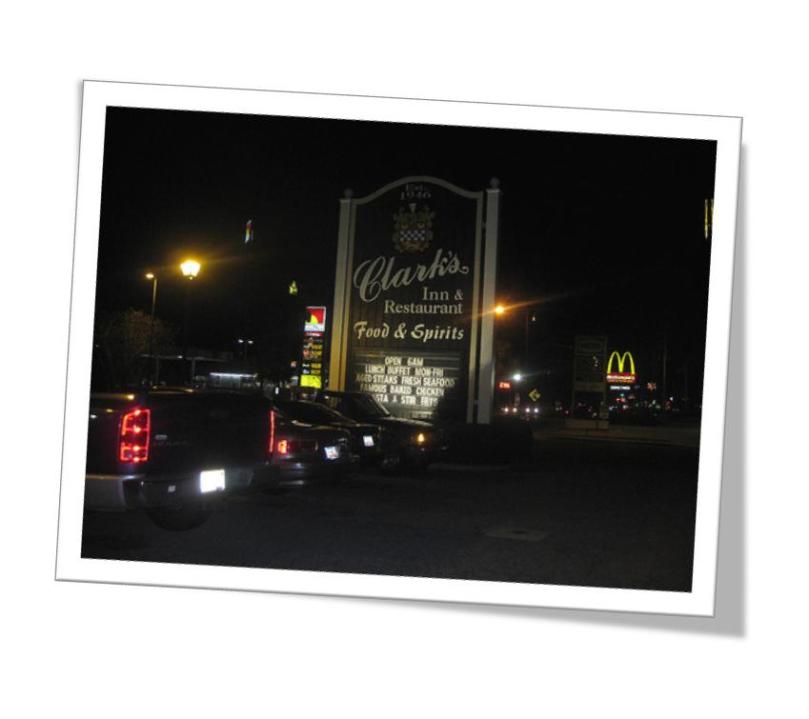
I had confused the drive times between Georgetown and Santee and Santee and Columbia. It takes about 1.5 hours to go between Georgetown and Santee and only about an hour between Santee and Columbia. Not having a map, I thought I had taken a wrong turn, but eventually realized that I had made the trip in as good a time as possible.
What had made me angry was that I had begun to imagine that Clark’s Restaurant in Santee, SC was going to be filled with customers and I would have to eat somewhere else. It had not dawned on me that this was a Saturday night… and that it was also the Holiday season and there might be groups or Christmas parties scheduled. But still I continued on and reaching the restaurant around 6 pm, I was surprised to find that the parking area was not already full.
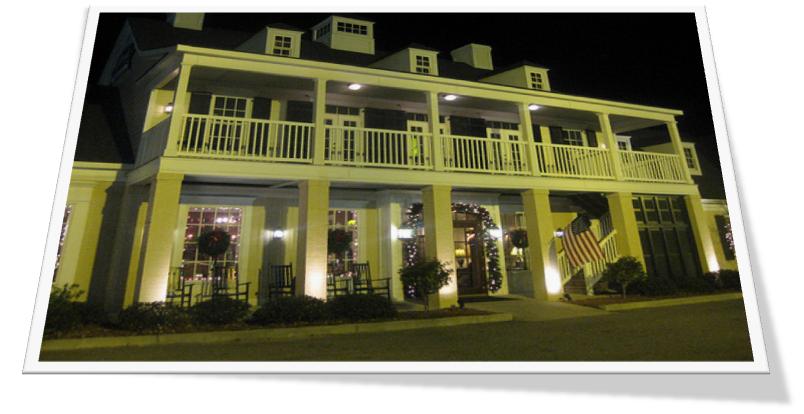 I went inside and noted that there did not appear to be a full crowd in the main dining area, nor in the side room(s). I asked the hostess if a reservation was needed and she said, “No, not tonight. Please follow me.”
There were diners at about five tables. I looked at the menu. There was a separate sheet with about three dinner specials, but I noticed that they had fried chicken livers and that struck me as something that I liked and could not “get at home” usually. I also ordered a baked sweet potato, their “dirty” rice (which I know is good), and a house salad with Ranch dressing.
The tea was sweet and good. The house salad was especially good for two reasons: There were a couple of slices of a small, highly flavored tomato (this was surprising being that they are “out of season”), and that there were several slices of sweet (not dill) pickles.
The sweet potato was delicious, having a sugary cinnamon topping. I also asked for some sour cream. The waitress commented that she liked sour cream with this also. The dirty rice was good.
The chicken livers were fat and lightly breaded and delicious.
The main dining room reminds me of a New England Inn, although I don’t think I have actually ever visited one. I’ve seen many on television, and have watched “A White Christmas” repeatedly throughout the years. The walls are a rich red, with paintings and golden light sconces and fixtures about. They play “elevator” music with recognizable tunes which is very comforting.
I had brought my iPad in with me and took a quick look at the Carolina vs Kentucky basketball score and then put the device up.
The waitress later asked me if this was an iPad, which triggered a long conversation with me suggesting that a smartphone would be a more productive device, but that the iPad was an excellent flat screen TV. Her daughter was a senior and would be going off somewhere the next year.
I finished my meal and headed for Columbia. The Google Maps directions do not show a map when I am using my iPad, and not knowing the starting point in Santee, I decided to head south of I95. I knew that eventually, I would come to I26 which traverses diagonally across South Carolina from Charleston up through Columbia and on to Asheville, NC, etc. But quickly I saw the Hwy. 301 ramp and decided that even if it was longer, I would eventually cross paths with I26. *This ended up being the quickest way, and probably very close to the Google Maps directions I had been given. Even with a minor slowdown, once I was on I26 (due to an accident, I think), the trip from Santee to Columbia was just about an hour.
Tarragon Pea Soup

Tarragon Pea Soup
- 1 t butter
- ½ onion, finely chopped
- 1 leek, finely chopped
- ¾ t white rice
- 2 cups frozen peas
- 2 cups water
- 2 cups chicken broth
- ¼ t dried Tarragon
- Salt & pepper to taste
Leeks are grown in a sandy soil and the grit can, and often does, become embedded in the folds of the leek. It is a good idea to wash them thoroughly, pulling the folds apart and rinsing to remove any grit.
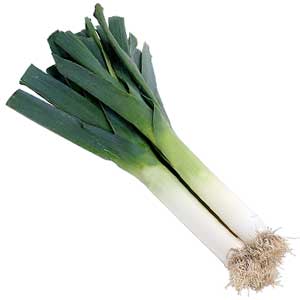
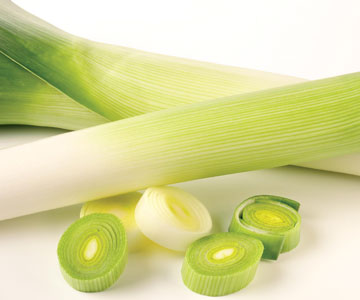
If the leek still has its root, you should chop them off. If the dark green leaf is brown at the top, or appears extremely tough, you can remove some of this.
Procedure
- Melt butter in 2 quart sauce pan over medium-low heat
- Add onion, leek & rice (cover & cook while stirring occasionally)
- Add peas, water, chicken broth & tarragon to boil (season with a little salt & pepper, cover and simmer gently for about 35 minutes)
- Let soup cool & then blend to a smooth consistency
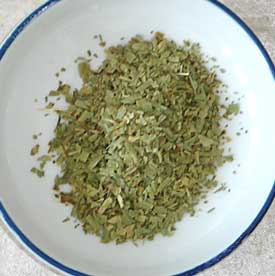
Serve with crumbled hard cook egg & croutons.
[ 05/08/22 ]: I just made this again a few days ago, and it is still a good soup, warm or cold.
Excellent Recipe from Williams-Sonoma
I went over to Russ and Deborah’s today. We were going to cook something, but didn’t know what. Russ was supposed to work, but had muscle spasms in his lower back, which kept him home from work. At some point, Deborah asked what we were going to cook and I happened to be looking at the Williams-Sonoma magazine and there was a picture of “Balsamic Quick-Braised Pork Chops.” I pointed to it and said, “This looks good.” We went on the Williams-Sonoma web site and found the recipe below;
This is a delicious recipe. If you think that you are including bacon, onion and balsamic vinegar with brown sugar, you’ve got to guess that it’s going to be good.
Deborah also fixed green peas, creamy mashed potatoes and some stewed apples.
This is a meal worth repeating over and over again.
—
Balsamic Quick-Braised Pork Chops
Seasoned with balsamic vinegar, bacon and fresh thyme, these pork chops come together quickly. They’re perfect for a weeknight supper with the family or a dinner for guests.
Ingredients:
- 4 bone-in pork chops, each 1 inch thick
- Kosher salt and freshly ground pepper, to taste
- 1 Tbs. olive oil
- 4 bacon slices, diced
- 1 red onion, sliced 1/4 inch thick
- 1 garlic clove, minced
- 2 Tbs. firmly packed dark brown sugar
- 1/2 cup balsamic vinegar
- 1 tsp. minced fresh thyme
- 1 cup low-sodium chicken broth
- 2 tsp. chicken demi-glace
- Fresh rosemary leaves for garnish
Directions:
Season the pork chops with salt and pepper. In a large sauté pan over medium-high heat, warm the olive oil. Add the pork chops and sear, turning once, until golden brown, 3 to 4 minutes per side. Transfer to a plate.
In the same pan over medium heat, cook the bacon until crispy, 5 to 8 minutes. Using a slotted spoon, transfer the bacon to a paper towel-lined plate. Pour off all but 1 Tbs. of the fat in the pan.
Reduce the heat to medium-low, add the onion and partially cover the pan. Cook, stirring occasionally, until the onion is caramelized and tender, 10 to 12 minutes. Add the garlic and cook for 30 seconds. Stir in the brown sugar, vinegar, thyme and bacon. Increase the heat to medium and cook until the liquid is thickened and reduced by half, 10 to 12 minutes. Stir in the broth and demi-glace and bring the sauce to a simmer.
Return the pork chops to the pan. Cook, uncovered, coating the chops with the sauce, for 10 to 12 minutes. Garnish with the rosemary leaves and serve immediately. Serves 4.
Williams-Sonoma Kitchen.
Glen’s Landing
I can see that I’m not in the mood to tell the story of Glen’s Landing today, but I wanted to get something down so that I can come back later and rewrite it coherently. I’ve written about it before, because Glen’s Landing was one of those sanctuaries from the world. When visited, there was nothing that could harm you, except perhaps stepping on an oyster shell.
Glen Matthews ran a “fish” house some years ago. My “Aunt Sis” would take me down there when she wanted to get some fish or other type of seafood. You could tell that they were old, good friends that were comfortable with each other and didn’t have to “put on airs.”
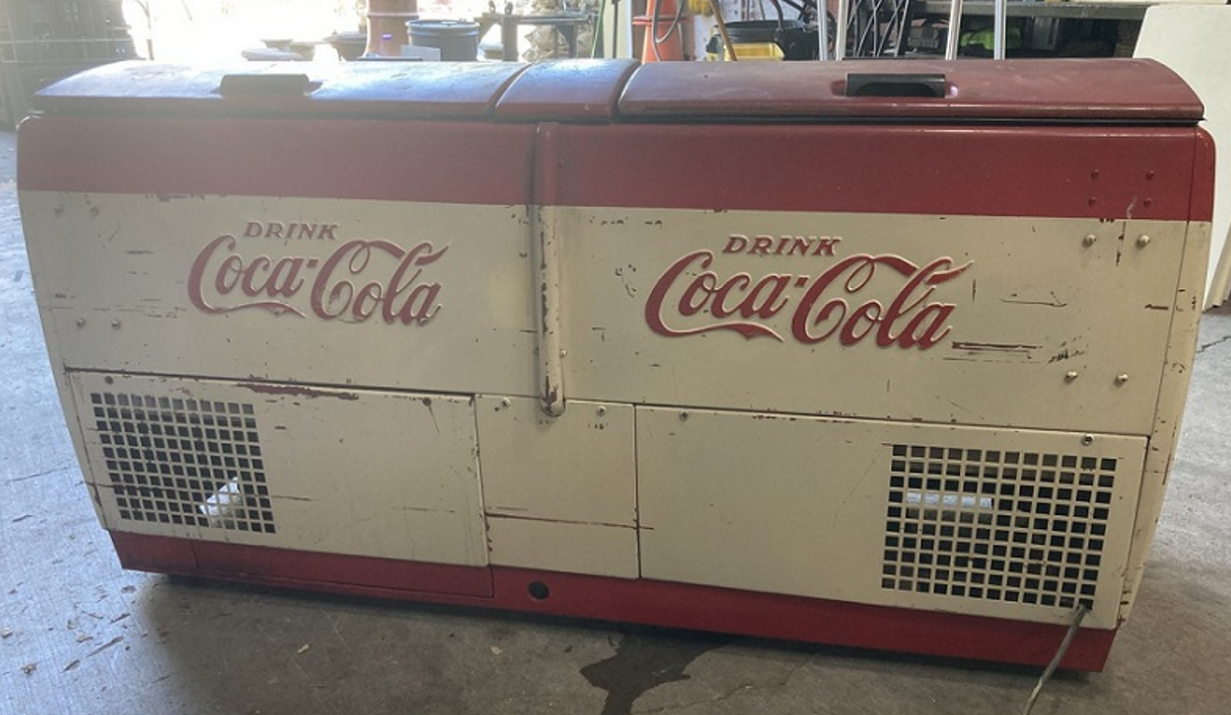
Sis would ask Glen what type of fish he had and he would start telling her and might even go over to one of the coolers filled with layers of ice and fish to scratch through the ice and pull up perhaps a fat flounder, or a couple of spots or maybe even mullets. *There was a Pepsi cooler with assorted drinks pushed down into the ice. I liked getting a “Chocolate Soldier,” which was a watery chocolate drink. There might be a reformed drink cooler set aside to keep fish cool.
I don’t recall exactly where the shrimp, scallops and oysters were, but those were also delicious options.
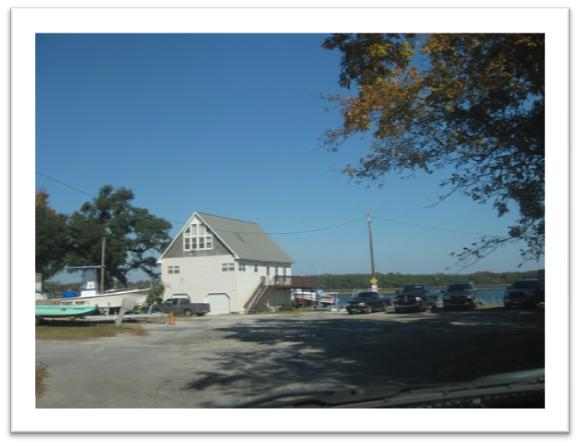
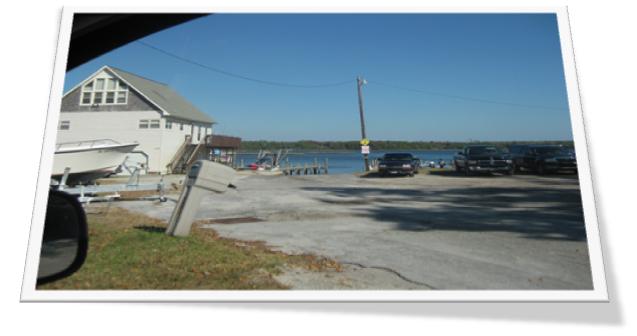
This house had been a private residence for several years. This is my first visit in a long time that leads me to believe that the location may once again be open for fishing business. I see the several boats and trucks parked as some might have been back when Glen ran his fish house and had a ramp for “putting in” to Queens Creek.
I can see that the docks are still located in about the same place as they had been when Glen was alive. But, the large A frame house was not what was there. Glen had a little one story A frame house, with a large barn-type door at the front and a smaller door at the back. The back door opened out onto a covered deck which had several weather grayed picnic tables, and off to one side, a raised trough system for scaling and cleaning fish. Glen would start a spigot of water and then start cleaning a fish. The scales and guts of the fish would wash down the trough and eventually make their way to a gutter which allowed the entrails to plop down into Queens Creek. Not sure that would be allowed today, but since it was all bio-degradable, I don’t see why not.
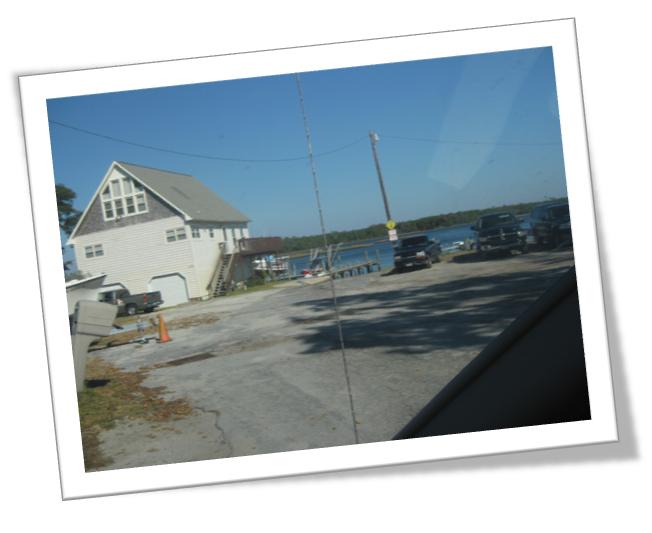
Eels and crabs would congregate at the water’s edge where the “fish guts” became a feast.
Fishermen used Glen’s boat ramp to put their small boats into and remove them from Queens Creek. The Intra-Coastal Waterway was just a short distance from this location. Glen had a gas pump so that the boaters could fill up their little red gas tanks.
There were oyster shells, being bleached by the sun, which formed part of the boat ramp. The ramp then became poured concrete which slipped from view down into the sometimes brownish (rootbeer) creek. *I would often be barefoot during the summer, and in shorts. If it was the start of the summer, just as shoes had come off after the long Winter and school days, and my feet were still tender, I might step across the shells as if walking across something hot. But, after my soles became calloused, walking across the oyster and clam shells was not an obstacle.
E. J.
Reverend E. J. Hines was one of those unique personalities that stood out. I was fortunate to have worked under him, and with Faye Edwards, at the Baptist Association for several years. Those were some of the “best years of my life.”
E. J. needed to talk in order to process his thoughts, and talk he did, for he had many thoughts. But, E. J. had a “good” ear, and a “bad” ear, although I think he hid that well. If you were smart, and wanted to convince him of something, it was wise to stand and deliver to his good ear.
He was a great leader. He was a politician. E. J. drew exceptional people around him. And at times, he directed ordinary people toward tackling extraordinary tasks, and the Southern Baptist churches, the people, of the area reaped the benefits.
E. J. was comfortable in meetings, dressed in coat and tie, but I like the thought of him on an old Farmall tractor, a picture of which he had in his office for many years.
I loved to get him to tell the story of “Uncle ‘Aintney’ (Anthony) and the Snake,” which he did by going into character and using a high pitched, brogue-ish voice.
I’ll miss him. We’ll miss him. But we are all better for having known him.
To use a word that E. J. used quite often, “Everything for E. J. is now copacetic.”
“Uncle Aintney” = Uncle Anthony
The story went that one day E. J. was out in the field. I don’t recall if it was a corn, tobacco, cotton, or other type of field. E. J. came upon a snake, and he called up to the house, “Uncle Aintney, bring the gun. There’s a snake.” So, Uncle Aintney gets the gun and brings it out in the field to E. J., but when he gets there, there are no bullets, and E. J. asks Aintney, “Where are the bullets?” To which Uncle Aintney replied, “Well, you didn’t tell me to bring no bullets.” I guess that says a whole lot about Uncle Aintney.
Say Rabbit for Good Luck.
Say Rabbit
I had forgotten about my mother and how on the first day of the month, she would come into my room, or pass by my bed and tell me to say, “rabbit.” I might be asleep or still groggy as she was telling me to, “Say rabbit. Say rabbit. It’s the first of the month. Say ‘rabbit’ for good luck.”
As I grew older, I would say something else like “cow” or “dog.”
I had not heard anyone mention this until several years ago, Robin Roberts, a black morning TV show anchor was talking about growing up and that her father would tell them to “say rabbit.” She grew up in Louisiana, I think. I also think she said that her father was an Air Force officer.
That was several years ago, but I just saw Robin Roberts on TV this morning and it reminded me of this, so I got online and googled and found that this was a British supersititon that may have appeared in the 1800’s, but the earliest they are aware of is the 1920’s.
 Bill Gibson, II