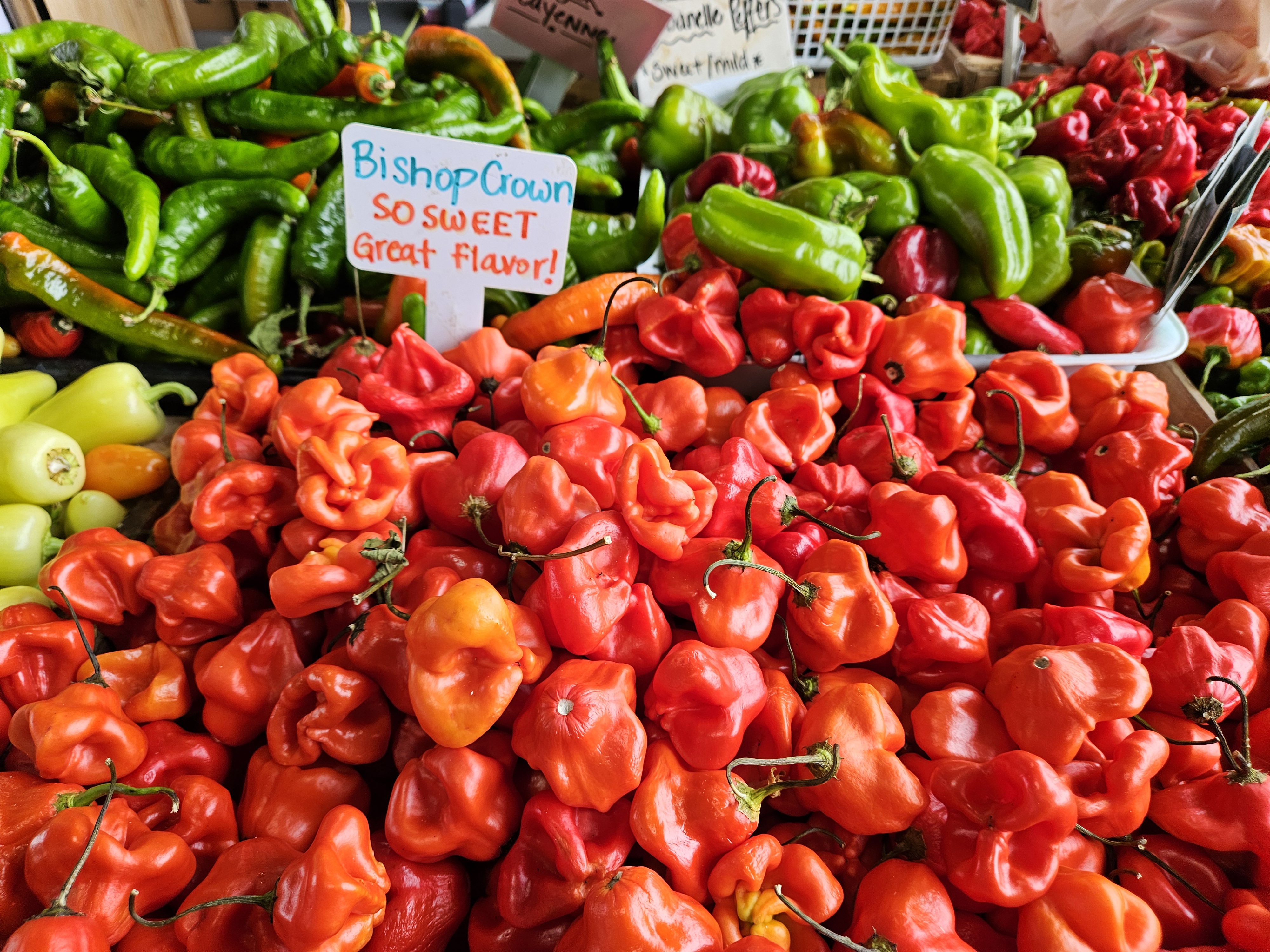
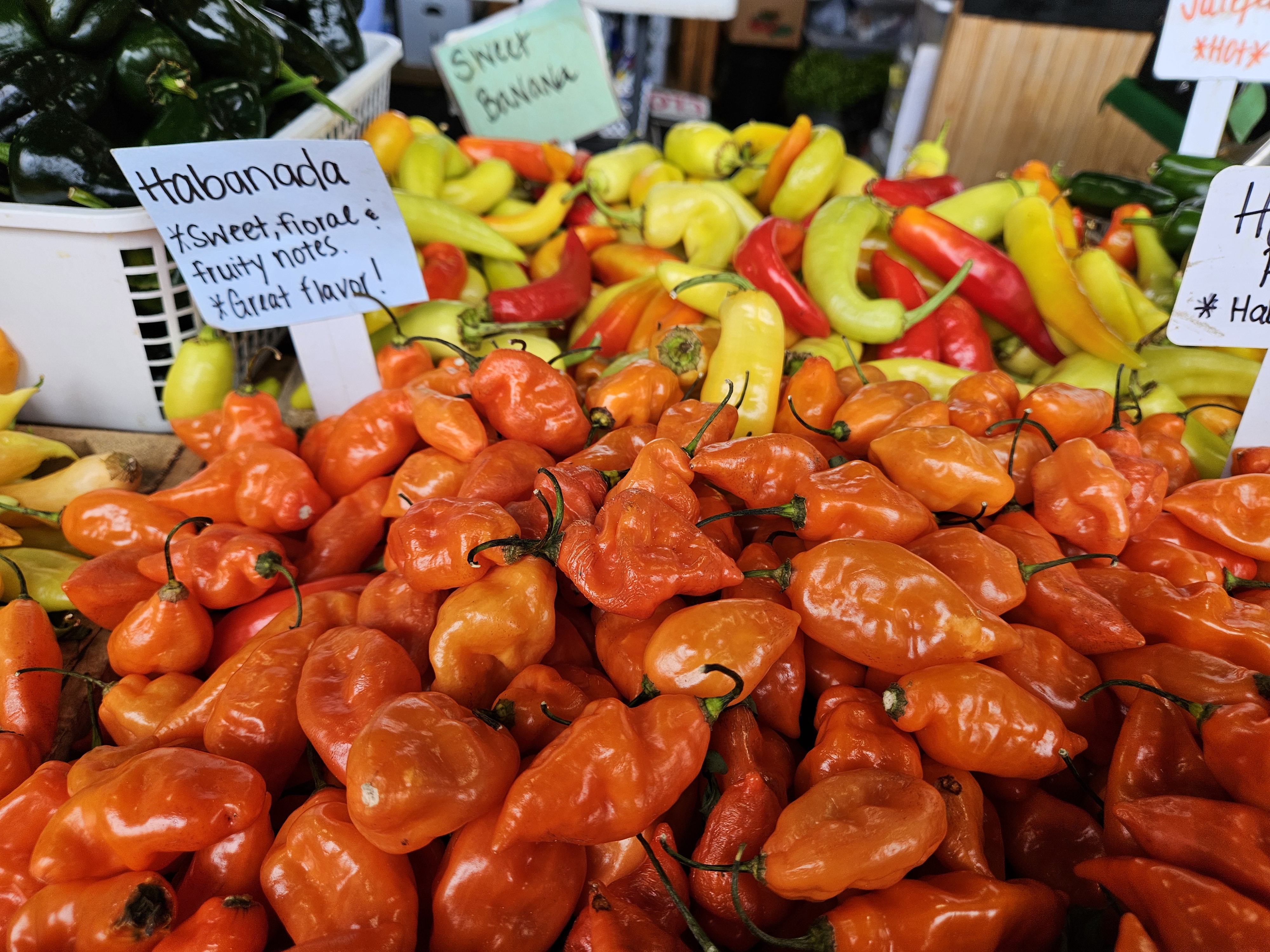
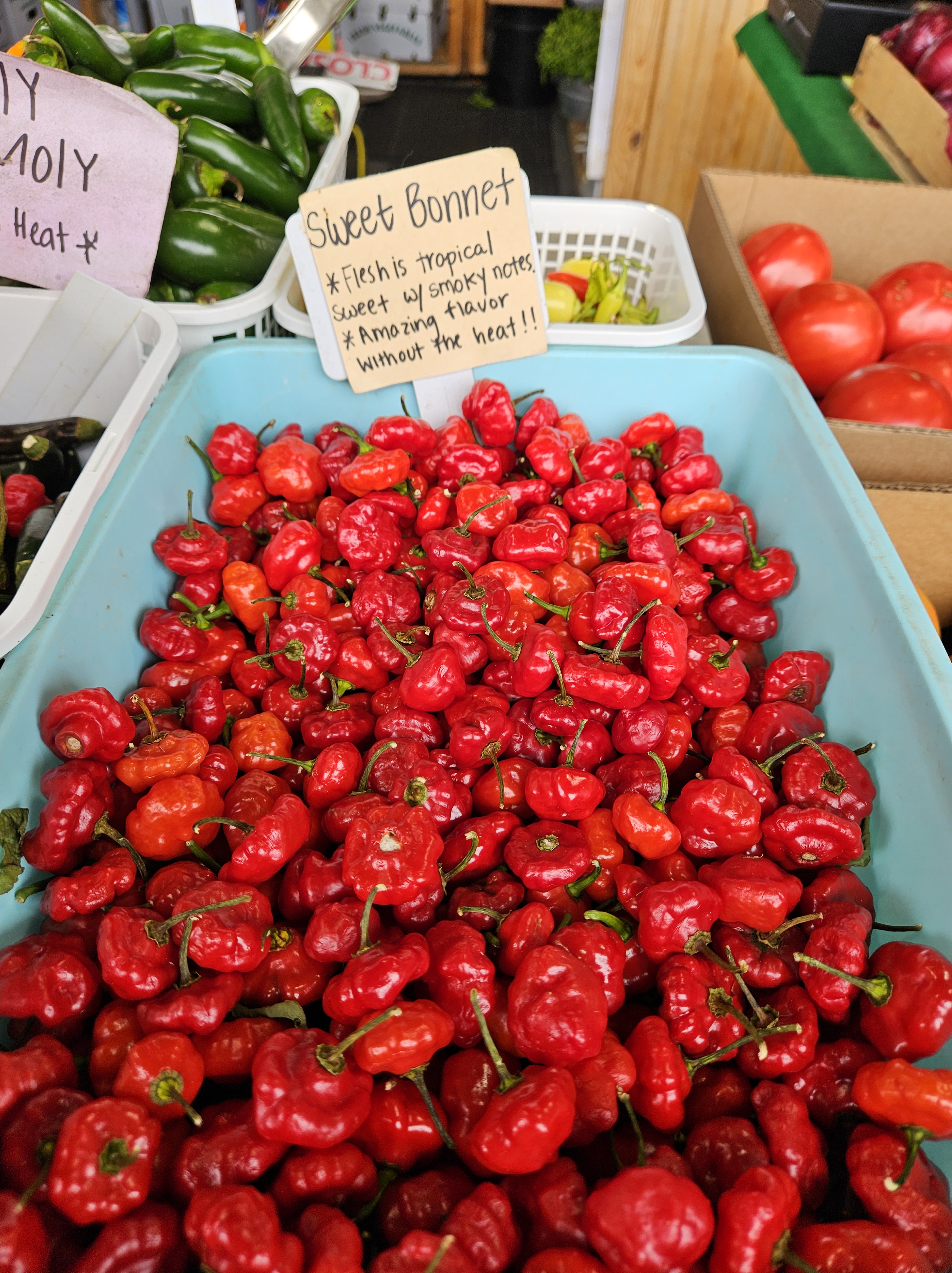
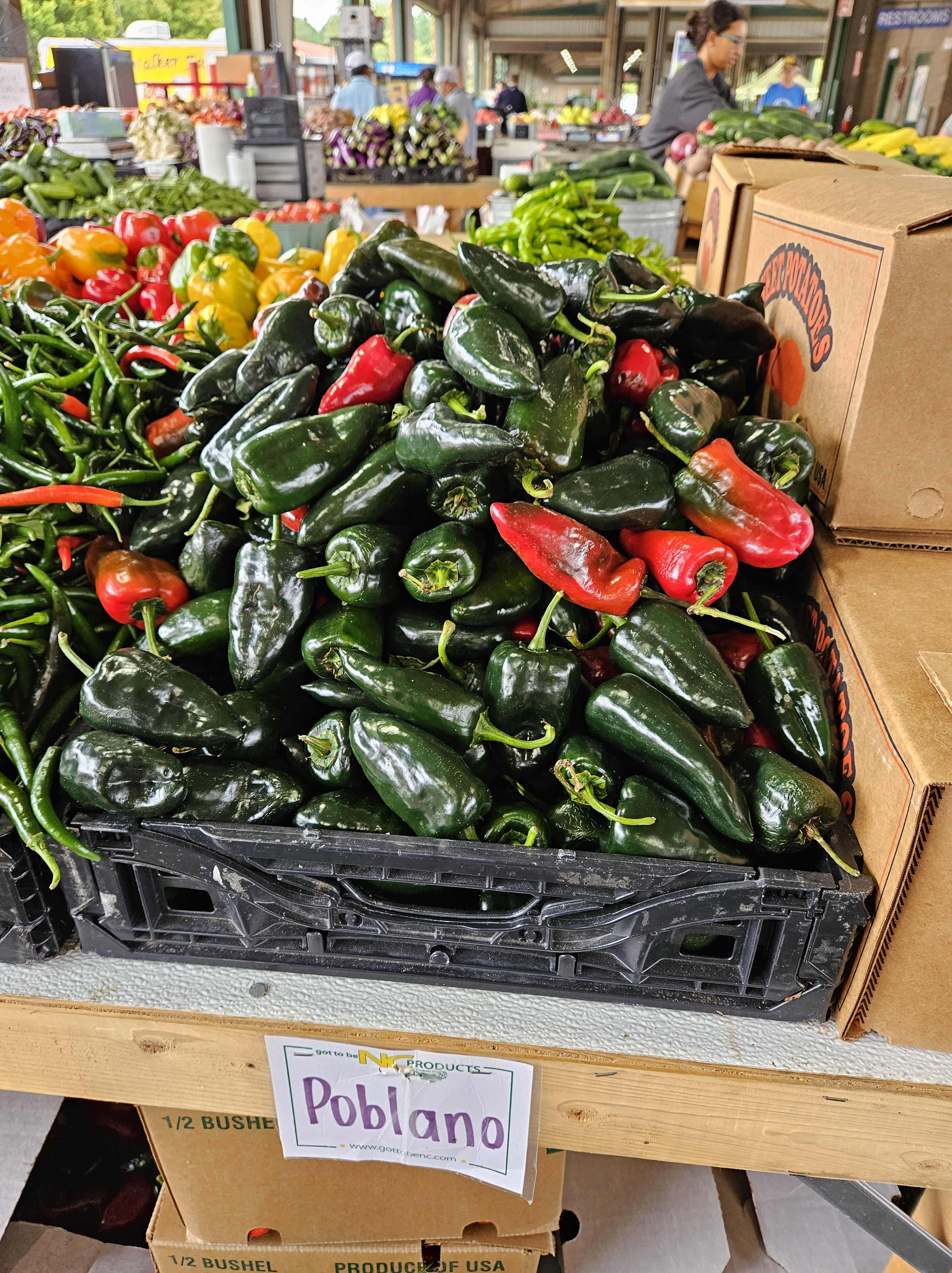
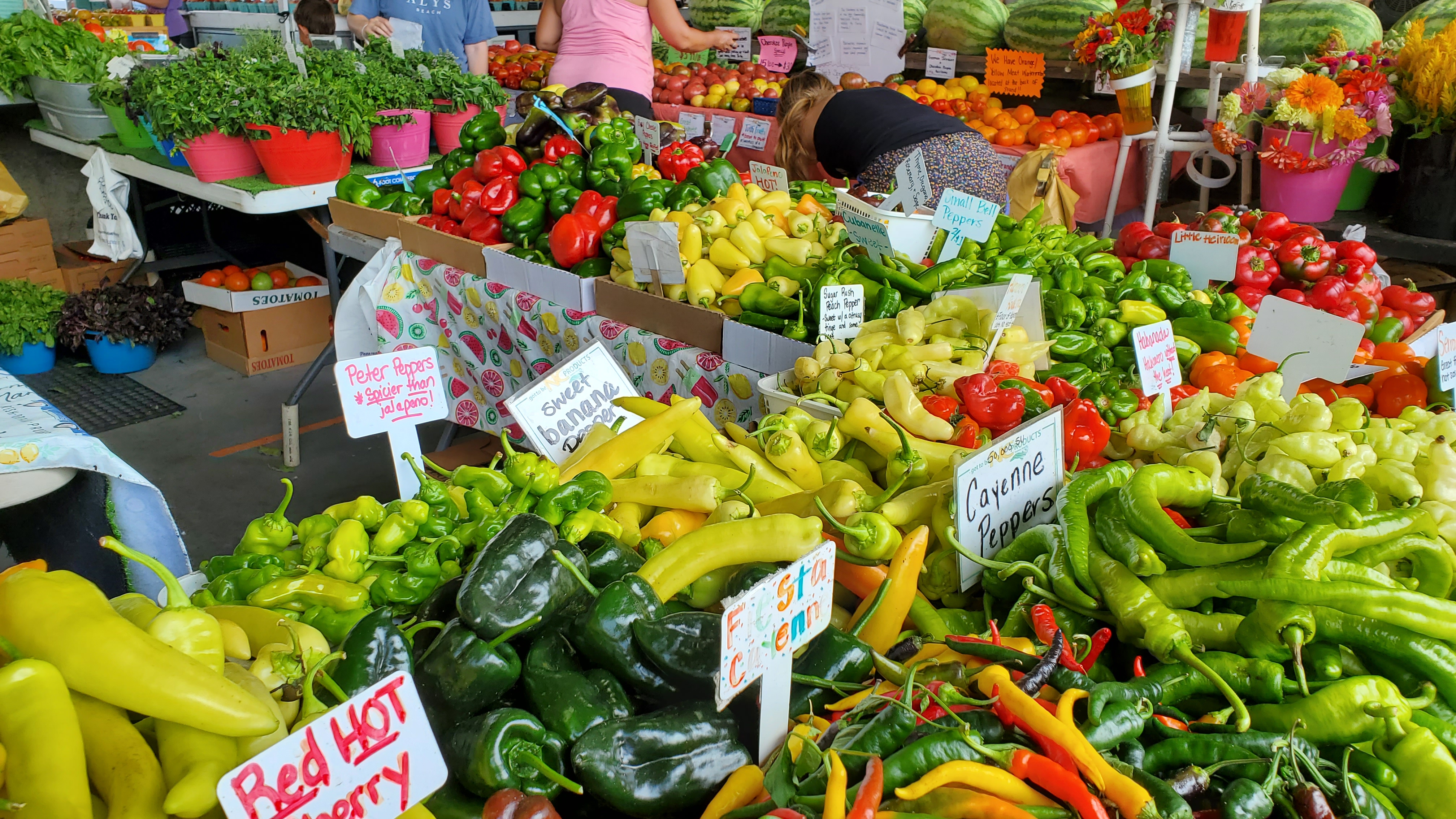
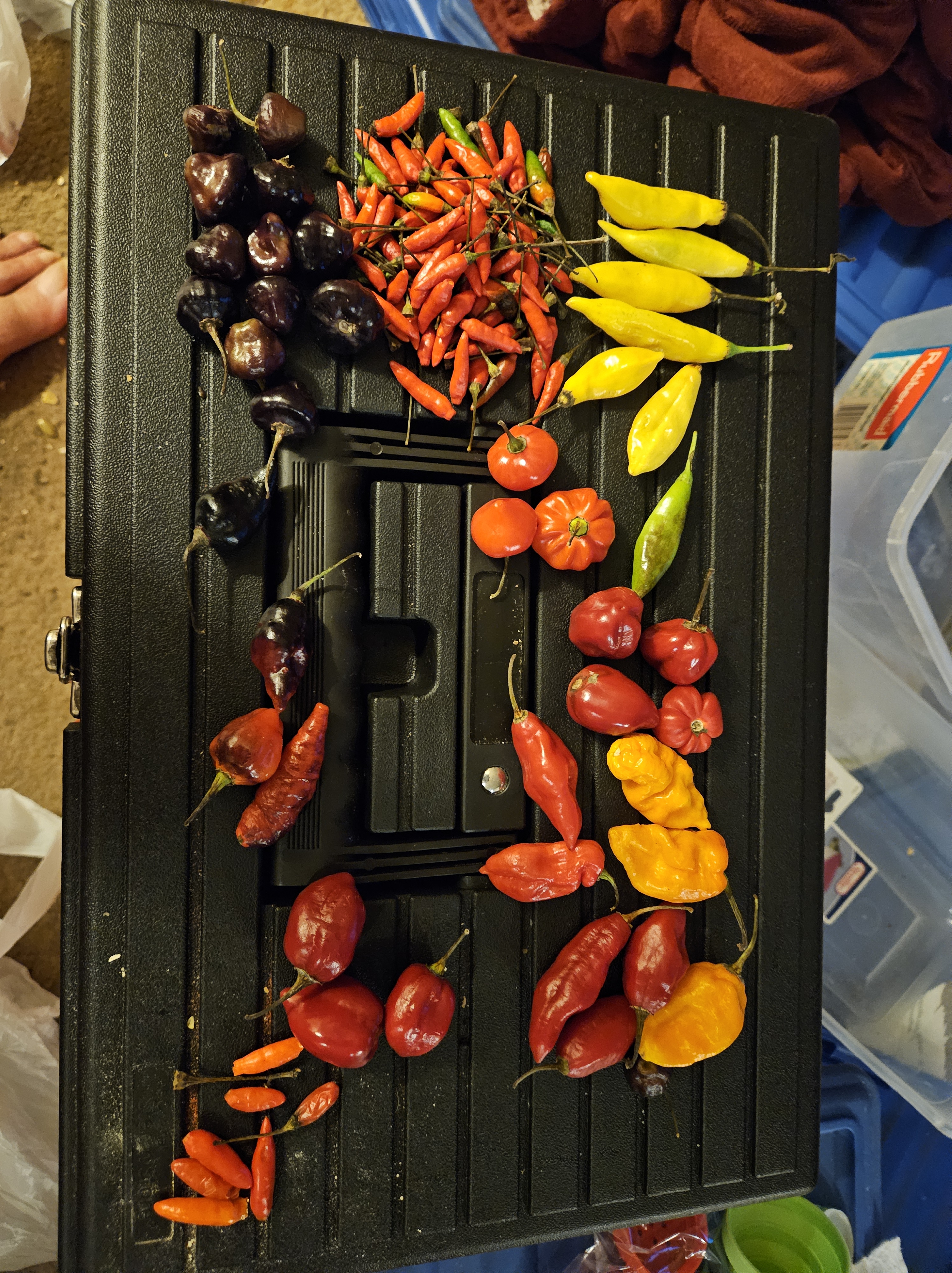
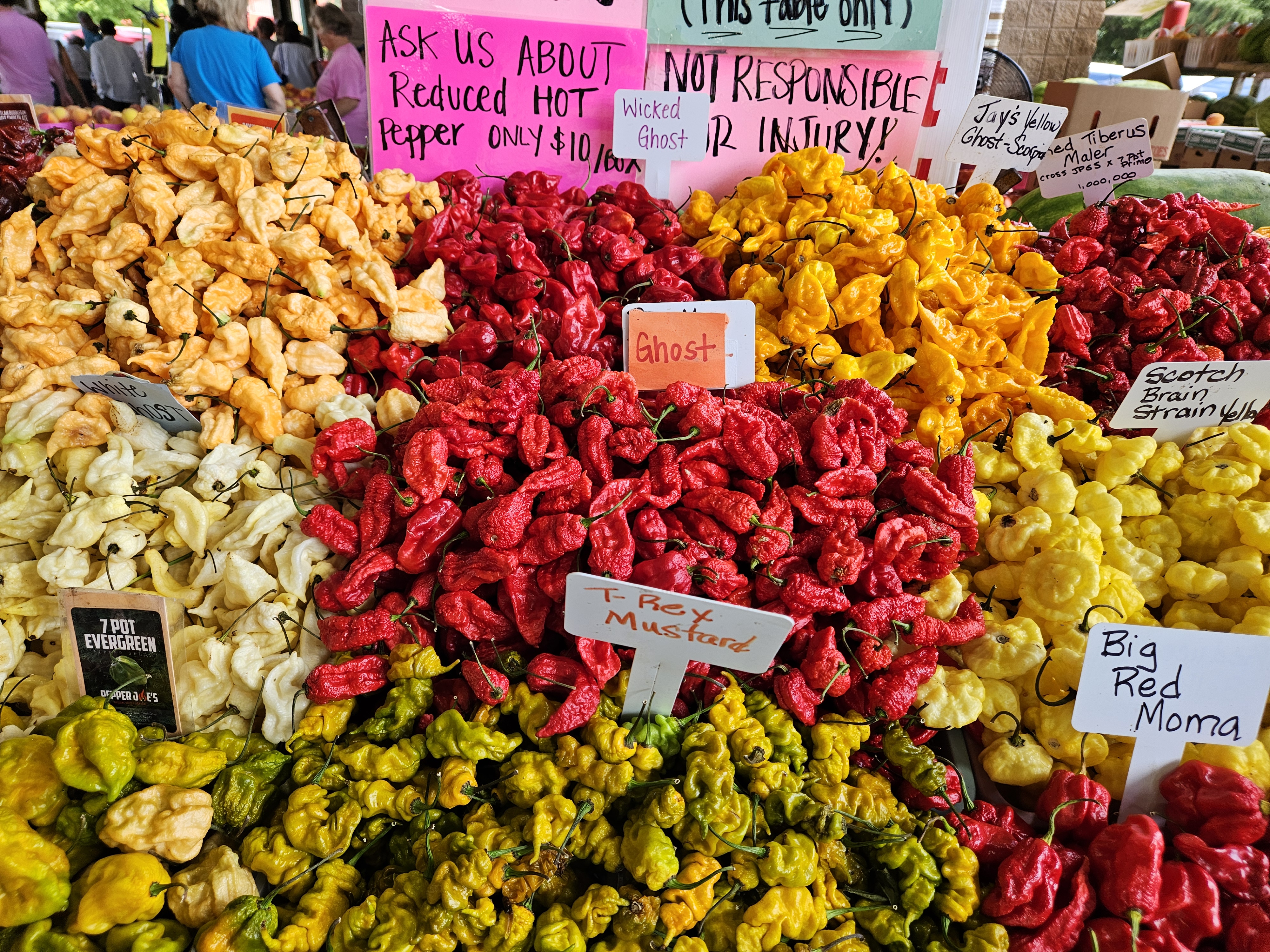
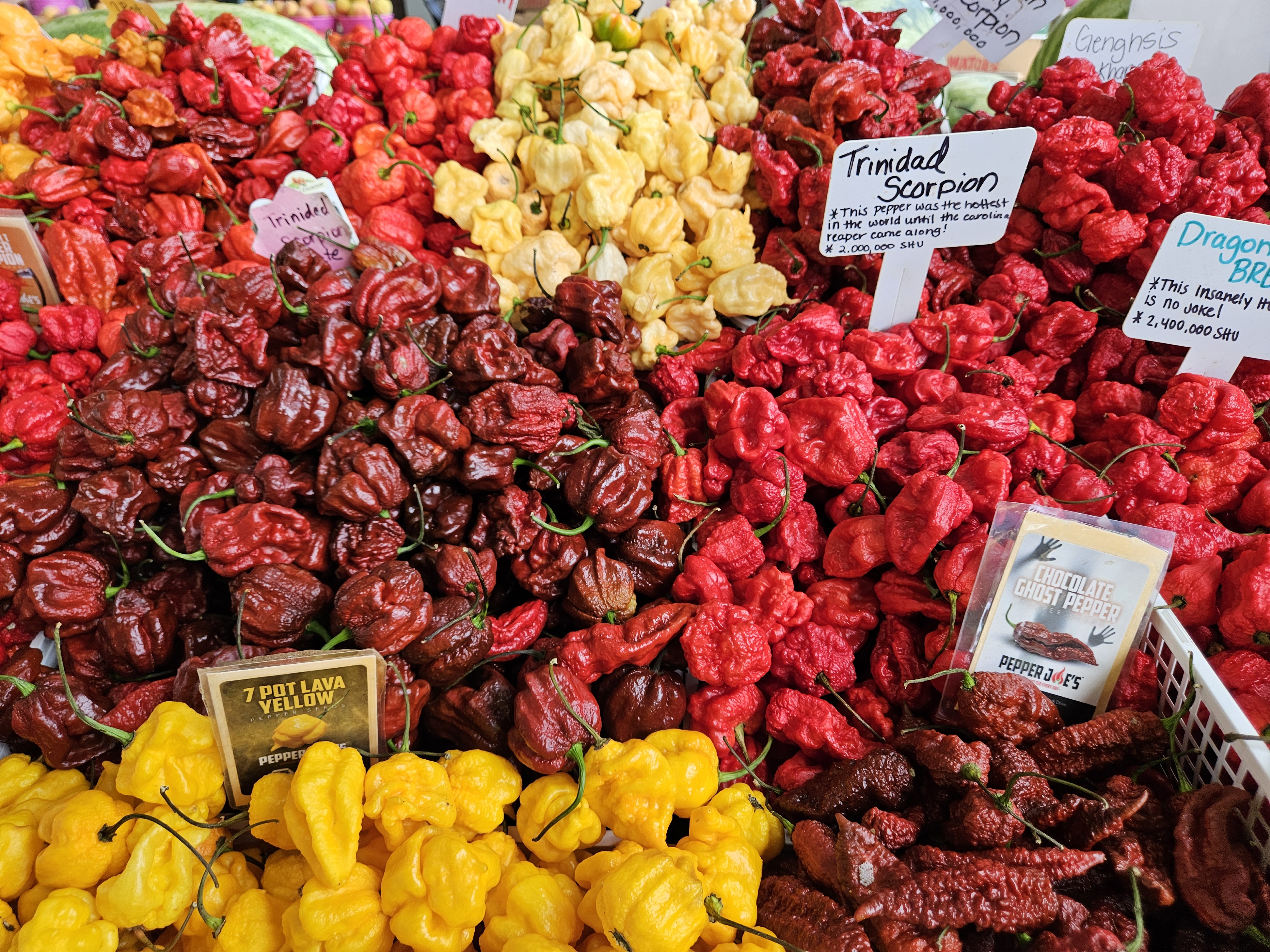
This is getting late in the season, but two vendors, “Ronnie Moore’s” and “Lee’s Produce,” still have many peppers (hot and mild) left.
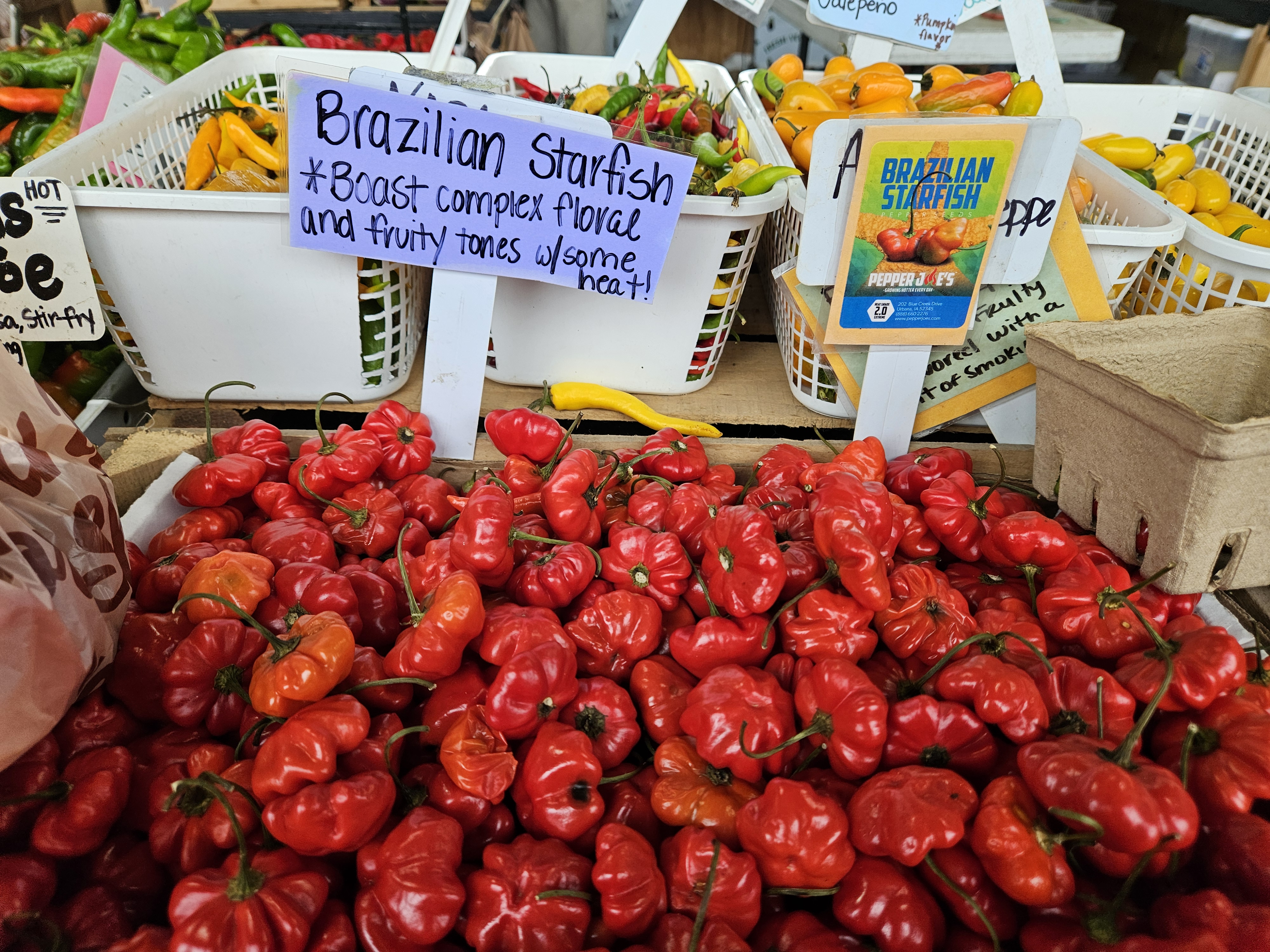
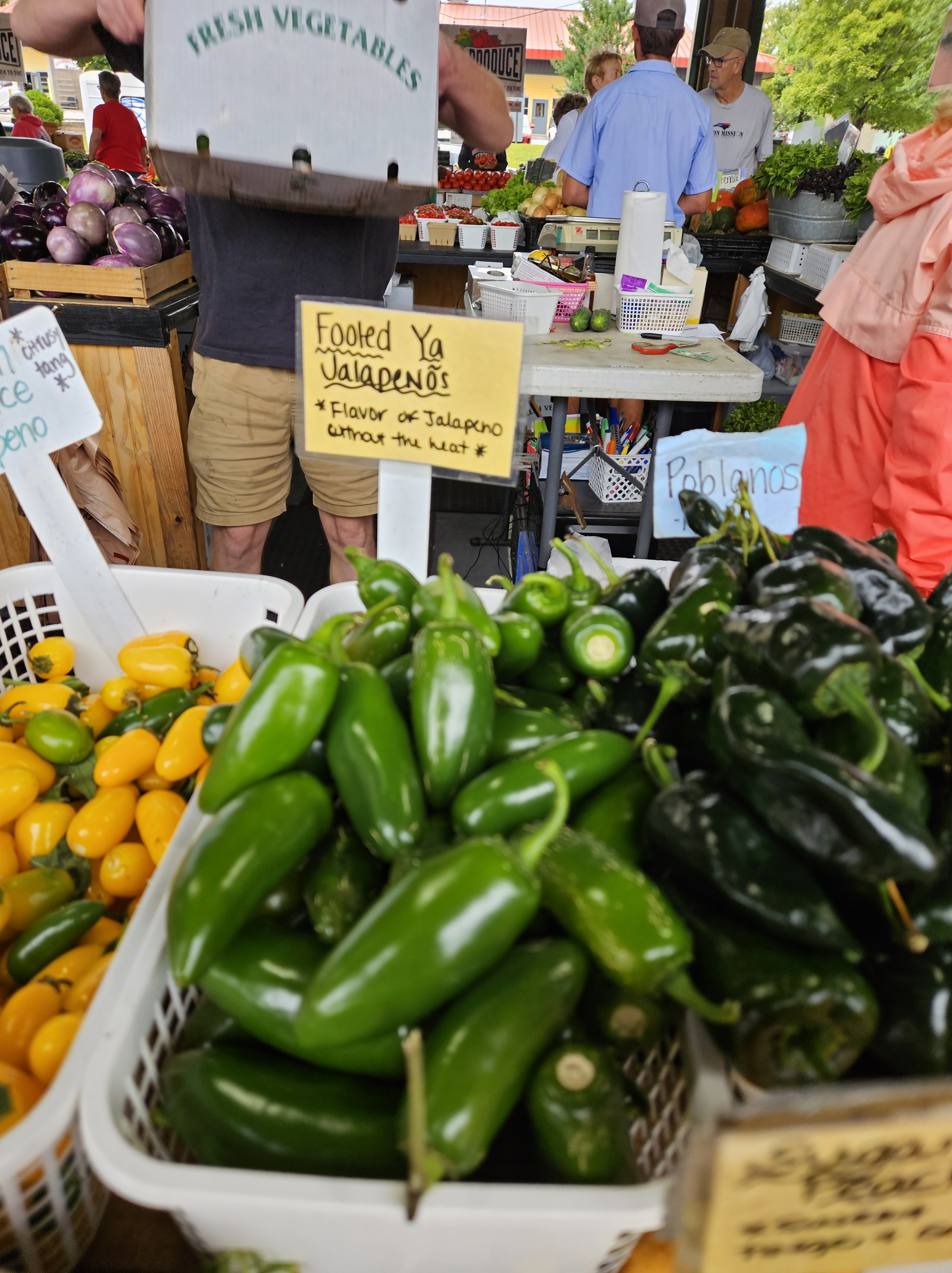
Brazilian Starfish has good flavor.Jalapeno w/ No HeatI bought some of the red Poblanos.
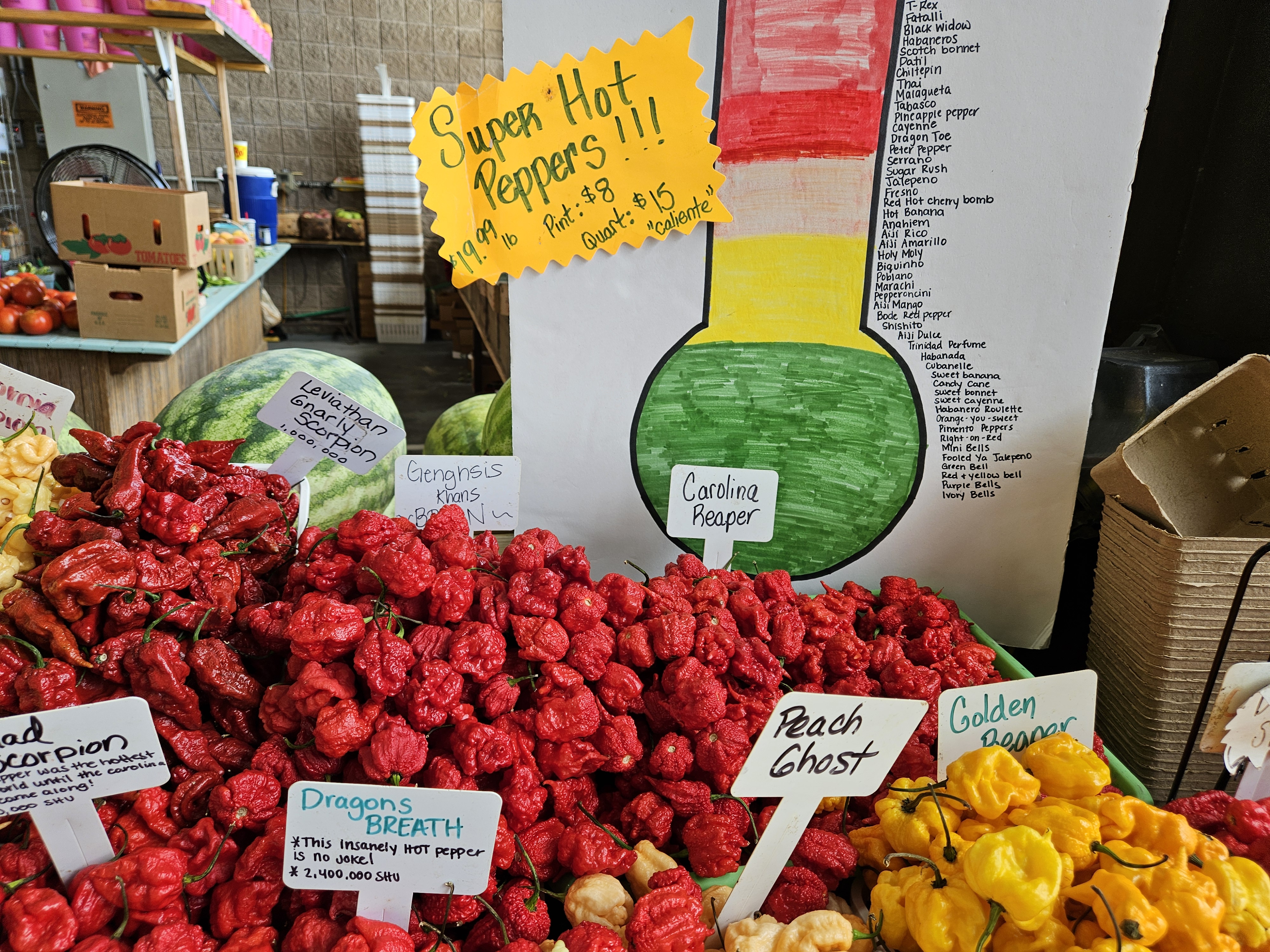
and peppers from another day at the Market:
They even have a colored thermometer listing the order of the least hot pepper to the hottest.
An assortment of hot colorful peppers make a great, cheap gift for those who like hot pepper vinegar on their BBQ, raw oysters, or collard greens. Just get a cheap Mason jar at Dollar Tree, buy a small container of Apple Cider Vinegar and add the peppers.
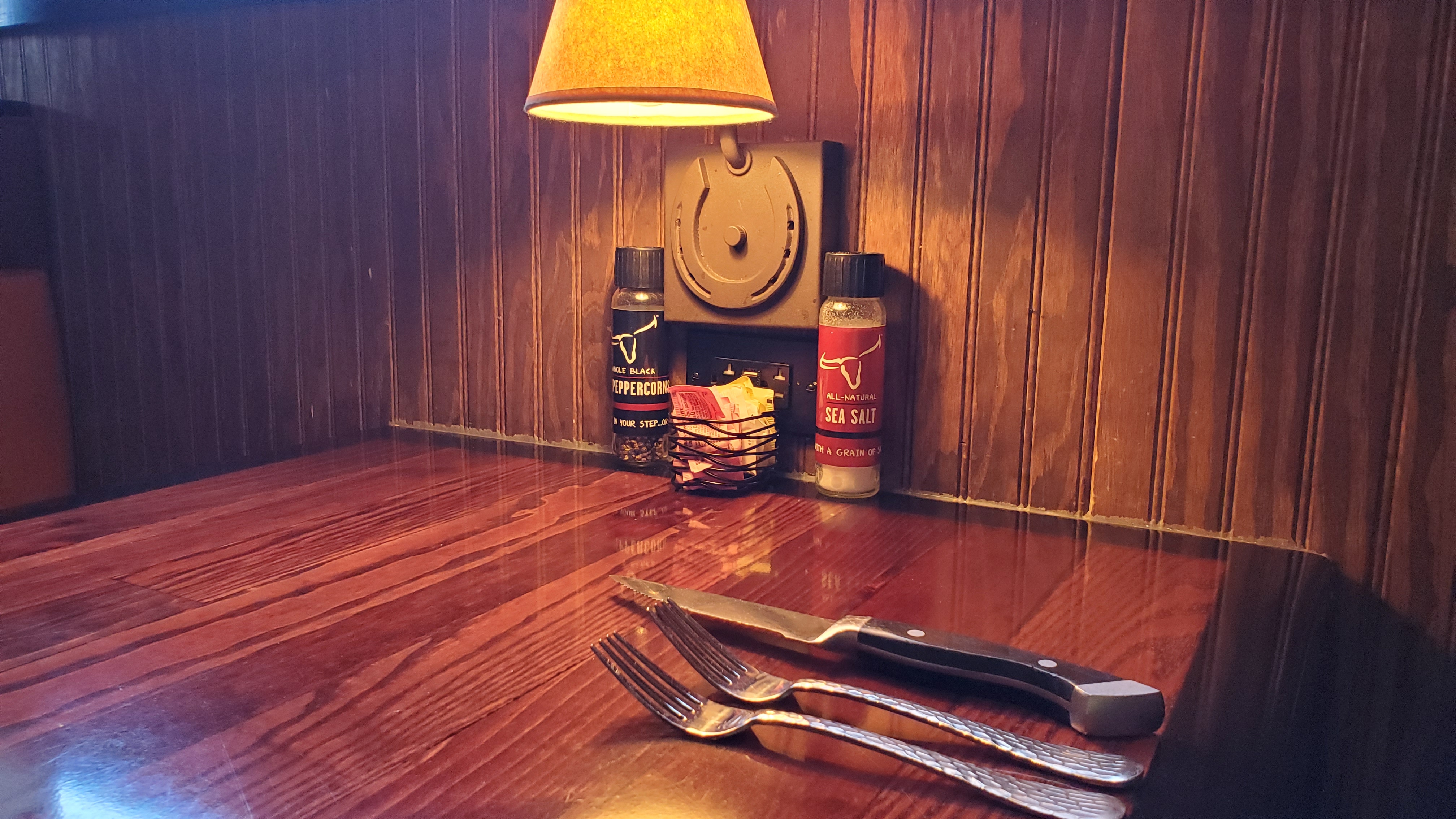
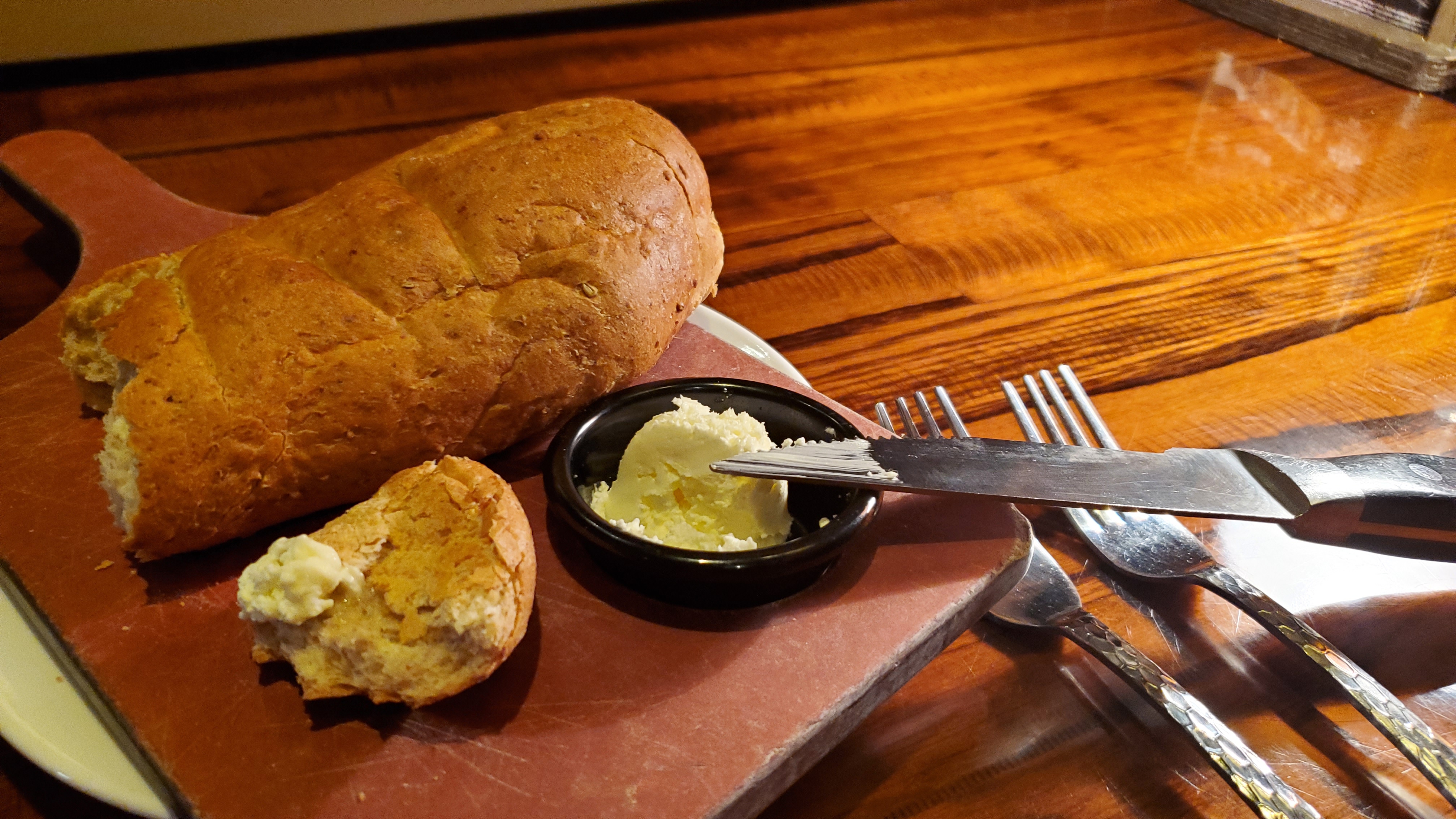
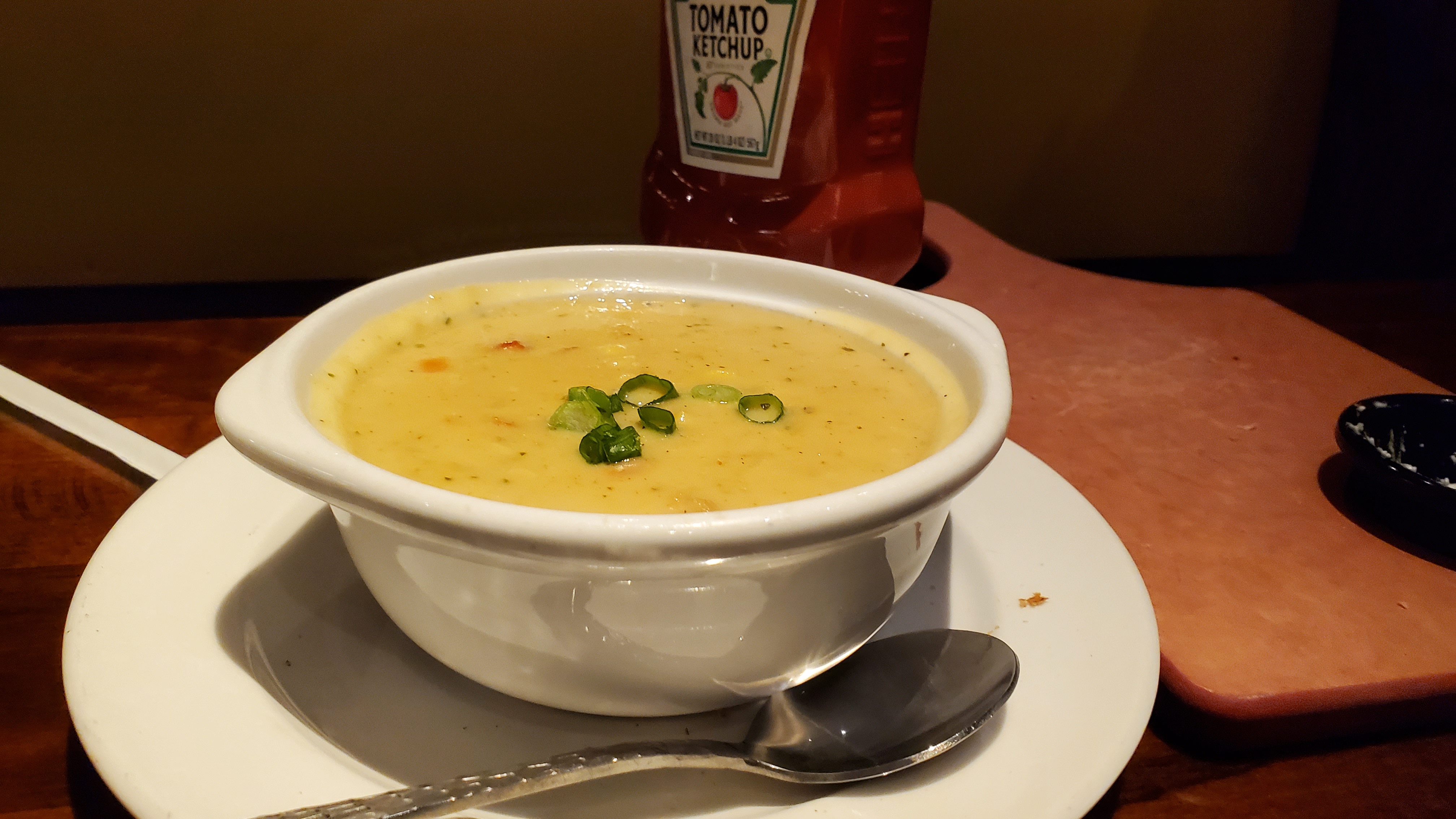
Okay, this is my standard lunch at Longhorn Restaurant in Goldsboro, North Carolina. Nothing to be proud of, but it is one of my “comfort” meals. And, although I don’t eat any of the hamburger bun, I will eat both halves of the appetizer bread by end of the day. And did.
Item
Calories
Fat (g)
Sat. Fat (g)
Carbs (g)
Fiber (g)
Sugar (g)
Protein (g)
Sodium (mg)
Shrimp & Lobster Chowder – Cup
190
11
6
17
2
4
8
570
Half-Pound Cheeseburger – No Bun (est.)
~625
~47
~14
~7
~1
~1
~43
~750
Honey Wheat Bread – Full Loaf
480
7
1
88
2
8
16
920
Butter – Full Portion
120
13
8
0
0
0
0
80
Totals (Chowder + Bunless Burger + Full Loaf + Butter)
~1,415
~78
~29
~112
~5
~13
~67
~2,320
Item
Calories
Fat (g)
Sat. Fat (g)
Carbs (g)
Fiber (g)
Sugar (g)
Protein (g)
Sodium (mg)
The total sodium listed above is about 20 mg over the suggested daily amount and the total calories is about 75% of a day’s total. So, although I will be back again, I will try to make it not so often, and it has been less than once a month. Maybe twice a year would be satisfactory.
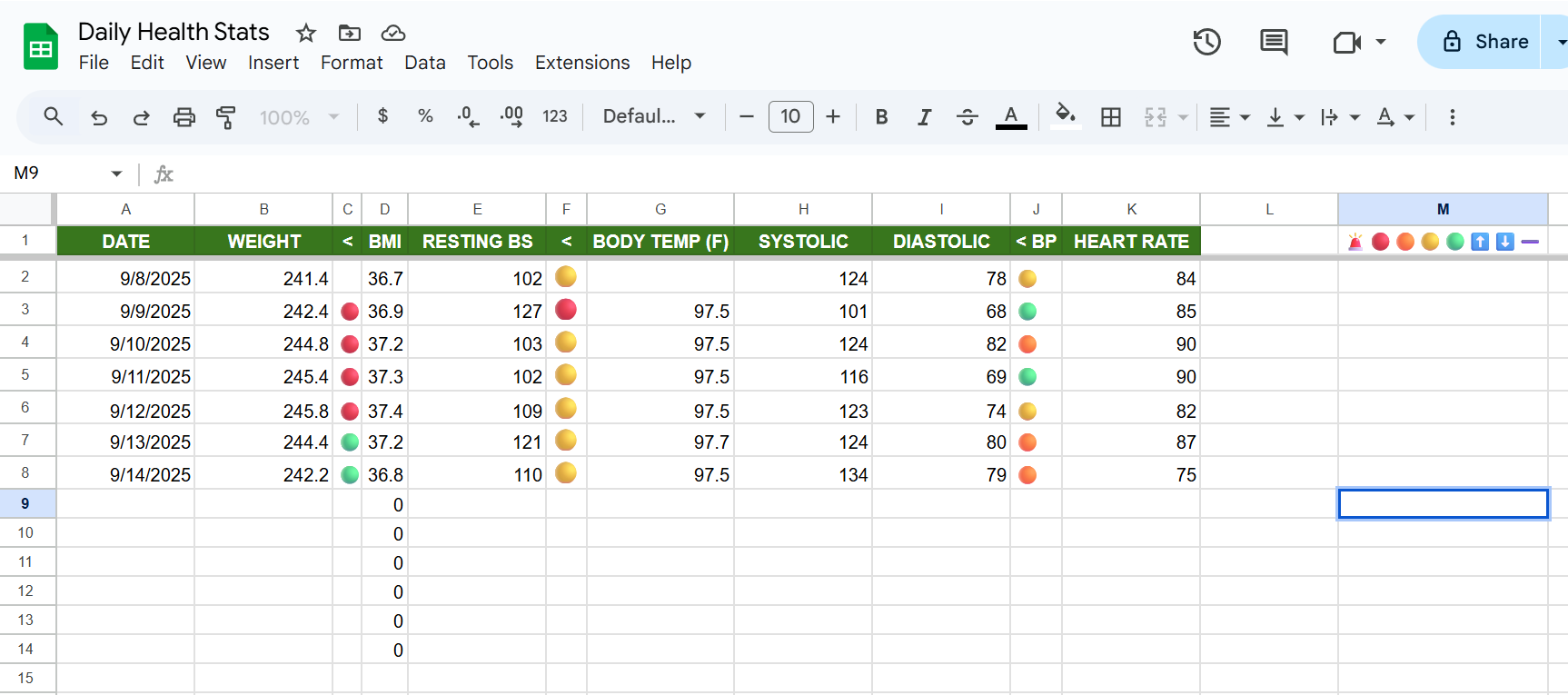
09/10/25: My total calories for the day were 976 above my daily goal of 1880 and my total sodium for the day was 2,301 which was 1 point over being twice my daily goal. Yeah, nutrition-wise yesterday at Lonestar and the Hershey’s Ice Cream was a fiasco. My morning weight was 244.8 lbs. which was up 2.4 lbs. from yesterday, but my Resting Blood Glucose Level was 103 which was great! *Still, if I go back to my “regular” pattern of eating today, I should be back down in a couple of days. This is from years of previous experience with a “cheat” meal or day.
ADDENDUM: On a usual trip to Goldsboro, North Carolina I will be going to have lunch at the Longhorn Restaurant in front of Berkley Mall. I think I’ve only been in Berkley Mall once and that was a few years ago. I think they have JC Penny’s on one end and on the other is/was an abandoned large store, perhaps Sears at one time.
I may drive out to look at any jets that may be taking off or landing out at Seymour Johnson Air Force Base. There is a road that dead ends at the fence beside the runway and often there are others out there taking pictures.
I will also try to go to the Main Wayne County Library back in town. They don’t take book donations. I wanted to give them a copy of the Reader’s Digest Magic Foods for Better Blood Sugar, but the clerk didn’t even ask, which book, just redirected me to the Literacy Connections of Wayne County. As soon as I realized that they didn’t take book donations, no reason for me to talk any longer with the woman at the front desk. I did roam the stacks and found a book on diabetes and took it and browsed through it.
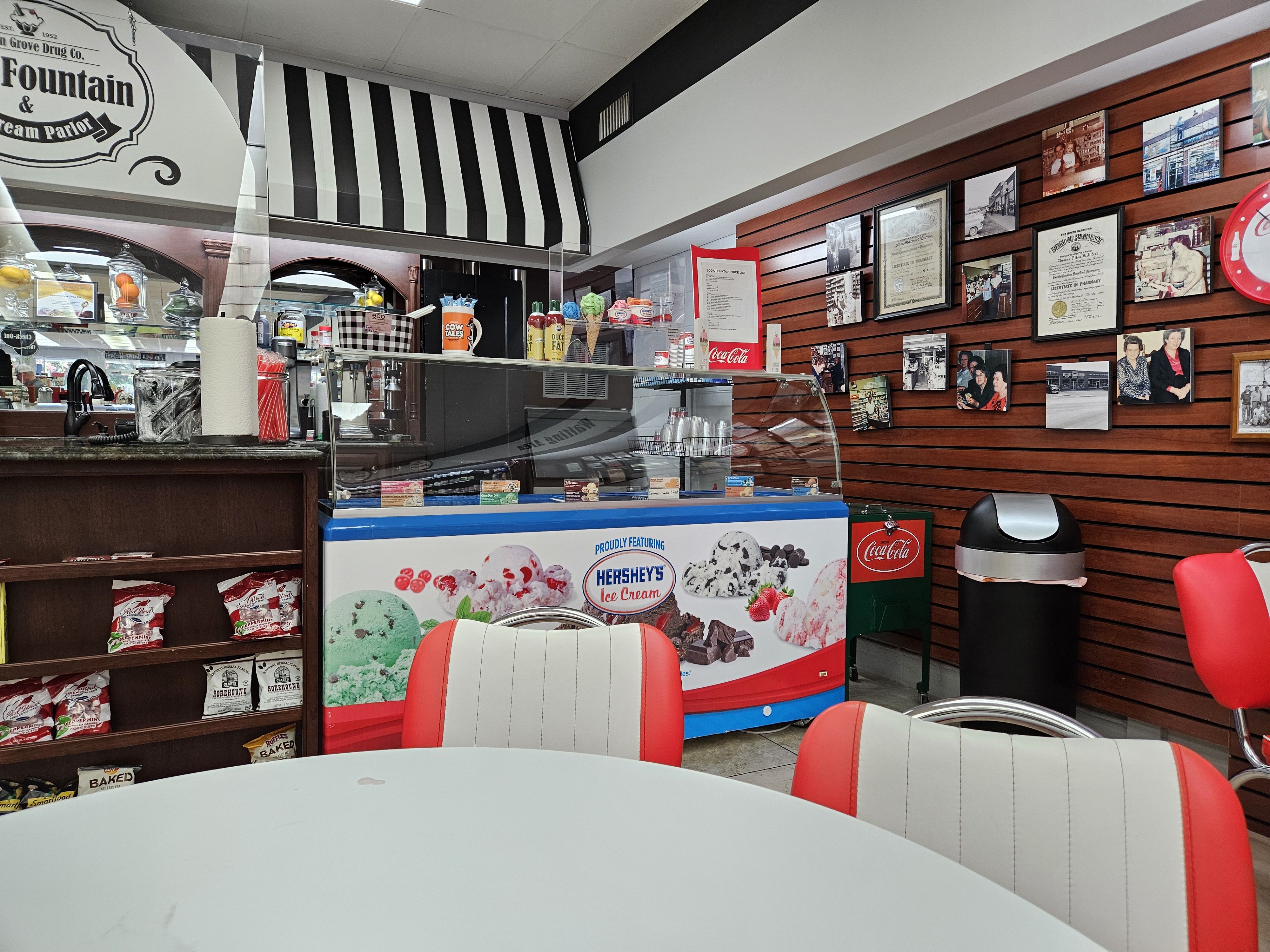
I stopped at the Newton Grove Drug Co. (pharmacy & soda fountain) in Newton Grove, North Carolina and had a 1 scoop ($2) of Hershey’s Ice Cream in a regular cone. *They give about a scoop & a half (almost two scoops) for only $2 (no tax). That’s a deal!
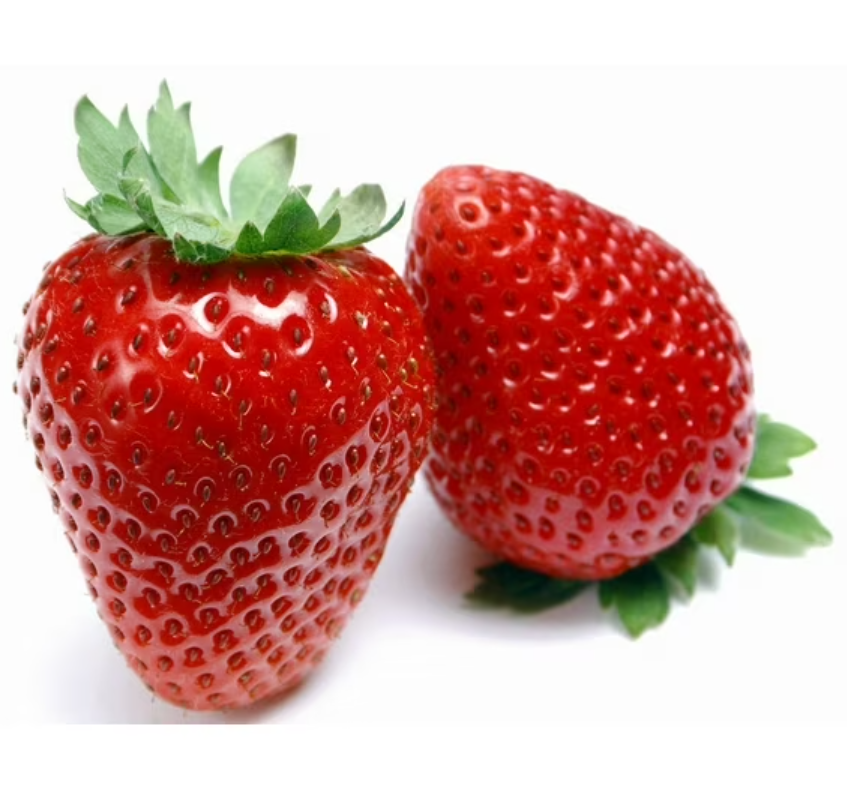
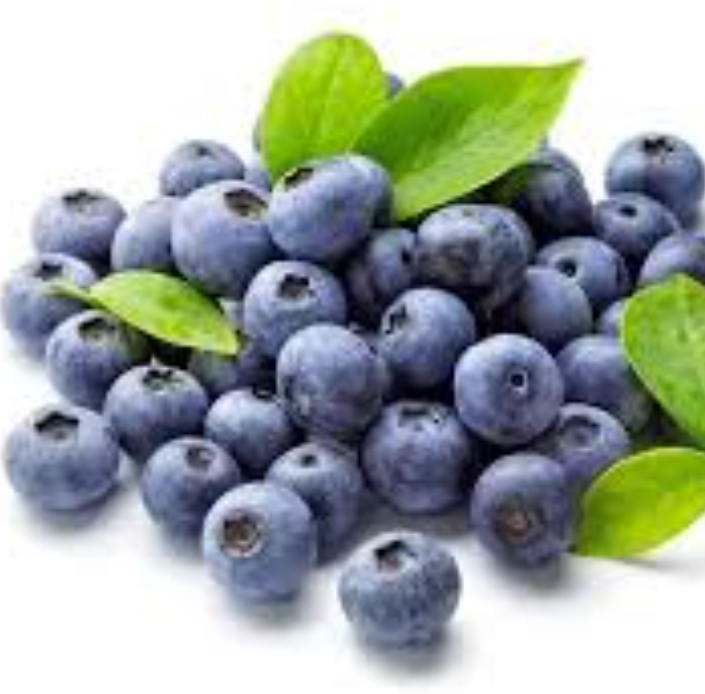
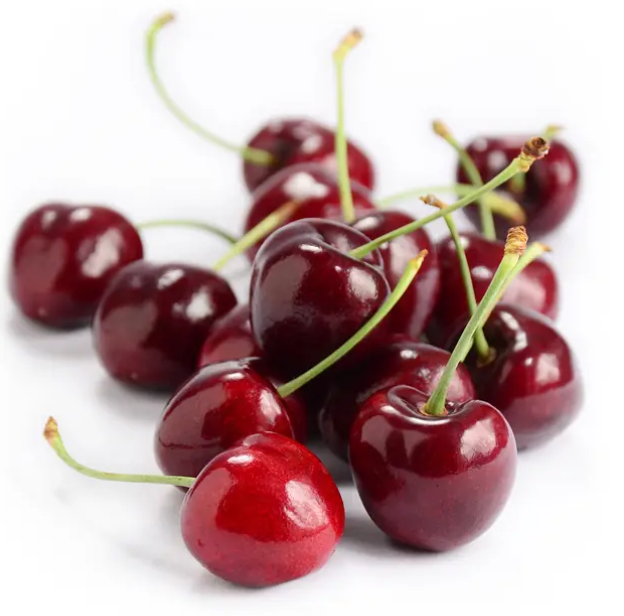
Although my “salad days” started at the IGA in Erwin, North Carolina, I found that the Harris Teeter in Fayetteville had a good salad bar also, and they offer an abundance of fruits (blackberries, blueberries, cherries, grapes, kiwi, and raspberries) and the salads with an abundance of fruit is what this page focuses on. The IGA has Ken’s Salad Dressings, and the HT has Cindy’s Kitchen Dressings.
I used the ChatGPT AI to help me create the Cranberry Vinaigrette Dressing and it is reminiscent of the “store bought” Raspberry Vinaigrette Dressing that I bought some time ago. *I had made some homemade cranberry sauce and used no sugar. That is a positive for this dressing, as I was looking for a lower calorie dressing from the Ken’s or Cindy’s dressings. I like their flavor, but they are high in calories.
An additional suggestion might be to add a tangy, fresh goat cheese like Bucheron (Fr.) or Capricho de Cabra (Sp.).
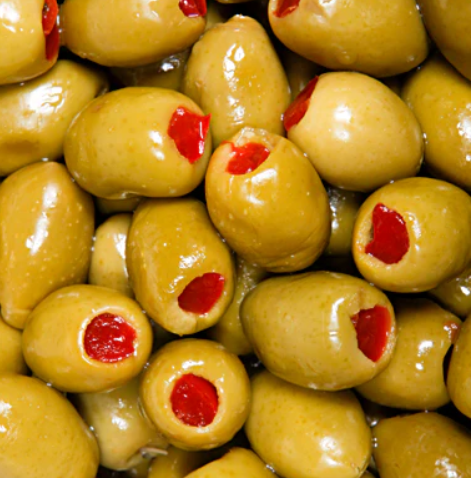
Extras: 2 olives, 1 tsp bacon bits ~331 cal | ~13g net carbs | ~10g protein
I enjoyed the dressing (non-creamy) and the salad to which I had also added 1/2 a medium avocado and a couple of raw cherries, but before 4 pm I was very hungry and ate a slice of bread, deli turkey & cheese sandwich, and a small container of shrimp-lentil stew. I had had a 2 egg frittata, with half an avocado at breakfast. So, being really hungry after lunch didn’t make sense to me.
🥗 Day 2 — Walnuts + Chicken + Cherry
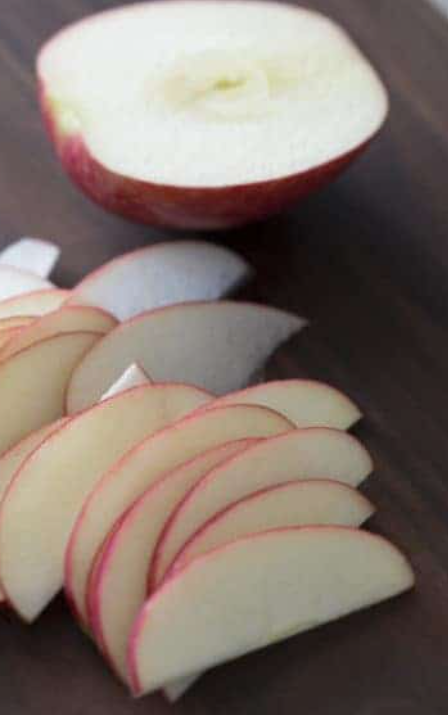
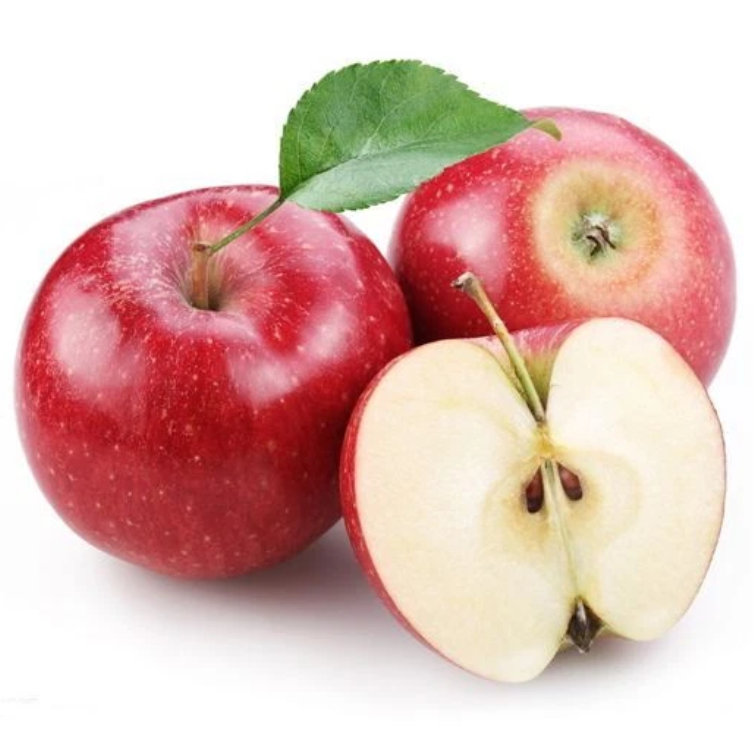
Fruits: ½ small apple (thin slices), 1 raw cherry
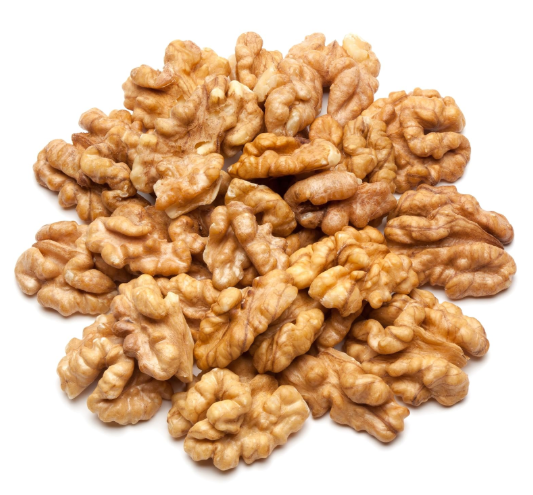
Nuts: 6 walnut halves
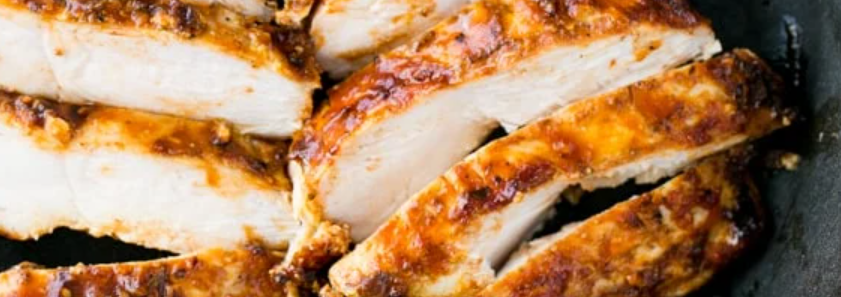
Protein: 3 oz grilled chicken breast (cubed)
Extras: 2 olives ~350 cal | ~13g net carbs | ~25g protein
🥗 Day 3 — Almonds + Egg + Cherries
Fruits: 2 strawberries, 2 raw cherries
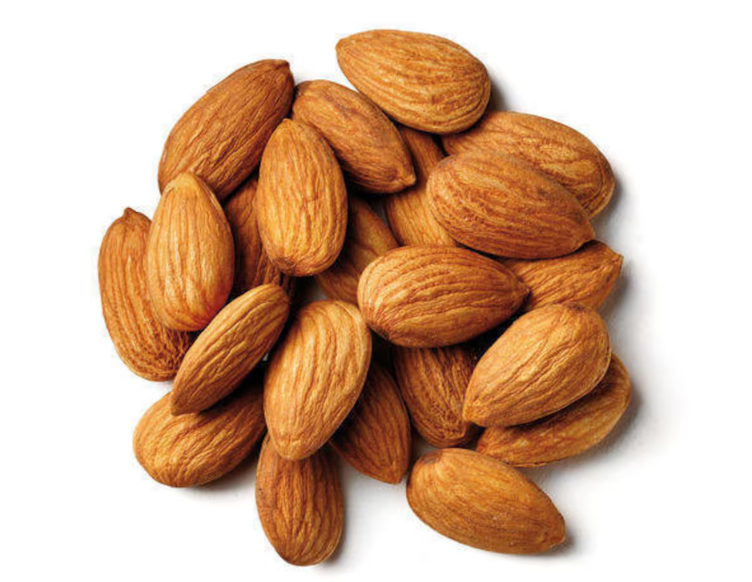
Nuts: 8 almonds
Protein: 1 boiled egg
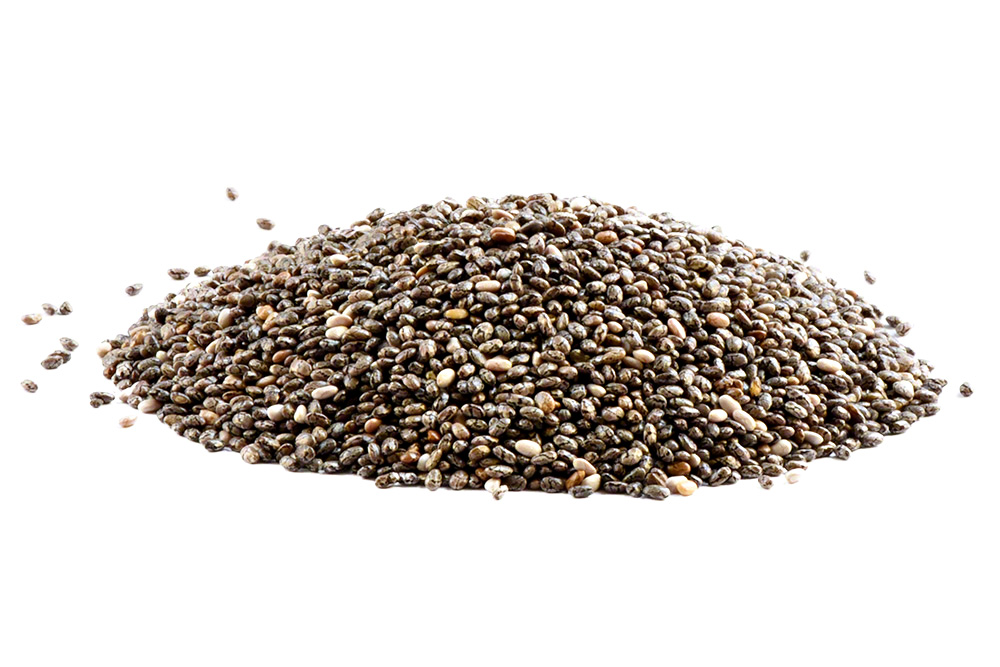
Extras: sprinkle of chia seeds (1 tsp) ~330 cal | ~13g net carbs | ~12g protein
🥗 Day 4 — Pecans + Egg + Yogurt Creaminess
Fruits: 3 raspberries, 4 blueberries, 1 raw cherry
Nuts: 6 pecan halves
Protein: 1 boiled egg
Dressing twist: mix cranberry dressing with 1 tbsp Greek yogurt → creamy version
Extras: 2 olives ~335 cal | ~12g net carbs | ~12g protein
Diabetic-Friendly Cranberry Vinaigrette
Ingredients (makes about ½ cup, 6 servings):
3 tbsp homemade cranberry sauce (preferably with little or no added sugar, sweetened with stevia, monkfruit, or a touch of agave)
2 tbsp apple cider vinegar (or red wine vinegar)
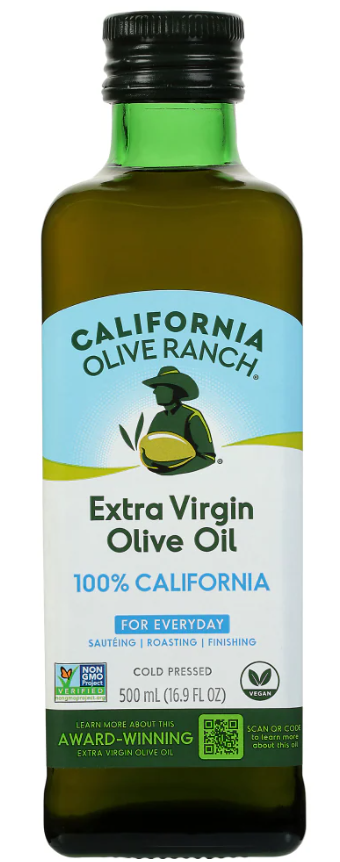
3 tbsp extra virgin olive oil (healthy fats help slow sugar absorption)
1 tsp Dijon mustard (emulsifier + savory depth)
¼ tsp salt
¼ tsp black pepper
(Optional) 1 tsp orange juice or zest, for brightness without much sugar
Instructions:
Whisk cranberry sauce, vinegar, mustard, salt, and pepper in a bowl until smooth.
Slowly drizzle in olive oil while whisking, to create an emulsion.
Taste and adjust: add a splash more vinegar if you want it sharper, or a pinch of sweetener if it’s too tart.
Nutrition (per serving, ~1.5 tbsp):
Calories: ~45
Carbs: ~2g (net ~1g, depending on your cranberry sauce)
Fat: ~4.5g (healthy monounsaturated)
Fiber: trace
No added sodium beyond what you include
I enjoyed the flavor and texture of this dressing and would make it again. I haven’t tried adding plain Greek yogurt to it, but I’m pretty sure I will like that also, since the yogurt also has some sour tang to it.
This dressing is tart, fruity, and works really well on dark leafy greens, roasted vegetables, or even a grain salad.
Creamy Cranberry Dressing
Ingredients (makes about ½ cup, 6 servings):
3 tbsp homemade cranberry sauce (no added sugar, or sweetened lightly with stevia/monkfruit/agave)
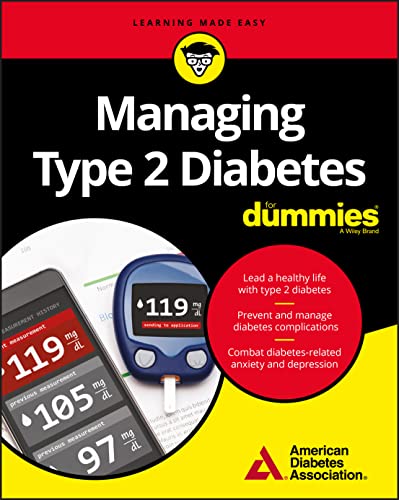
I saw this book title and image online at the Asheboro Main Library yesterday (09/02/25) and when I asked about it, the desk clerk said it was available but at the branch library in Liberty, North Carolina. *I was familiar with the town of Liberty having been there at various times in the past. Rev. Rick Bell & his wife Linda had lived there. Rick was the pastor of First Baptist Church, Liberty. *After lunch at No. 1 China Buffet, I looked up how far it would be if I drove up to Liberty. I think it was only about 18 miles, and then on the way, after getting gas, I saw that I would turn off of Hwy. 64 at Ramseur, on Hwy 49, to go to Liberty. This was great because I think it was only about 9 miles from Ramseur, which was on my way back home anyway. Surprisingly, as I was coming into Liberty, I looked to my right and there was the First Baptist Church that Rick had pastored. And then a little farther, on the right also was the Main Library (maybe the only one in town).
I went in the library carrying a copy of “Magic Foods for Better Blood Sugar” thinking that I would offer the book for the library, if they wanted it, and also asking about the “Managing Type 2 Diabetes for Dummies” book to see if they had it. There was a tall man at the front desk and he said they would accept the book donation and then he went to look for the Dummies book and found it quickly. I took it and said I would like to read it in the library and he said something like, “Well, you can read all you want up until 7 pm,” which I took to mean that that was the library’s closing time.
There were four chairs, one with a rotating desk top, two facing two and with colorful cushions. I chose the chair with the desktop and sat for a read. Having a book specifically written for “type 2” diabetics was refreshing. It probably took me about two hours to read through it, skipping the section for “women” and “teens,” but there was a lot of info that would be useful for a new type 2 diabetic. They even had a brief section for men & ED.
This book covers what diabetes is, and how the body has failed both in producing insulin and in recognizing when insulin is available (insulin resistance). Is it the pancreas that handles the production of insulin? And it’s glucose, the simplest form of sugar, that is carried by the blood to the cells that need it for energy to do things. If the body isn’t working right, the glucose gets to the cell, but the cell doesn’t recognize that it is there and the glucose begins to build up into the blood. And that is where the body problems begin to manifest themselves. Nerve ends are damaged, eye sight affected, and if untreated more serious problems like the need to remove body limbs and blindness occur.
The book goes on to explain about various food types, carbohydrates (carbs), proteins, fats and non-starchy vegetables. That all are necessary, but the carbs cause spikes in blood sugar so eating those requires strict monitoring as to the types and amounts (serving sizes).
Oh, perhaps the main statement early in the book was that (and I paraphrase here) ‘you are captain of your own domain.’ When all is said and done, it is the choices YOU make that determines if you successfully control your type 2 diabetes, blood sugar and ultimately your health. You can call others in to help, form a team, so the speak, but it all comes back to you in the end.
Team? I may not recall all those listed but they were: a CDE, a dietitian, a health care specialist (perhaps a doctor, your primary care physician) and your pharmacist.
Being reminded of the CDE, I then recalled that when first diagnosed with type 2 back in January of 2012 (I think it was 2012, but perhaps 2011.) that I was supposed to attend a session with someone knowledgeable about diabetes, and although I signed up for a session, the session was cancelled and I never rescheduled one. I’m not so sure that it might not still be useful although I have lived 13 years since, and have gotten much better about the things I eat, having lost about 10 lbs. during the last year and dropped about 25 points in my resting blood sugar level.
*As an aside, I had asked my doctor if I could get a CGM (continuous blood glucose monitor) after my last medical checkup. Later she said that my insurance company had refused, and just yesterday I was looking through some old mail and opened and read the Humana explanation for their refusal. I think it was based on not meeting at least one of two criteria: I think one requirement was having experienced a “low blood sugar” event and I don’t recall the other. Might have been a blood glucose level or A1C above a certain amount. I won’t fight it, but I wanted to see how certain foods affected my blood sugar “on the fly.”
In reading this book, it dawned on me that even with my successes, I’m still what they might call a “borderline” diabetic. I’m thinking that an A1C below 7, just below, was great, but no. I think they were saying that even a 6.4 is right on the border, and a resting blood sugar level of above 100, even if just slightly, isn’t that great or normal. I should be trying to hit a goal of maybe 90 on a regular basis. **And, that number I would think was very low for me having only hit near it about two or three times in a whole year.
TERMINOLOGY:
CDE, which stands for Certified Diabetes Educator.
This credential is given to health professionals (nurses, dietitians, pharmacists, etc.) who specialize in educating and supporting people with diabetes. In 2020, the title shifted to CDCES (Certified Diabetes Care and Education Specialist), but many people still use “CDE” as the shorthand.
The following chart was not in this book (or I didn’t copy it from this book, but had my AI create it for me).
📊 A1c ↔ Average Blood Glucose Chart
(0.1% increments from 5.0 to 8.5)
A1c (%)
Avg Glucose (mg/dL)
5.0
97
5.1
100
5.2
103
5.3
106
5.4
109
5.5
112
5.6
114
5.7
117
5.8
120
5.9
123
6.0
126
6.1
129
6.2
132
6.3
135
6.4
138
6.5
140
6.6
143
6.7
146
6.8
149
6.9
152
7.0
154
7.1
157
7.2
160
7.3
163
7.4
166
7.5
169
7.6
171
7.7
174
7.8
177
7.9
180
8.0
183
8.1
186
8.2
189
8.3
191
8.4
194
8.5
197
🔍 Context (important for how you read this)
Each 0.1% A1c ≈ ~3 mg/dL average glucose
CGM users with high time-in-range (like your 97%) often see:
Lab A1c slightly lower than this table predicts
This chart reflects population averages, not variability or spike shape
For reference:
Your ~133 mg/dL average → ~6.2–6.3%
With your glucose profile, a lab result closer to 6.1–6.2% would not be surprising
Sulforaphane is a natural compound found in cruciferous vegetables (like broccoli, cabbage, kale, and Brussels sprouts). It forms when the plant enzyme myrosinase acts on glucoraphanin (a sulfur-containing compound) — usually when the vegetable is chopped, chewed, or combined with mustard seeds or sprouts.
Key Benefits of Sulforaphane
🛡 Antioxidant support – boosts the body’s natural detox enzymes and defenses against oxidative stress.
🧠 Neuroprotection – studied for supporting brain health, reducing inflammation, and potentially helping in conditions like autism and neurodegenerative diseases.
Neurodegenerative diseases are conditions in which nerve cells (neurons) in the brain and/or spinal cord gradually break down, lose function, and die.
Alzheimer’s disease is the most common neurodegenerative disorder, primarily affecting memory and cognition.
❤️ Cardiovascular health – may improve blood vessel function and lower inflammation linked to heart disease.
🧬 Anti-cancer potential – promotes the elimination of carcinogens, helps regulate cell growth, and supports normal detox pathways.
🔥 Anti-inflammatory effects – reduces chronic low-grade inflammation that underlies many diseases.
🩺 Metabolic benefits – some evidence for improving insulin sensitivity and blood sugar regulation.
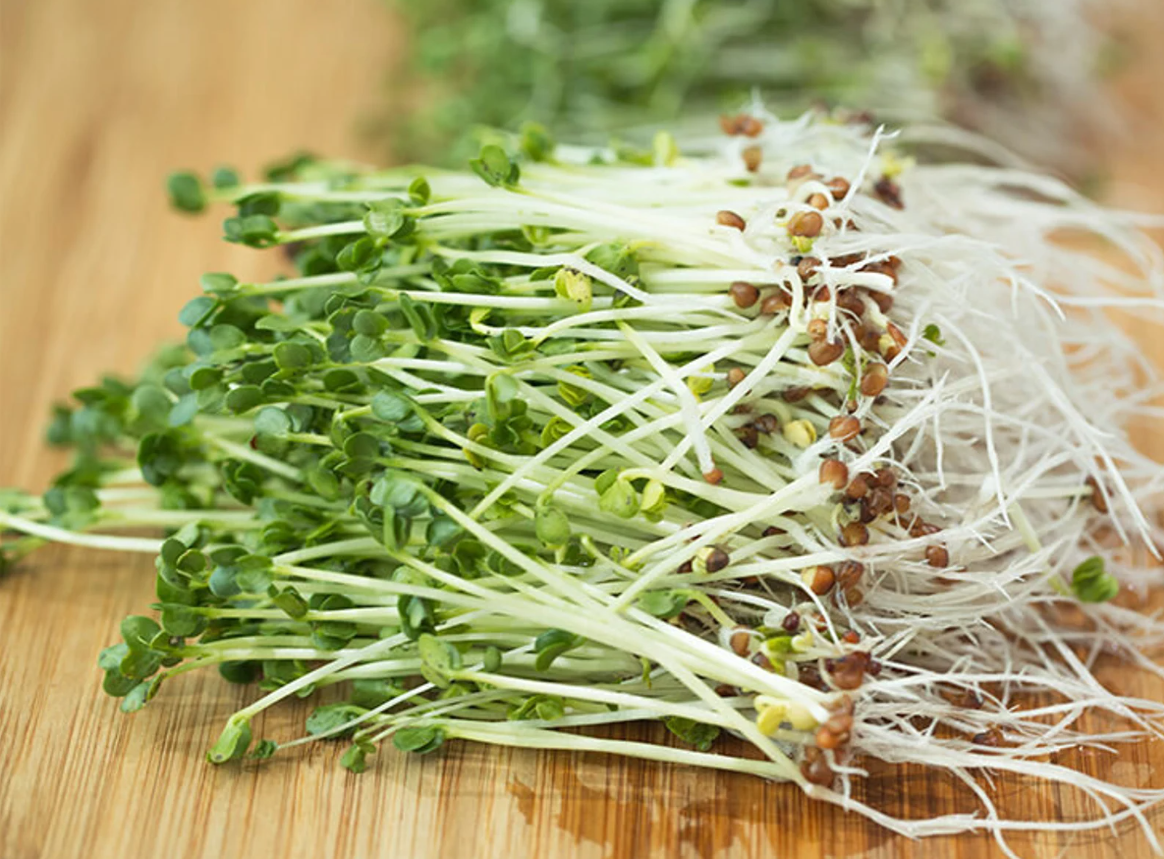
👉 The richest food source is broccoli sprouts, which can contain 20–50× more sulforaphane precursors than mature broccoli.
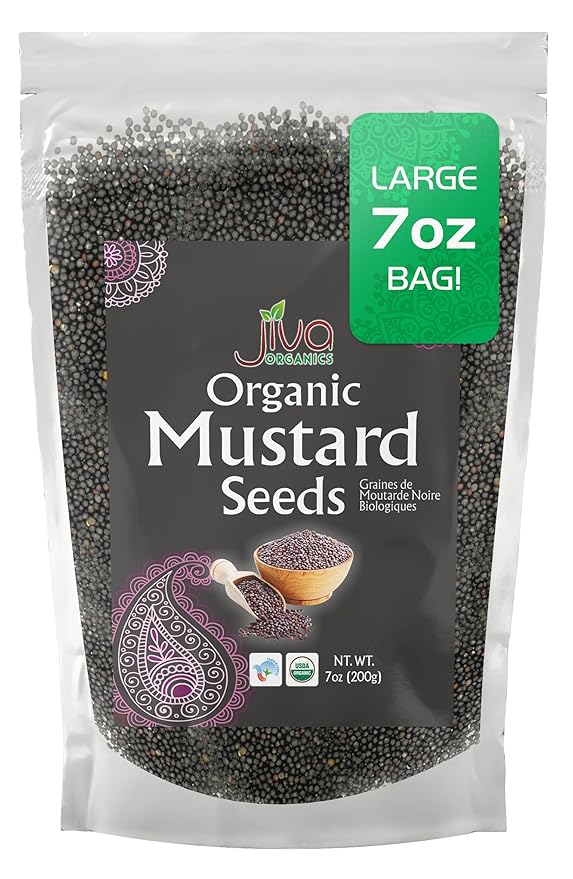
MUSTARD SEED COLORS
Color
Flavor & Heat
Common Uses
Notes
Yellow / White
Mildest; slightly sweet, tangy, low heat
American yellow mustard, pickling spices, salad dressings, sauces
Seeds are larger and pale in color. Often ground into mustard powder.
Brown
Medium heat; spicier, more pungent than yellow
Indian curries, Dijon mustard, stir-fries, spice blends
Smaller seeds, reddish-brown; preferred in Europe and Asia for stronger flavor.
Black
Hottest, sharpest, and most aromatic
Indian cooking (tempering in hot oil), strong mustards, spice pastes
Very small and dark; prized for intense aroma but harder to find than brown/yellow.
Here’s an extensive list of cruciferous vegetables (all belong to the Brassicaceae family, often called the mustard or cabbage family).
Common Crucifers
Cabbage (green, red, Napa, Savoy)
Broccoli
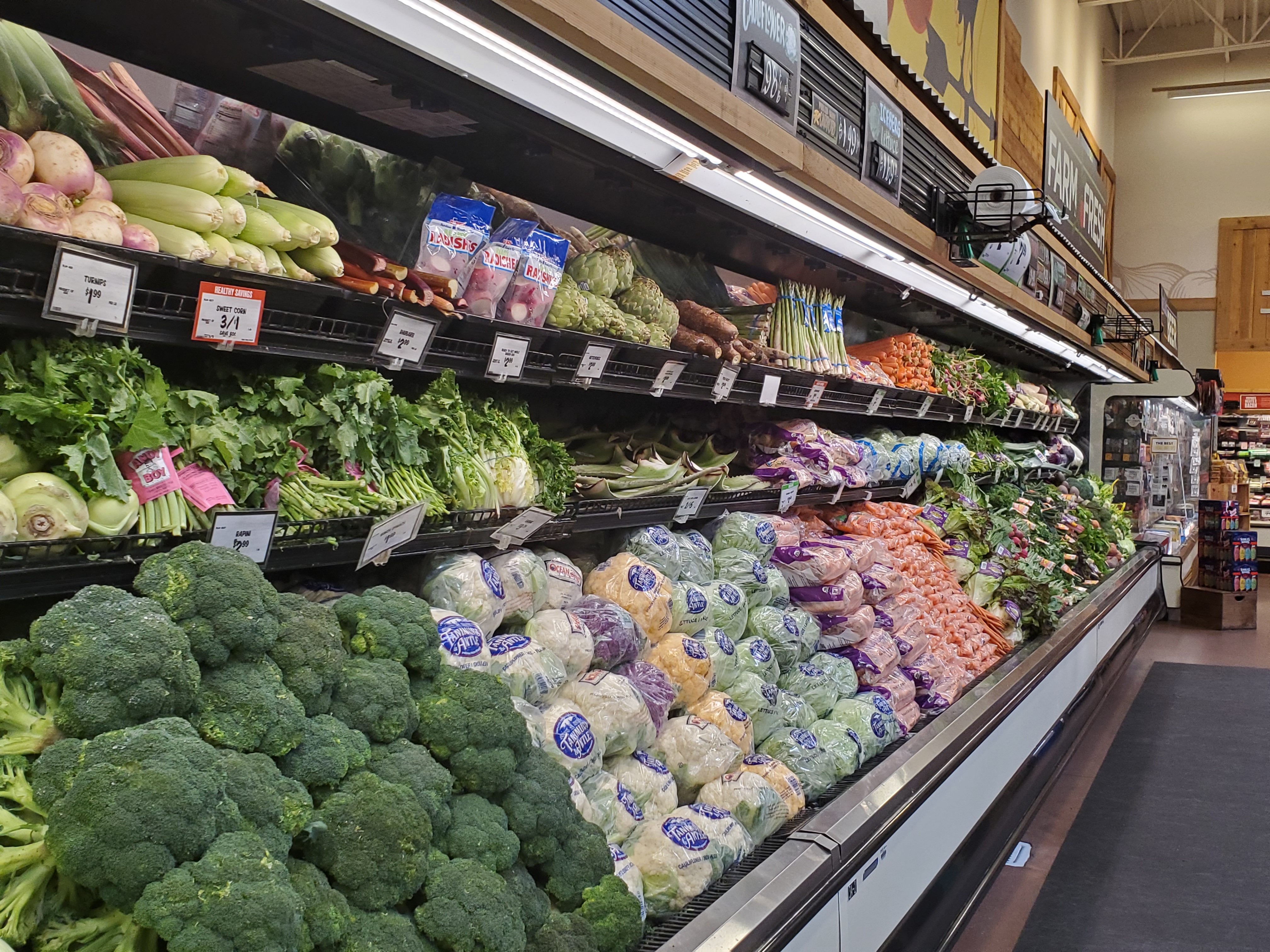
Cauliflower
Brussels sprouts
Kale
Collard greens
Bok choy (pak choi)
Chinese cabbage (pe-tsai)
Kohlrabi
Mustard greens
Turnip greens
Rutabaga
Turnips
Radishes (including daikon, black radish, watermelon radish)
Arugula (rocket)
Watercress
Less Common / Specialty Crucifers
Mizuna
Tatsoi
Komatsuna
Rapini (broccoli rabe)
Gai lan (Chinese broccoli)
Broccolini (hybrid of broccoli + gai lan)
Romanesco (spiral cauliflower-broccoli type)
Choy sum
Shepherd’s purse
Wasabi (root used as condiment, leaves edible)
Horseradish (root + leaves)
Nasturtium leaves (part of the extended family, peppery taste)
Sprout / Seed Forms
Broccoli sprouts
Radish sprouts
Mustard sprouts
Kale sprouts
Cabbage sprouts
Crucifer + Myrosinase Booster Rotation
Crucifer
Mustard Seeds
Broccoli Sprouts
Cabbage
✅ Best with ground mustard seeds
✅ Top with broccoli sprouts
Napa / Chinese Cabbage
✅ Add mustard after steaming or stir-fry
✅ Toss raw sprouts into salads or wraps
Broccoli
✅ Mustard rescues sulforaphane after steaming
✅ Sprouts + mustard = powerhouse combo
Brussels Sprouts
✅ Great with mustard or horseradish
✅ Sprouts add fresh crunch after roasting
Cauliflower
✅ Mustard powder works well
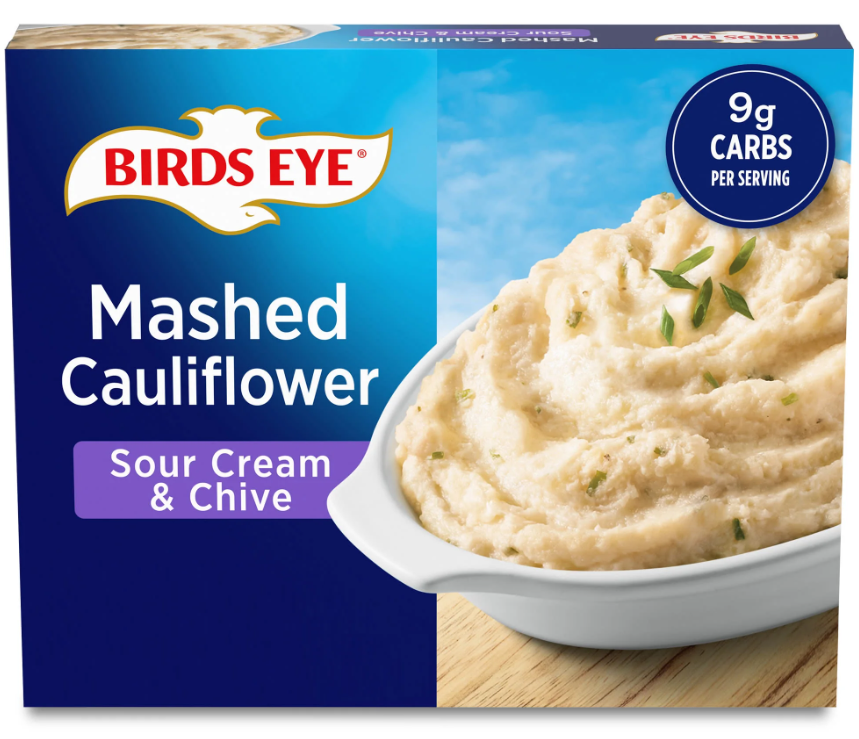
✅ Mix sprouts into cauliflower mash
Kale / Collards
✅ Add mustard seeds after sautéing/steaming
✅ Add sprouts raw after cooking
Turnip / Mustard Greens
✅ Mustard seeds complement flavor + boost
✅ Combine sprouts + mustard for double effect
💡 Tip: Add boosters (mustard seeds or broccoli sprouts) after cooking to preserve myrosinase activity.
I’M CURRENTLY…
08/30/25: I’m currently grinding mustard seeds onto broccoli sprouts before I add them to my lunch salads. But after doing the further research, via ChatGPT AI, I realized that I could use almost any type of mustard, even Yellow French’s, to activate the enzymes that enhance the production of sulforaphane. E.g. I make a basic Italian salad dressing with: olive oil, red wine vinegar, Italian herbs, yellow mustard and sweetener. The mustard in this dressing would enhance sulforaphane production in not just broccoli sprouts, but if I put it on a salad that includes cauliflower or broccoli florets. Or add ground mustard seeds to cauliflower mash, or on braised brussels sprouts.
Not related to producing extra sulforaphane, I am also adding ground Ceylon cinnamon to various items: fried apples, in a chia seed pudding with pureed fruit, added to steel-cut oats, and on a slice of sprouted grain bread with some peanut butter. [end]
Broccoli sprouts are the only common cruciferous vegetable that reliably produces high amounts of sulforaphane. The others contain some precursors, but the amounts are small unless eaten raw, finely chopped, and combined with myrosinase.
Sulforaphane is a compound formed when glucoraphanin (found most abundantly in broccoli sprouts) is converted by the enzyme myrosinase (present in sprouts, mustard seed, and raw radish). Among cruciferous vegetables, broccoli sprouts are the only reliably high source, and adding mustard powder or radish increases the conversion.
Sulforaphane has strong cell-protective and anti-inflammatory effects. Here are the key benefits, stated plainly:
Reduces chronic inflammation by lowering NF-κB activity.
Supports liver detoxification by activating Phase II detox enzymes.
Improves insulin sensitivity and blood sugar regulation.
Helps protect brain cells and may improve memory and mood under stress.
Increases the body’s antioxidant defense system (especially by raising glutathione).
May slow growth of certain cancer cells by promoting apoptosis (cell self-destruction).
Supports gut health by reducing inflammatory bacterial byproducts.
These effects are based on well-documented biochemical pathways — it is not a supplement-style claim.
Practical takeaway
If you’re making slaw or salad:
Let it sit 5–10 minutes after mixing (to allow conversion)
Eat within 1–2 hours for maximum sulforaphane
No need to rush — you don’t lose it immediately — but don’t prepare it the day before if sulforaphane is the goal.
Here’s a Quick-Start Plan inspired by Reader’s Digest Magic Foods for Better Blood Sugar — something a newly diagnosed type 2 diabetic could use right away:
🍎 1. Stock Your “Magic Foods”
Focus your grocery list around these blood-sugar-friendly staples:
American diner/fast food: go bunless or whole-wheat bun, side salad instead of fries, water instead of soda.
👉 Rule of thumb: Protein + veggie first, carb second, fried/sugary foods last or not at all.
🧪 4. Track & Adjust
Test your blood sugar before and 2 hours after meals (when you’re learning).
Notice patterns: which foods spike you, which keep you steady.
Use those results to tweak — it’s personal as much as general.
🥤 5. Lifestyle Add-Ons
Drink water or unsweetened tea; minimize sugary drinks.
Aim for a 15–20 min walk after meals if possible — movement helps lower post-meal glucose.
Sleep and stress matter: poor rest or high stress can raise blood sugar.
⚡ Bottom line:Fill your plate with fiber-rich “magic foods,” balance carbs with protein/fat, make smart swaps when eating out, and check your meter to learn your body’s responses.
“Don’t tell me what you won’t do—tell me what you will do. Come see me today.” — Dave Burrell, only at Crossroads Ford
Sprat Pate
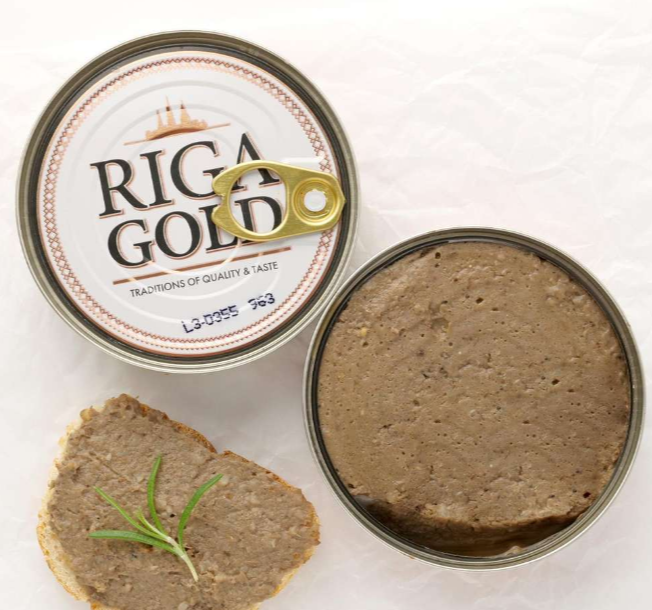
You’ve read the simple outline of the Quick Start Plan above and to paraphrase Dave Burrell, a new car dealer, “Don’t tell me what you won’t eat–tell me what you will eat.” I have friends and relatives that have long lists of what they don’t or won’t eat, and short lists of what they will eat. My list is reversed, although if you pressed me, it might get longer in the negative than I would like. But, for the most part tofu, and a fish pate from the Black sea, are the two things that quickly come to mind that I don’t want to eat again. Everything else is fair game, even game. I’ve tried alligator sausage, and venison. And although “gamey” I would eat venison again, I just don’t have many opportunities to do so.
I was in the checkout line yesterday at the Fresh Market. I was looking at the items that the man in front of me was purchasing and I saw that he had at least one package (about 16 oz. I think) of ground Bison. I’ve tried that, and had no problem with the flavor, but I seem to recall it didn’t have enough fat for me, so ground beef is perfectly alright with me. And I prefer ground beef to ground sirloin just because the ground sirloin I tried several time had a different texture and flavor. My choices are based on nuances of flavor and texture, not on outright dislikes, as in tofu.
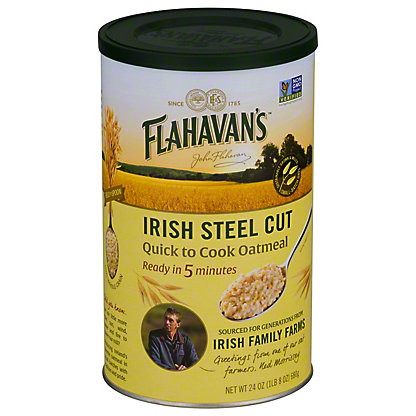
I am still buying new things to try. I bought a cannister of Steel-Cut Oats yesterday. They take 40 minutes to cook, but have a better Glycemic Index than 1 Minute Quick Oats. Believe me, I love the quick oats. The flavor and texture is what I am familiar with. Sugar and maybe cinnamon or with raisins. Yeah familiar, but not what I need now, late in my life and wanting to go out as best I can.
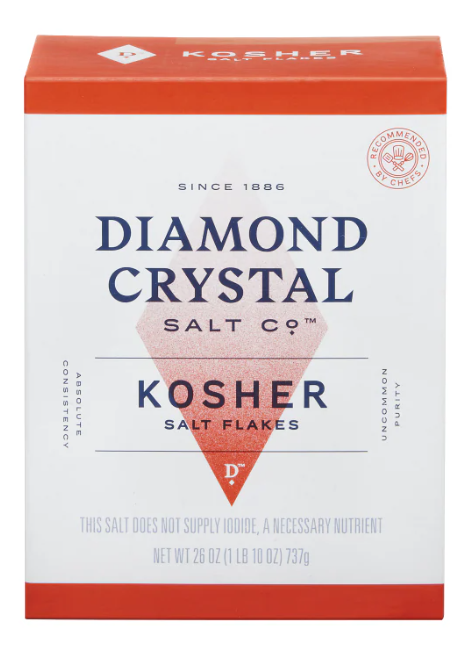
Oh, I also bought a box of Diamond Crystal Salt. Kosher. A patented process for forming the little salt crystals into hollow triangles. *Doesn’t that form an odd image in your mind? And this difference is preferred by many chefs. I personally asked my AI, “Doesn’t that mean you are actually getting less salt for the same volume as compared to Morton’s Salt?” And yes it does. **Not too long ago I was parsing through the “Simple” Cookbook by Gina Holmoka and I seem to recall a note that she only used Diamond Crystal Salt. It was only seeing the box of Diamond Crystal Salt on the Fresh Market shelf that made me recall her note, and decide to give it a try.
For not nutritional reasons, I have for some time been grinding my own salt in which I combine regular Morton’s Salt with Pink Himalayan Salt. It give the ground salt a slight pink hue but for me no difference in flavor. Salt is salt.
Take a 10–15 min walk after meals — helps bring glucose down naturally.
🛒 Mindset & Shopping
Start with “What can I add?” (fiber, protein, veggies) instead of “What must I cut?”
Keep healthy snacks (nuts, cheese sticks, veggie sticks + hummus) on hand so you’re not reaching for cookies or chips.
✅ These steps don’t require giving foods up “cold turkey.” They’re little swaps and adjustments that still let you enjoy familiar meals while easing blood sugar into a better range.
BABY STEPS FOR BLOOD SUGAR CONTROL (Ranked)
Here’s that same list of baby steps for blood sugar control, but ranked from easiest to adopt → most impactful.
⭐ Easiest Baby Steps (low effort, high success)
Swap soda/juice for water, sparkling water, or unsweetened tea.
Sprinkle cinnamon on oats, toast, or coffee.
Eat whole fruit instead of juice.
Pair fruit with protein/fat (apple + cheese, berries + yogurt).
⚖️ Medium-Effort Baby Steps (takes a little planning)
Cook → cool → reheat rice, pasta, potatoes, oats.
Choose sprouted or whole-grain bread instead of white.
Add protein/fat to carbs (nut butter on toast, egg with oatmeal).
Smaller portions of starch, bulk up with veggies.
💪 Higher-Impact Baby Steps (bigger payoff if you stick with them)
Don’t skip meals — keep eating steady and balanced.
Stock healthy snacks (nuts, hummus + veggies) to replace chips/sweets.
👉 Why this ranking?
The top steps are so easy you can do them tomorrow without much disruption.
The middle ones take a bit more intention (shopping choices, meal prep).
The last ones have the biggest effect on blood sugar, but also require consistency and habit change.
Published in 2007, but still a valid resource for beginning to understand how to approach better blood sugar control. A few “left out” items might be: sprouted grain breads, Greek yogurt and blue corn tacos/tortillas. Well illustrated, an easy read and can be found online, “used” for about $5.
























 Bill Gibson, II